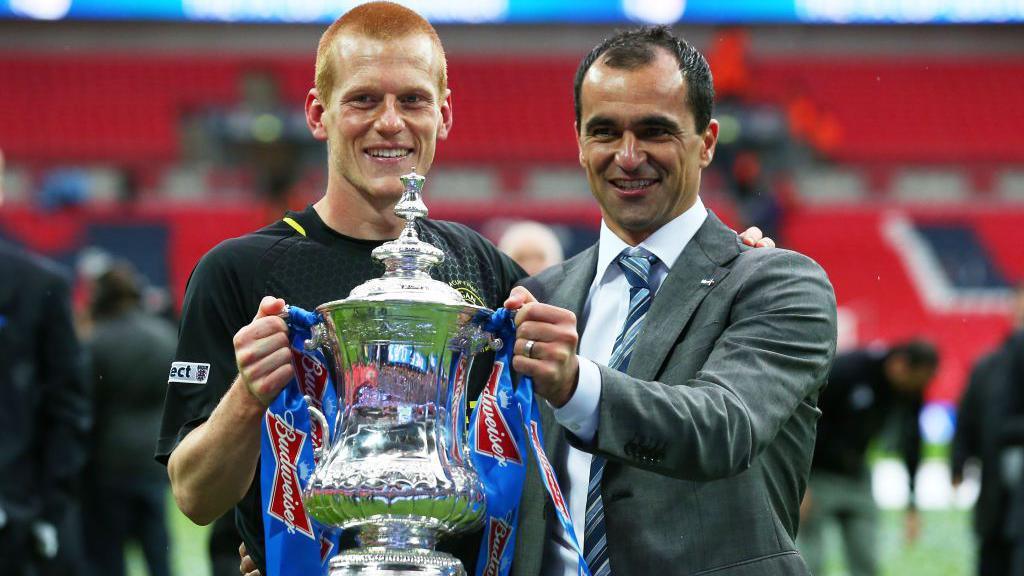
Kelly: Let’s talk just quickly about that FA Cup final, because that’s still one of the greatest shocks… one of the greatest FA Cup finals in history. How do you reflect upon that all these years later?
Roberto: With a lot of pride. Dreams can really happen in the FA Cup. And I think that game… you play the champions of England – Man City – with all the stars. The odds are against the underdog. I think everybody likes it. I always found out that we had so many neutral fans that day… that’s what happens in the FA Cup. But to actually perform and deserve to win was very special.
Kelly: At what point did you think, ‘management is for me’? Was it always management?
Roberto: Always. Always, yeah, because my dad was managing. I thought that was the best.
Kelly: Did you almost envisage being a manager before a player?
Roberto: Yes, because I never saw my dad play. And it was fascinating because when I came to the UK in 1995, straight away they tell you there is no ‘I’ in team. You have to adjust to the group and you have to do whatever it takes to be with the group. The reality doesn’t work like that. It’s the opposite. You have to address the ‘I’ before you can create a team. And sometimes you are in the corner of a room thinking… completely different culture, different background, and you expect it to perform without having help to be settled, to feel that you are valuable. There are many aspects that I learned from my own experience of being away from home. Without me knowing it, that was preparing me for that side. You need to get… a team to be together, to have the same goal and to be able to perform on the pitch.
Kelly: Other than your dad, who’s had the biggest influence on Roberto Martinez the manager?
Roberto: I was intrigued by Johan Cruyff – the way he managed Barcelona. He came in, he changed completely the way that the game was played. I think many, many people in the last 100 years have influenced the game, but I don’t think anybody has influenced the game the way that Johan Cruyff did it, because it changed. It was more a technical game, it was a possession-based game, it was about a numerical advantage. And then you created the ones that didn’t follow that way of football – they had to find a way to counter that style. I followed many other managers… I think what John Toshack did when he went to Real Sociedad and then went to Real Madrid. I love Pacho Maturana – what he did with the Colombian team. Arrigo Sacchi – so structured and rigorous and methodic. I always enjoyed how managers get their message across to the players and in a different way.
Kelly: Have you ever had an opportunity to go and watch any of those managers? We’ve spoken to Andoni Iraola and Brendan Rodgers this year, and they talked about managers that they went and learned from. Have you had anyone like that – any mentors or anything?
Roberto: I was just watching games. I liked to watch a game and I tried to double-guess: ‘How did that happen? How did you take the risk to get to the player to understand what you’re trying?’ I never went to see anybody work, but I followed many World Cups. I started managing in the Premier League in 2009. Every summer with my wife, I would invite her to go to South Africa first, and then Poland, and then Brazil, and then France. Our holidays were following the big tournaments!
Kelly: So she thought she was going on a lovely, exotic holiday, but she was actually going for a tournament…
Roberto: I think the first time, yeah. The first time.
Kelly: Then she cottoned on.
Roberto: And then she knew. I still owe her. From this day, I still owe her a nice honeymoon – because the honeymoon when we got married was South Africa, and she was delighted. She didn’t realise that it was the World Cup!
Kelly: You’ve obviously seen management from both sides as well – in terms of club management and international management. How do the two differ?
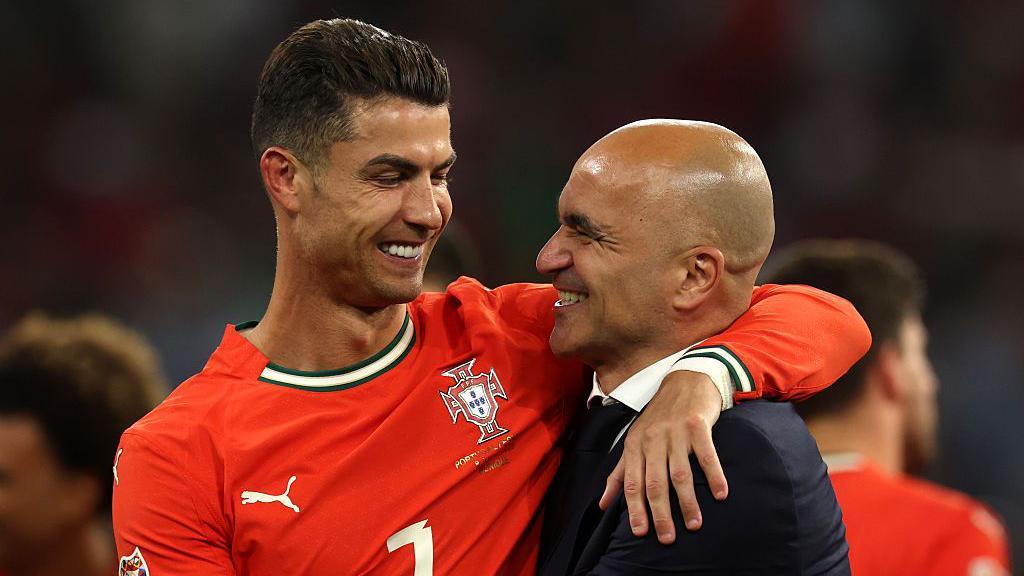
Roberto: Coaching in the Premier League is about tomorrow and it was about preparing the game that is in front of you, preparing the players so they can make a difference in winning the game. International football is about trying to find out the best talent and then to make it in a structured way, to make it competitive – and you’ve got three days to do that. That’s very different to doing it in a club. Everything is more tactically synchronised – everything can be more methodical. International football is about creating good mood, creating a sense of pride, creating high-performance teams that they follow in their dreams because when you represent your national team, it affects your family… the neighbours. If you win, the whole country wins. When you lose, the whole country loses. It’s a completely different way of enjoying the game. I was fascinated about being involved in a World Cup – that was one of my dreams as a kid. The first World Cup I remember – 1978, Argentina – Mario Kempes, scoring in the final, then 1982 was in Spain, so it was a big impact. So for me, the move to international football was just to experience a World Cup. Then I enjoyed it so much that I stayed almost 10 seasons now.