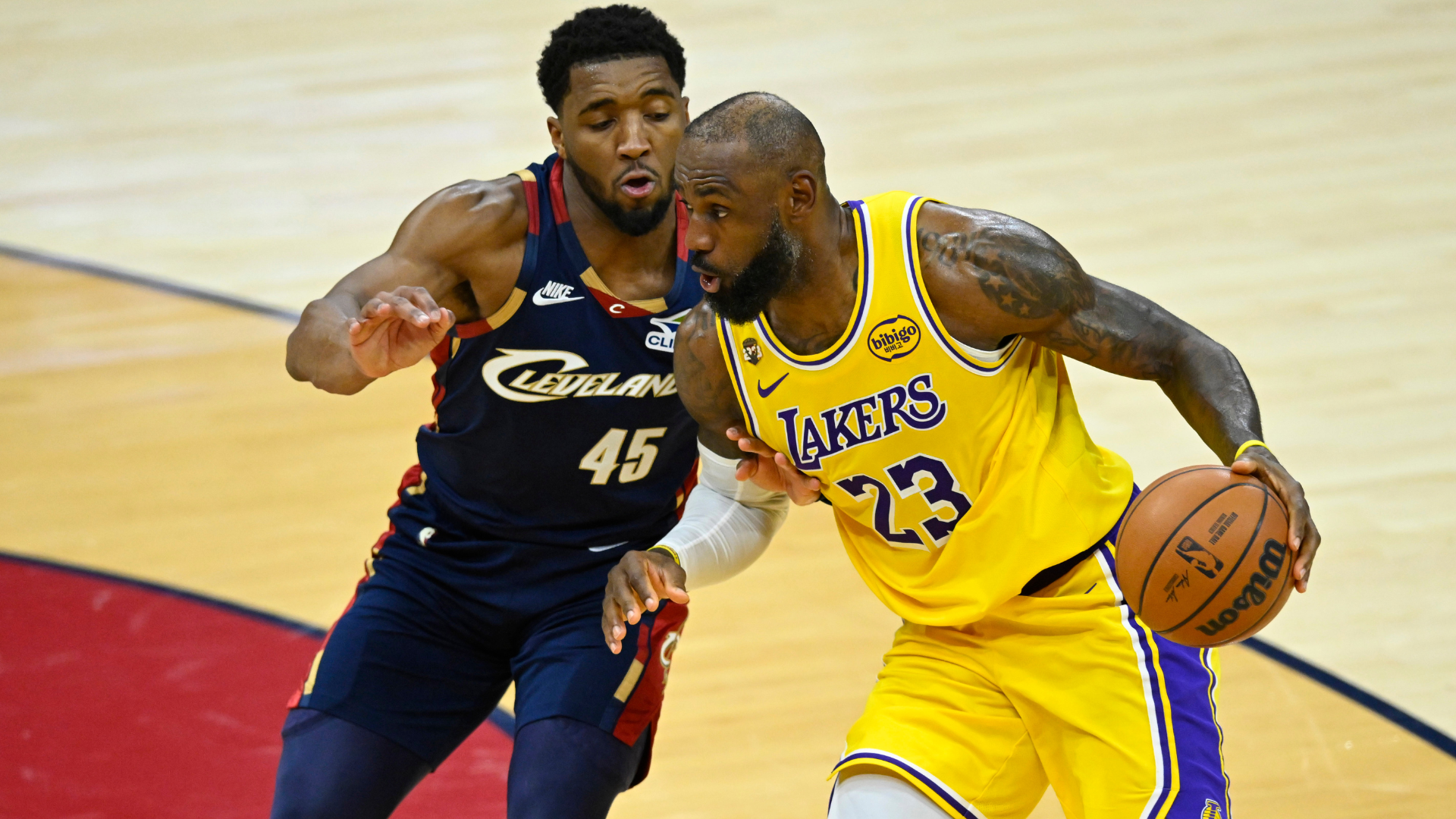
Trading a 26-year-old All-Star for a 36-year-old All-Star sends a certain message. That’s not something you do when you’re satisfied just competing. The 64-win regular season, the three consecutive playoff berths, the preseason Eastern Conference favorite status, that sort of trade essentially renders all of that stuff meaningless. It’s the sort of move you make when the only acceptable outcome is the Finals. Literally anything less is a failure.The Cleveland Cavaliers spent the first two rounds of the 2026 NBA Playoffs teetering on the edge of calamity. They very nearly lost to Toronto. They looked dead early against the Pistons. Reaching the conference finals against the New York Knicks was a new high for this group. Had they competed earnestly in the series, they perhaps could have justified a quiet summer. When they led Game 1 by 22 in the fourth quarter, they could even start fantasizing about the Finals. And then Jalen Brunson lit James Harden on fire for eight minutes. The Knicks won the game in overtime.
This version of the Cavaliers died that night. The next three games were an extended funeral, no matter what Kenny Atkinson thinks the analytics stated.
Cleveland just had the NBA’s highest payroll. Its 2033 first-round pick is frozen because the Cavaliers exceeded the second apron. Most of its other picks are still owed out through the Donovan Mitchell trade. Speaking of Mitchell, he’s going into a contract year. The 36-year-old that Cleveland imported to support him had his moments in the postseason, but ultimately created more problems than he solved. The youngest core Cavalier, Evan Mobley, hasn’t grown into the star scorer Cleveland hoped he would.
This is a “nobody is safe” sort of defeat. One way or another, the Cavaliers are probably going to look different next season. So let’s go through the roster and figure out who’s staying, who’s going, and who might be coming.
Will Donovan Mitchell extend? Should Cleveland want him to?
The relief in Cleveland when Donovan Mitchell signed a $150 million extension in 2024 was palpable. After two years of exit rumors, Cleveland’s risk in acquiring Mitchell when he wanted to go to New York was rewarded. Yet that extension ultimately secured them only two more years of team control. Now Mitchell is one year away from free agency, unofficially making him a pre-agent. If he doesn’t extend, the trade rumors begin anew.
Cleveland has made retaining Mitchell its primary goal. Mitchell did not want the Cavaliers to sit tight at the deadline, according to The Athletic. He wanted Harden specifically, so they got him. All indications suggest at this point that they will indeed offer him a full, 35% max contract this offseason. He’s about to turn 30. He’s usually available, but often banged up.
His postseason was up and down. His playmaking has all but evaporated. With Harden playing point guard, Mitchell hovered around three assists per game in the postseason. He was held to 20 points or fewer three times by Toronto. Ausar Thompson took him out of large stretches of the Detroit series — Mitchell shot 7 of 26 with Thompson as his primary defender in the series, according to NBA.com tracking data, and the Cavaliers scored an ugly 0.9 points per possession as a team during the possessions in which Thompson guarded Mitchell. Thompson does this to almost everyone, but if you’re paying 35% of the cap for a guard who no longer really defends or passes, the reasonable expectation is that he should be able to score against anyone.
If Cleveland is at all skittish about this contract — and nothing the Cavs have done to this point suggests that’s the case — there will still certainly be suitors willing to pay a hefty price. Mitchell would be an ideal Cade Cunningham running mate, for instance. The Pistons badly need another scorer, but Cunningham can handle the playmaking duties, and the Pistons have far more defensive depth than Cleveland does. Houston and Atlanta are in somewhat similar boats. They’re loaded with assets, have a ton of wings, but could really use a guard. If Mitchell is interested in finally getting to New York, Brooklyn’s lottery plunge potentially opens that door. The Nets have an almost endless collection of picks. They could theoretically get Mitchell and someone else.
Mitchell might make the decision for them. When that happens, the player typically has a destination in mind. Is there an ideal home for Mitchell if he moves? The Knicks, his preferred landing spot in 2022, are off the table at this point. If he cares about market, would he wait for his free agency to try to jump to the Lakers in 2027? Miami has long been rumored to hold interest. Stars often whisper in each other’s ears. Maybe someone recruits him.
For now, the assumption should be that Mitchell is back. That takes us to the next star on the list.
Evan Mobley for Giannis?… Or anyone else?
By any reasonable standard for a No. 3 overall pick, Evan Mobley has been a success. He was a Second-Team All-NBA selection and the Defensive Player of the Year 12 months ago. He was mostly great in these playoffs, too. The 3-point shooting that fell off compared to last season came back. He made plays out of the short roll and did everything Cleveland could have asked of him defensively. But he’s not an alpha scorer. He’s probably never going to be an alpha scorer. Those early career Tim Duncan and Kevin Garnett comparisons did him a real injustice. Mobley doesn’t have to be a top-20 all-time player to deserve his max contract.
But he might have to be closer to that if Cleveland is going to win a championship. It’s not a coincidence that this team’s best regular season by far was Mobley’s best season. The silent hope here was probably that Mitchell would remain at his All-NBA level, but that Mobley would eventually surpass him as the team’s best player. That hasn’t happened. Based on the postseason we just witnessed, it certainly doesn’t seem like Cleveland has someone equipped to be the best player on a champion.
Trading Mitchell means reorienting around Mobley. Either he becomes that player over time or Cleveland uses the assets it gets for Mitchell to find that sort of player for Mobley. He’s perfectly suited to sidekick duties. He won’t get you 30 every night but he’ll do everything else. If Cleveland is going to consider trading Mobley, there can’t be any question. It will be for someone as good or better than Mitchell is today.
The most obvious name, and perhaps the only viable one, is Giannis Antetokounmpo. Mobley was one of the players Milwaukee wanted for Antetokounmpo at the deadline, according to ESPN, but a deal didn’t come. It could be revisited over the summer, though The Athletic unveiled recently that Cleveland, as of now, has shown no interest in such a swap. Emphasis on “as of now.” Things change quickly in the NBA. If Mitchell wants Antetokounmpo and Cleveland is dead set on keeping him, the equation changes.
If Antetokounmpo has specific market preferences, well, that’s a battle Cleveland only tends to win when the star was born there. If he’s open-minded, the Cavaliers check most of the necessary basketball boxes: tons of shooting, a viable co-star in Mitchell, and geographic distance from Oklahoma City and San Antonio, meaning you’d only have to face one of them in the Finals rather than both in the Western Conference playoffs.
That doesn’t mean there wouldn’t be basketball questions here. Antetokounmpo won his Defensive Player of the Year six years ago. Mobley’s was last year. Antetokounmpo has slipped a bit defensively in that time, and without much on the perimeter, asking him to anchor a defense by himself would be precarious.
Sharing a front-court with Jarrett Allen would give Cleveland imposing rim-protection, but Antetokounmpo has only really succeeded next to centers who can shoot. Either that needs to change, Cleveland needs to swap Allen for a shooter, or Antetokounmpo may need to start playing center himself. Maybe the Cavaliers could sneak Myles Turner out of the deal as well to give Antetokounmpo that shooting big, but Turner’s recent comments about Antetokounmpo’s poor punctuality didn’t exactly make it seem as though they loved their brief partnership this season.
Offensively, he wants to be a point guard, or at least a primary ball-handler. How would that work given how dependent Harden is on having the ball? Could Harden be moved with picks for Giannis-centric role players? It’d be tricky. It’s worth noting here that Harden and Antetokounmpo haven’t always had the friendliest relationship either.
Antetokounmpo is almost seven years older than Mobley, and he’s substantially more injury-prone. The Harden trade was all-in. This would be so far in that the “out” line is no longer visible. You’d be great for a few years and probably pretty bad for a while afterward. Is that a worthwhile tradeoff?
You could argue the answer is yes. How do you want to distribute your championship equity? Would you rather have a 10% shot for two years, or a 2% shot for 10? Cleveland spent most of its chips getting Mitchell. If it lets his prime lapse without winning a ring, it will be operating at a disadvantage in trying to win one around Mobley. Ask the Warriors how juggling two timelines goes. If you’re not going to have a shot later anyway, aren’t you best served maximizing the one you have now?
To that end, it’s worth wondering if there are other ways Cleveland could trade future for present. Would it make sense to consider swapping Mobley for Jaylen Brown, for instance? If nothing else, it would solve Cleveland’s long-festering wing problems while addressing all of the front-court losses Boston has sustained over the past year. The Cavaliers are better equipped than most teams to trade a star big today. They can use Allen as their only starting big if need be, though they’d have to invest in backups.
There are some apron issues that would come with this sort of deal. Cleveland would have to shed money. It would also probably demand picks from Boston. They’ve already made one young-for-old trade without getting picks back, and if they’re dangling Mobley without getting an MVP like Antetokounmpo back, they almost certainly wouldn’t do that again. It’s a tricky and unlikely concept. It probably isn’t even an advisable one. There are only a handful of bigs in the NBA who can do everything Mobley does. Giving him up would be a panic trade. These are just the sort of conditions that tend to precede panics.
What to do with James Harden?
As James Harden playoff disappointments go, this one was pretty benign. He helped Cleveland largely survive the Mitchell bench minutes throughout the postseason. The Cavs don’t beat the Pistons without him, and his pick-and-roll with Mobley became their primary source of offense in that matchup. There were genuine moments of positivity.
He’s also 36, and that made diagnosing the bad moments far easier. He’s just not the same player he once was. Forget about Ausar Thompson and Scottie Barnes. They made him invisible when they guarded him, but they do that to everyone. Harden wasn’t even creating huge advantages when he switch-hunted weaker links like Duncan Robinson. His own defense was as invisible as it’s ever been, with Game 1 against the Knicks among the worst stretches of even his career on that end of the floor. At this stage, he’s a regular-season floor raiser. He can be a part of a high-level playoff team. He’s just no longer someone who should be treated as a playoff superstar.
Perhaps the biggest question of Cleveland’s offseason is what was, or wasn’t, discussed about a possible contract extension when the trade happened. Nothing official could be done at the deadline, but informal promises are made frequently. Harden says he got one from Daryl Morey in Philadelphia that the 76ers ultimately reneged on, leading to his infamous “liar” comments and the trade that followed. He has an unusual contract, a $42.3 million player option with only $13.3 million guaranteed. That leaves Cleveland three realistic options:
- Cleveland could work with Harden on a long-term deal. That would probably mean opting out and lowering his cap figure for this season, but getting multiple years in exchange. If the Cavaliers need to create only a little bit of flexibility for some other move, this is probably the play. It’s also the likeliest option.
- Cleveland could simply tell Harden he is welcome back on that player option, but no extension will be discussed. Harden has historically gotten grumpy when he hasn’t been given the contract terms he’s wanted. This would no doubt fester into the season. It would also make Harden a giant expiring salary that Cleveland could potentially use for trade purposes. With lottery reform punishing the worst teams, his floor-raising might have a market. He’s not especially valuable anymore, but could make sense for certain suitors. The Cavaliers may also simply decide they’re pivoting after next season but want him for one more year. This is probably Cleveland’s best option, but it’s not as likely as an extension. Mitchell wanting Harden gives him some leverage.
- Cleveland could waive Harden. He only has $13.3 million in guarantees, and the Cavaliers could use the stretch provision to spread that over three years. As of right now, the Cavaliers are roughly $3.4 million above the projected second apron for next season (including their first-round pick). Waive-and-stretch Harden and Cleveland saves around $38 million for next season, taking them comfortably below the luxury tax. They could then use that flexibility for other moves. There’s a certain free agent whose initials are “L” and “J” they might like to spend the nontaxpayer mid-level exception on, for instance. This is still the least likely option. Harden, for all of his foibles, is still a useful player, and the optics of waiving him after trading Darius Garland to get him would be brutal.
Whatever the case may be here, the Cavaliers have to recalibrate their expectations for Harden. He’s not his Houston self anymore, and the sooner the Cavaliers accept that, the sooner they can go about figuring out what sort of role — if any — they still want him to occupy on this roster.
Is the supporting cast fixable?
We’ve been mocking Jarrett Allen-for-a-wing trades for years now. If there are no other big moves here, now is probably the time for this one. The five-year, $100 million contract Allen signed in 2021 was, by and large, a bargain. He gets a raise starting next season on a new three-year, $90 million pact. That takes Allen to the top of the non-star center market, and it commits almost $80 million in salary next season to a two-big front-court that neither rebounds at an elite level nor guarantees a high-level defense (they ranked No. 14 this season).
Centers are back in vogue. Someone would pay handsomely to get Allen, especially coming off of the best playoff run of his career. Is Mobley ready to play center full time? He played much more there this season, yet Cleveland’s lineups, for the second season in a row, fared better with him at power forward. There’s some noise baked into those numbers. Mobley’s power forward minutes came mostly with the other starters.
There are real problems on both sides. Mobley’s switching and help-defense are vital, but Allen is the more traditional rim-protector. If Mobley’s shooting were steadier, this would be simple. It isn’t. The Mobley-Allen partnership was tenable when both were cheap. Now that it’s expensive, the fact that Cleveland doesn’t derive the standard benefits of a double-big lineup makes it cumbersome.
Cleveland’s tradable draft capital is minimal, but not nonexistent. They have the No. 29 pick in this year’s draft, plus their unprotected pick in 2031 and swaps in 2030 and 2032. If they wanted to really go looking for a role player upgrade, their best chip is probably Jaylon Tyson, who still has two years left on his rookie deal. Don’t expect Cleveland to dangle him lightly. “We talk about Evan Mobley as our future,” Koby Altman stated in a post-deadline press conference. “We need to start adding Jaylon Tyson to that conversation.” Cleveland can’t aggregate salaries so long as it remains above the second apron. One way or another, they’re shedding money if they’re making changes.
The core problem with their wing rotation is that none of them are reliable on both ends of the floor. Cleveland started Dean Wade for his defense for most of the playoffs. He attempted seven total shots in the last five games of the Pistons series and didn’t make a free throw for almost four full months. Sam Merrill is one of the NBA’s best shooters, but a negative defensively. Max Strus comes the closest to reliable two-way wing play, but he’s small, missed most of the year and runs hot and cold.
Cleveland has thrown every imaginable resource at this problem besides Allen. Isaac Okoro was a top-five pick. Strus was an expensive free agent. De’Andre Hunter was a big-name deadline acquisition. Nothing has quite stuck. They’ll either have to use that meager remaining draft capital to take another shot or they’ll have to dangle Allen for someone a bit more reliable.
Is LeBron coming to the rescue?
If LeBron James is coming for the minimum, great, you take him. Even if he wants the mid-level exception, Cleveland has ways of clearing it out both with Harden and without him. He’d be an undeniable asset in a variety of ways. His playoff résumé is unimpeachable and would serve as an insurance policy against the shakier history of some of this roster’s core players. His experience with Luka Dončić and Austin Reaves has taught him how to function as a third option offensively. He’d be fine with Harden and Mitchell in that respect, and would probably benefit from managing his workload over the course of the season. He can ratchet up his defense when needed. He’s still the greatest problem-solver in NBA history. He was better than any Cavalier this postseason.
But the Lakers have home-court advantage here, full Bird Rights they can use to pay him more than Cleveland and a formula that looked far more promising when the team was healthy than anything the Cavaliers showed this season. Cleveland’s best hope for getting LeBron hinged on two factors that have seemingly faded: its superior championship equity and waning interest from both James and the Lakers in maintaining their partnership. The Cavs and Lakers had nearly identical regular-season records. But, given the circumstances, the Lakers winning an extra game is far more impressive. If there was any midseason bitterness between James and the Lakers, it has seemingly faded. This doesn’t rule Cleveland out. It just makes a second reunion less likely than it seemed a few months ago.
Besides, James isn’t the silver bullet he was 12 years ago. He’s no longer the best player in the world. He’s going into his age-42 season and would be playing alongside a 37-year-old co-star guard in Harden, who’s never been known for night-to-night effort. Immediately, their transition defense would be a mess. They’d need youth and athleticism as a counterbalance for the two of them, and though nobody is going to leave James wide open, he’s not nearly the shooting threat some of Cleveland’s other wings are.
He might have to play power forward in Cleveland, which would mean moving Mobley to center and finding a trade for Allen. The better solution, at least in a playoff context, would probably involve using Harden’s expiring contract and their remaining trade capital to seek defensive-minded role players. James can shoulder the playmaking burden so Mitchell wouldn’t have to, much as he did alongside Kyrie Irving. Dennis Schröder can soak up regular-season usage to keep him fresh, or the Cavaliers could add another guard to do so.
NBA politics tend to prevent players like Harden from coming off the bench. He probably should on a team with James and Mitchell — or perhaps James, Mitchell and Antetokounmpo. At a certain point, there’s not enough ball for all of those stars. There are eventually diminishing returns for shot-creation. The Raptors and Pistons just showed Cleveland how important dirty work role players can be. You’re never stopping anyone in the regular season with Mitchell, Harden and James playing next to two bigs. Either Allen goes and gets replaced by someone who can guard opposing stars or Harden comes off the bench for someone who can do so.
James would be an enormous help and would probably come on some sort of value contract. He is not fixing everything. Even if Cleveland gets him, it probably still needs to address these bigger problems. The last time James returned to Cleveland, he brought Kevin Love with him. Don’t be surprised if some version of that story plays out again this summer. James may come home, but the roster would still change quite a bit around him. At this stage of his career, he’s a finishing piece. If you have the right balance of shooting and playmaking and defense around him, he’ll amplify everything. If Cleveland expects him to be the savior again, we’ll probably be having the same conversations again in a year.