We’ve reached the end of May, which means the season is about one-third of the way done. It’s showing its wear now, with “early-season noise” becoming less and less of an excuse for aberrant performances. So let’s come up with some new ones. Even now, a lot could change. Baseball is defined by its uneveness, which is why it takes 162 games to get to the bottom of what’s actually real (and even then, there can be fakeouts). It’s hardly uncommon for a player to be miserable for two months of the year and aces for the other four. It’s just more conspicuous when the bad months are the first two. Not every player can get the benefit of the doubt, of course, but the ones who most deserve the most generally fall into two categories: Those with a strong data set, meaning exit velocities, spray angles and plate discipline readings that belie their poor production. Those with strong track records, meaning such a clear history of standout production that it’s reasonable to presume everything will fall back in line even if the underlying data suggests otherwise.Someone who fit both descriptions a short while ago was Ketel Marte. He’s been an early-round fixture at one of the weakest positions in Fantasy, and his Baseball Savant page has been splashed in red all season long. Eleven days ago, he was batting .209 with a .619 OPS. Now, he’s batting .275 with a .797 OPS. That’s how quickly things can turn around.
I’m still counting on these 14 players turning their seasons around for similar, if slightly more fallible, reasons, and I’m asking you to keep the faith in them as well. Keep the faith
Ronald Acuna Jr.
RF
ATL
Atlanta
• #13
•
Age: 28
2026 Stats
AVG
.242
HR
2
SB
7
OBP
.358
OPS
.713
AB
149
Because of a hamstring injury that sidelined him for most of May, Acuna’s sample is only two-thirds the size of most other hitters, making it more susceptible to the early-season noise that we should all know to tune out by now. Even last year, when he hit .290 with a .935 OPS, included a 48-game stretch when he hit just .196 with a .689 OPS. He’s at 40 games now.
Pete Alonso
1B
BAL
Baltimore
• #25
•
Age: 31
AVG
.235
HR
10
RBI
33
R
30
OPS
.760
AB
204
Alonso’s .284/.337/.545 slash line in May is more along the lines of what everyone expected from him and perhaps makes the case all on its own, but I’ll add that his 95.1 mph average exit velocity is in the 99th percentile and the highest its ever been. His plate discipline readings are also as good as ever, and there’s absolutely nothing in his profile to suggest he won’t be a top-five first baseman this year.
Bo Bichette
3B
NYM
N.Y. Mets
• #19
•
Age: 28
AVG
.227
HR
5
OPS
.597
AB
220
BB
15
K
41
It’s possible Bichette is still suffering from the PCL sprain that sidelined him for most of the postseason, which could pose a problem given that the one blemish on his track record came when he was playing through injury in 2024. But he already has more home runs (five) than he did then (four), and his .275 xBA would suggest he deserves better than he’s gotten so far.
Jazz Chisholm
2B
NYY
N.Y. Yankees
• #13
•
Age: 28
AVG
.247
HR
5
SB
13
OPS
.713
AB
190
K
61
Like Pete Alonso, we’ve seen significant improvement from Chisholm already with the change to May, but the overall numbers are still lagging from a miserable April. Mainly, it’s the home run output that’s drawing short, but his pull-air rate remains right where you want it for a left-handed hitter at Yankee Stadium. The skill set remains intact, in other words, and I think he’s just due for a hot streak, which is reflected by him having half his usual barrel rate.
Pete Crow-Armstrong
CF
CHC
Chi. Cubs
• #4
•
Age: 24
AVG
.223
HR
6
SB
12
OPS
.673
AB
193
K
56
Enough skepticism surrounded Crow-Armstrong at the beginning of the year that it’s easy to lose heart with this slow start, but a hallmark of his volatile skill set is that he tends to run extremely hot and cold. The disparity between his August and September two years ago and his first and second half last year pretty much sums it up. Better days are likely coming on the hitting side, and the speed should hold you over in the meantime.
Vladimir Guerrero Jr.
1B
TOR
Toronto
• #27
•
Age: 27
AVG
.287
HR
3
OPS
.758
AB
188
BB
28
K
23
Guerrero is batting .287 with more walks than strikeouts, so the disappointment here mainly comes down to him having only three home runs. That’s through 53 games, which indeed puts him behind last year’s pace, but he had just four home runs through 42 games then. Power droughts are common for him because of a suboptimal spray angle (too many ground balls and opposite-field hits), but as long as he’s hitting the ball with a authority (and he is), you can trust him to deliver his usual 25-30 homers.
Gunnar Henderson
SS
BAL
Baltimore
• #2
•
Age: 24
AVG
.221
HR
11
SB
6
OPS
.695
AB
226
K
69
After hitting just 17 homers in 651 plate appearances last year, Henderson is already up to 11 in 244 plate appearances this year. It seems like a deliberate choice, judging from the nearly doubled pull-air rate and increased willingness to chase pitches out of the zone, but unfortunately, every other positive trait has been skewered in the process. I suppose you could take that as a sign that he’s lost his way, but I’m choosing to read it as an overcorrection that he’s capable of dialing back once frustration begins to set in.
Manny Machado
3B
SD
San Diego
• #13
•
Age: 33
AVG
.170
HR
8
OPS
.595
AB
182
BB
25
K
50
This one does give me some pause seeing as most every major Statcast indicator is down for a 33-year-old with a ton of mileage, but the ones that I think would be the clearest indicators of age — average bat speed, fielding range and performance against fastball — are dead-on or even improved from a year ago. The track record is so robust here that Machado’s struggles would have to persist through the All-star break for me to shift my expectations meaningfully.
Josh Naylor
1B
SEA
Seattle
• #12
•
Age: 28
AVG
.250
HR
5
SB
12
OPS
.667
AB
200
K
32
Naylor has already answered the biggest question of whether he can remain a prolific base-stealer despite his basement-level sprint speeds, his 12 steals putting him on a 35-steal pace. His hitting stats are lagging, but his .282 xBA and .426 xSLG make him out to be one of the biggest underachievers so far and are right in line with his .271 xBA and .436 xSLG last season.
Austin Riley
3B
ATL
Atlanta
• #27
•
Age: 29
AVG
.223
HR
8
RBI
31
R
27
OPS
.673
AB
202
Detractors are quick to point out that Riley’s 2026 fits right in with the decline trend we saw in 2024 and 2026, but a quick look at his history will tell you he’s always saved his best for the summer months. That familiar midseason surge was just starting when he suffered a season-ending wrist fracture in 2024, preventing his numbers from normalizing fully, and he missed much of a second half last year as well. His Baseball Savant page suggests he’s just a little off in most measures, but red in the areas where he’s supposed to be red.
Tyler Soderstrom
LF
ATH
Athletics
• #21
•
Age: 24
AVG
.201
HR
5
OPS
.661
AB
194
BB
22
K
43
The most obvious changes for Soderstrom this season — an improved pull-air rate along with career-best strikeout and and walk rates — would normally correspond with a statistical bump, which makes his slow start all the more perplexing. His contact quality has dipped some, but without a change in bat speed, and his favorable home environment should make for a quick correction once the regression hits.
Kyle Tucker
RF
LAD
L.A. Dodgers
• #23
•
Age: 29
AVG
.246
HR
4
RBI
26
R
35
SB
4
OPS
.751
Though it’s tempting to presume the worst for Tucker after his bumpy (and injury-plagued) finish with the Cubs last year, everything in the underlying data set looks about the same as it always has with the exception of a barrel rate that’s been halved. So his batted-ball events are averaging out to something typical, but he’s missing the highest-end ones that yield the most damage, which I’ve always taken to be a good indicator of how “hot” or “cold” a player is. His upside in the Dodgers lineup remains enormously high whenever he does heat up.
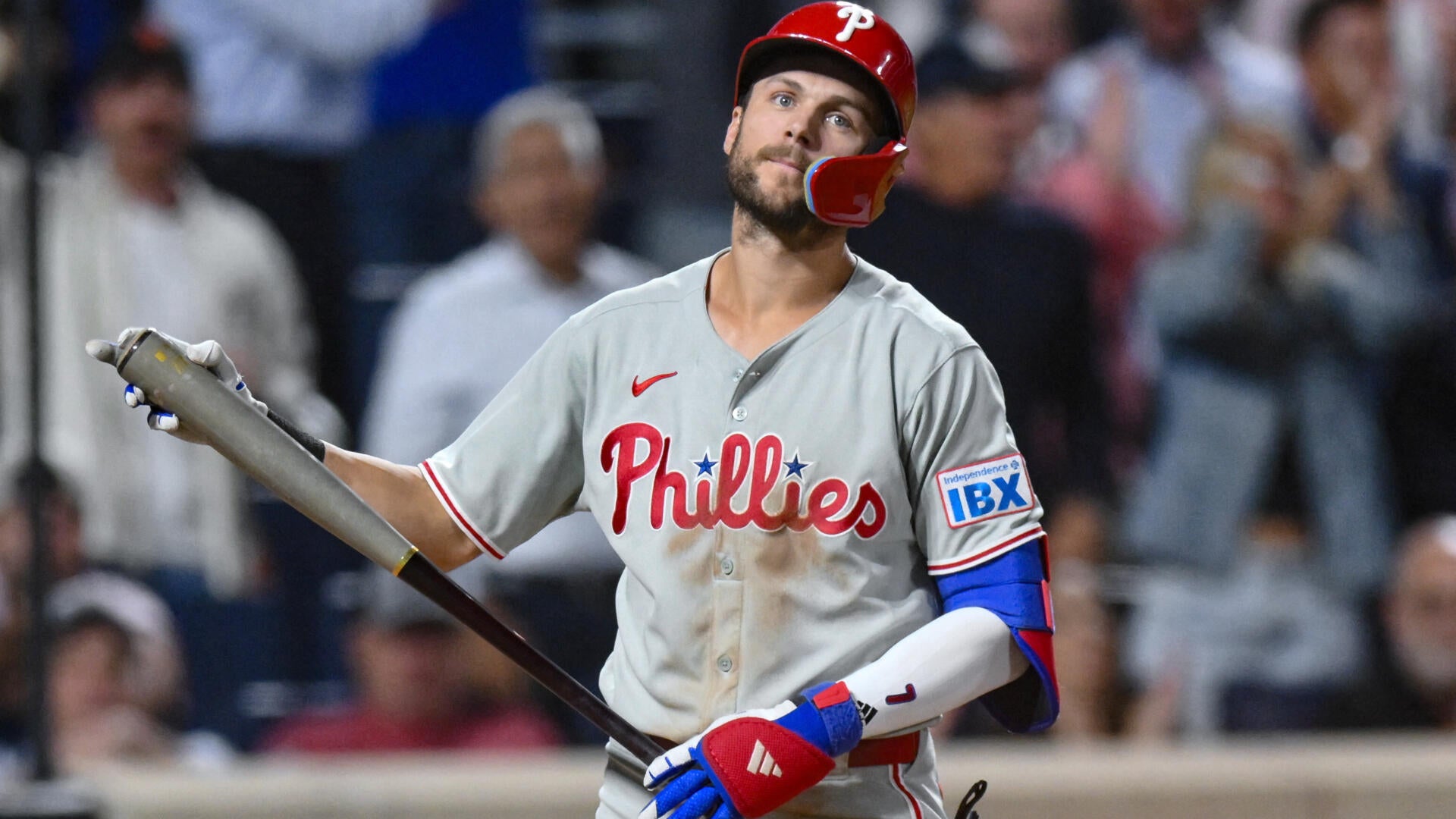
Trea Turner
SS
PHI
Philadelphia
• #7
•
Age: 32
AVG
.221
HR
5
SB
9
OPS
.608
AB
217
K
52
Seeing as Turner turns 33 this year, nobody would be surprised in the slightest if he began exhibiting signs of decline, but even with this slow start, I’m not seeing any real evidence of that. His sprint speed remains in the 99th percentile, his average bat speed is right in line with career norms, and he’s still stinging fastballs to the tune of a .352 batting average. The telltale indicators of age-related decline simply aren’t there, which would suggest better days are ahead.
Framber Valdez
SP
DET
Detroit
• #59
•
Age: 32
W-L
2-3
ERA
4.28
WHIP
1.33
INN
61
BB
23
K
50
Even within individual seasons, we’ve seen Valdez rise and fall on the strength of his curveball, and its usage and effectiveness so far would suggest that he hasn’t gotten a great feel for it yet. Other indicators like velocity and arm angle are normal, so I think you should trust in the historical trends here.