Why Pochettino’s fluid USA midfield is thrivingImage source, Getty ImagesImage caption, Mauricio Pochettino’s USA team scored four goals against Paraguay from six shots on target with an expected goals of 1.34ByUmir Irfan
For the past couple of seasons, many teams looking to dominate the ball have done so in a rigid manner.
A very common shape in possession has been the 3-2-2-3 set-up, with a box in midfield – teams such as Manchester City, Chelsea and Arsenal have moved a full-back into midfield to achieve this.
In this World Cup, teams have been willing to reimagine that strict structure, taking a more fluid approach on the ball and one of the best examples has been Mauricio Pochettino’s USA.
Here we analyse the shape, movement and intention behind their unique approach as they look to continue their fine start to the World Cup when they face Australia in Group D on Friday (20:00 BST).
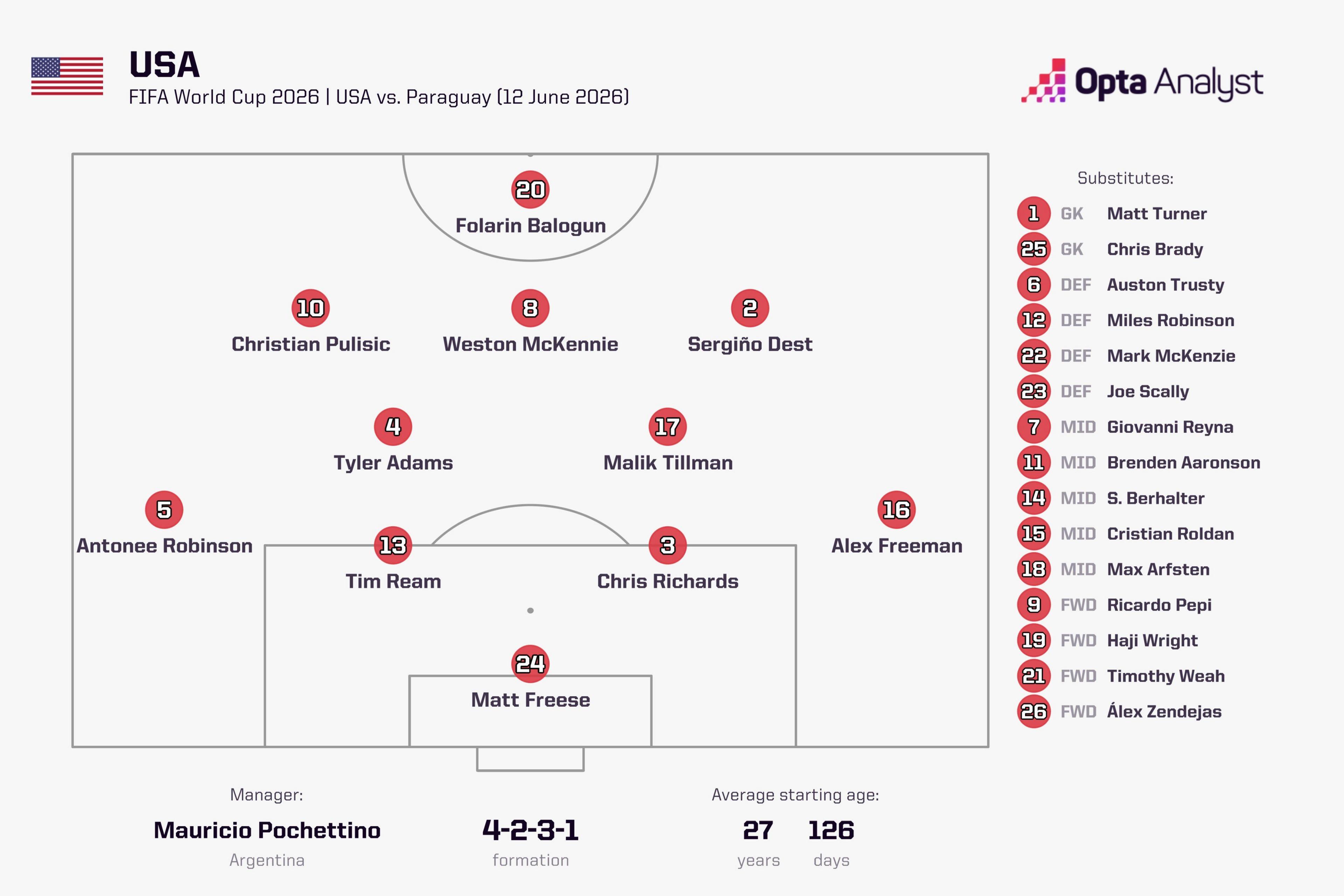
There was a difficulty in pinpointing the formation USA used in their impressive 4-1 win against Paraguay last Saturday.
On paper, you could argue it was a 4-2-3-1 shape with Sergino Dest as the right winger.
When USA got on the ball, however, it looked more like a three at the back – a fairly common tactic.

Image source, OptaUSA’s starting XI against Paraguay in their opening World Cup match was set up in a 4-2-3-1 shape, but moved away from that
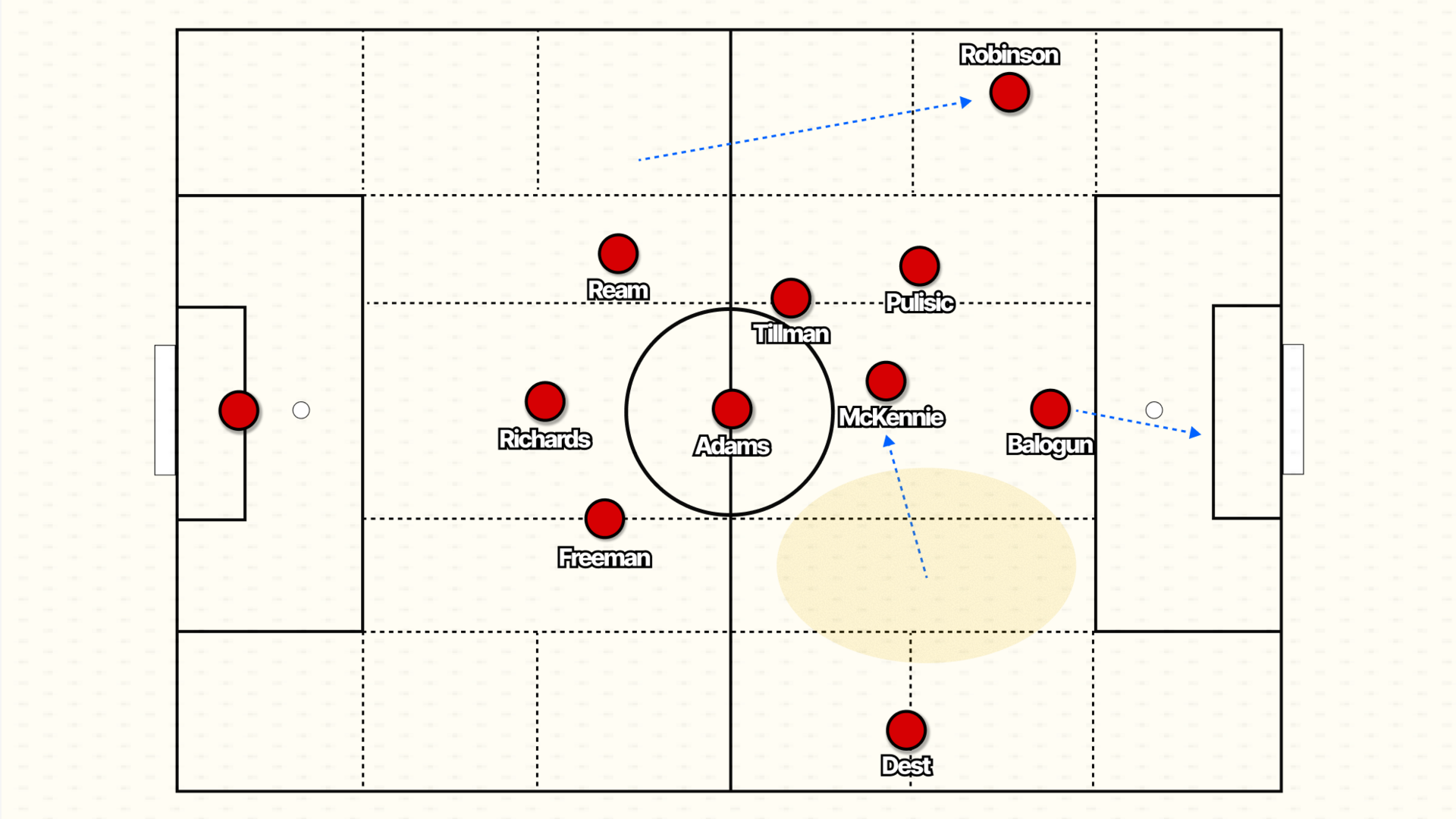
The USA’s right-back Alex Freeman and centre-backs Chris Richards and Tim Ream formed a back three with central midfielder Tyler Adams positioned in front of them.
Left-back Antonee Robinson pushed up and mirrored Dest’s more advanced role on the other side – both of them hugging the touchline.
Folarin Balogun stayed high up the pitch in a striker’s position.
Left-winger Christian Pulisic moved in-field from the wing and adopted a central position alongside midfielders Malik Tillman and Weston McKennie.
For many coaches using a traditional positional system, Adams and Tillman would probably have sat at the base of the box in midfield – with Pulisic in the left attacking-midfield position and McKennie to his right.
The USA’s approach, however, was different.

USA’s 4-2-3-1 changed shape in possession to something resembling the above. Position changes here include Freeman moving from right back to right centre-back, Robinson pushing up on the left, Pulisic moving in-field and McKennie moving from a right #10 position towards the left side of the pitch.
What we saw instead was a system where only certain players being tasked with holding their position.
This included the three central defenders, the two wing-backs and the striker.
The four players making up USA’s ‘box’ – Adams, Tillman, McKennie and Pulisic – were allowed to roam more freely between positions, move close to each other and play on the same side of the pitch.
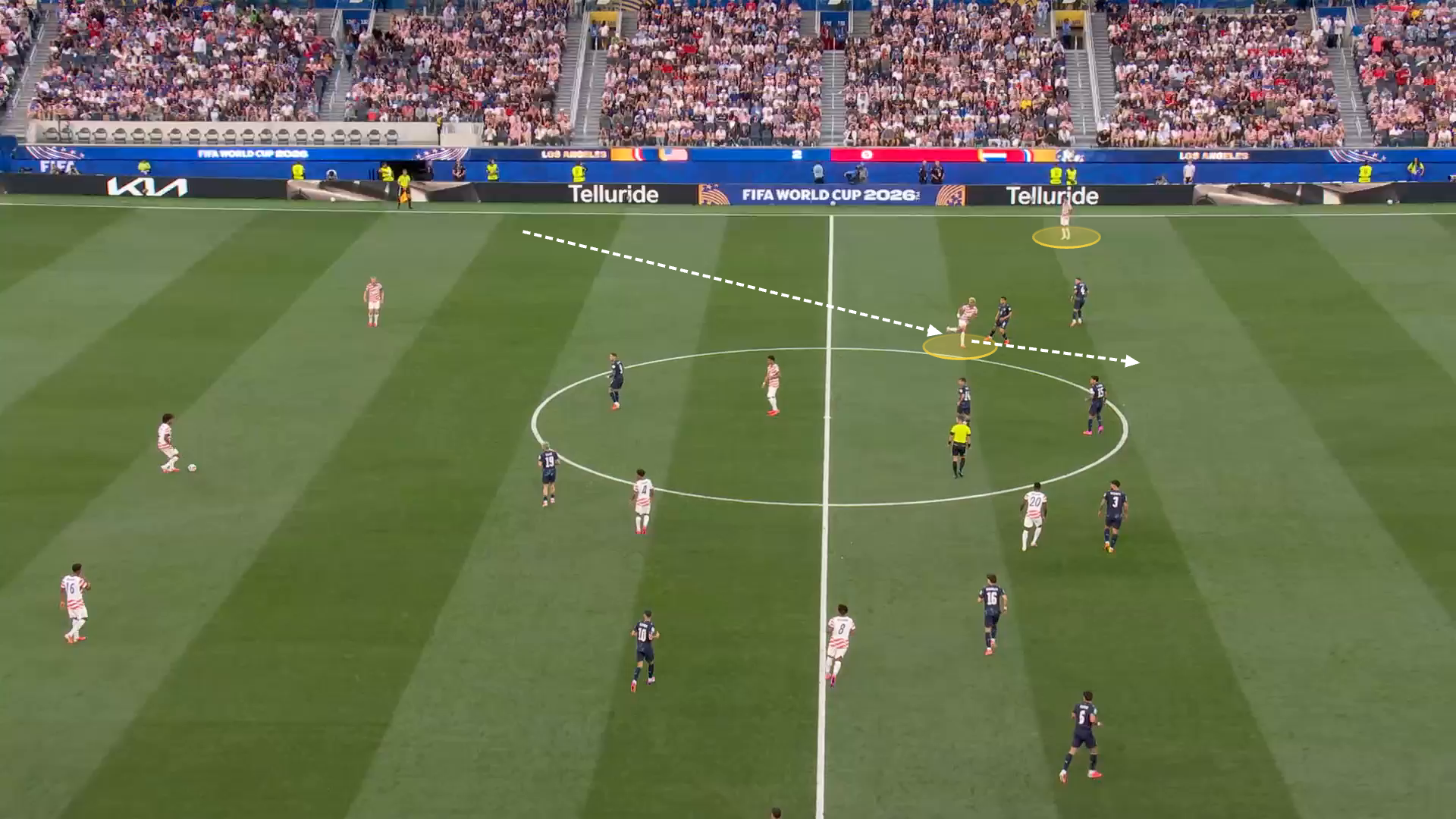
In addition, there was some fluidity between Pulisic and Robinson as they swapped roles at times, with one acting as the roaming central player, and the other as the rigid wide-left player.

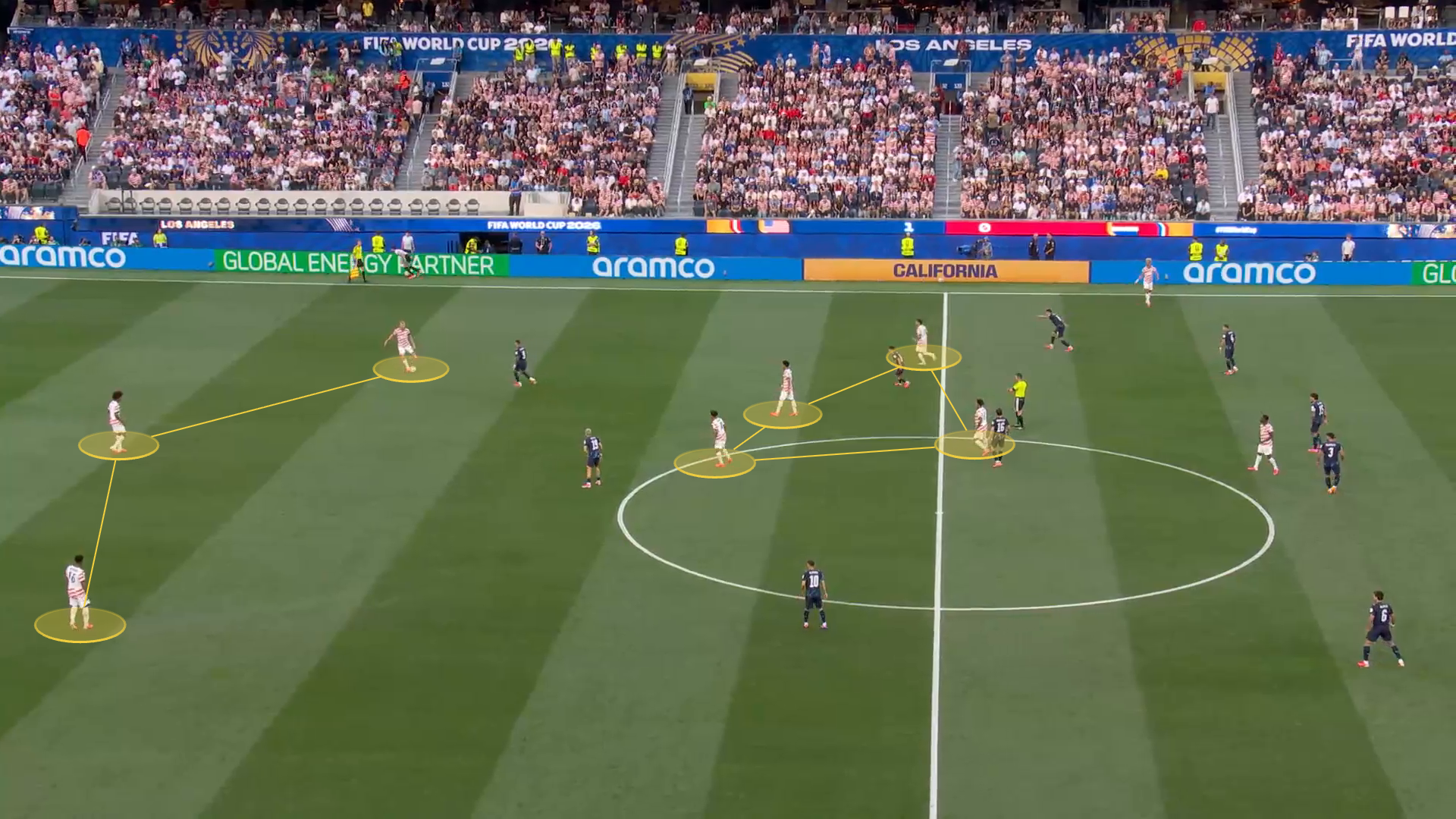
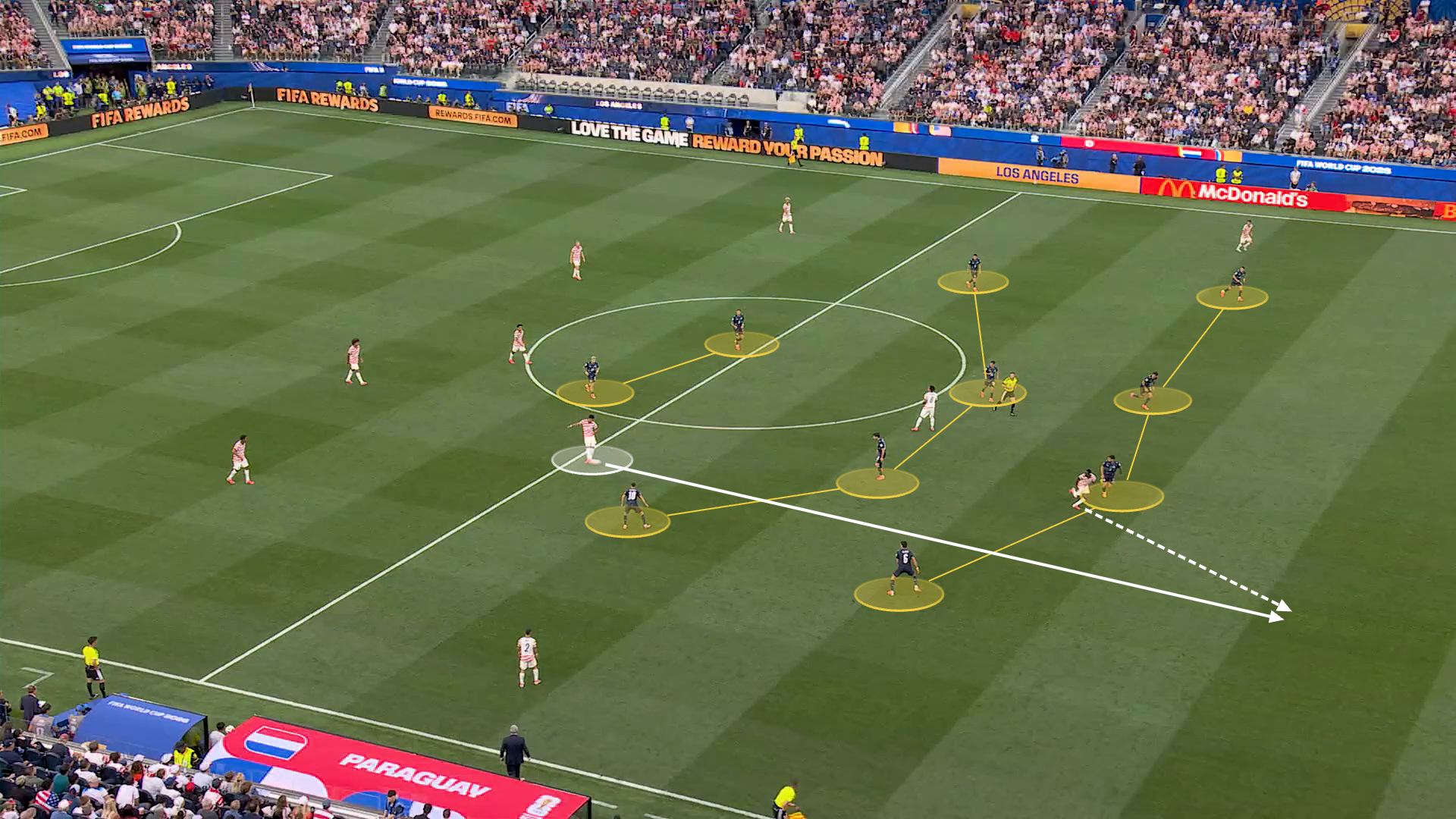
Here is a good example of USA’s fluid midfield four. McKennie has placed himself near his three midfield team-mates, leaving the right half-space empty. With a four against three in that area of the pitch, USA are best placed to play quick combinations before looking to find their attackers in space

Here we can the swapping of Pulisic and Robinson. In this example, Robinson inverts into the fluid midfield four with Pulisic positioned on the touchline for balance. Out wide, Pulisic was able to showcase impressive one-against-one dribbling throughout the match.
This approach posed problems for Paraguay who defended in a zonal manner – meaning players were tasked with defending specific areas rather than individual players.
The US midfielders being able to move freely meant they could step into areas of the pitch between those zones that Paraguay were tasked with defending.
This resulted in those players often being unmarked with time and space on the ball.

Paraguay’s zonal 4-4-2 allows the USA’s roaming midfielders to pick up positions between their zones unmarked. Tillman here gets the ball between the striker and the left midfielder with neither picking him up. Given Paraguay’s higher defensive position, space opens up in behind for Balogun to run onto before scoring
By playing in close proximity to each other in the middle of the pitch, the US found another benefit.
Small-space passing combinations helped draw Paraguay up towards the ball and combined with clever off-ball movement to stretch the pitch, resulted in the US being able to find their striker with few players around him.
Pochettino’s men looked to thread through-balls in behind and early after enticing Paraguay’s press – and the speedy Balogun was able to turn those chances into goals.
It was impressive to see a side play in a manner that did not follow the typical shapes and patterns seen at club level.
Against more impressive opposition, they may revert to a more defined positional approach.
But the tactics they used worked to maximise their players’ qualities – the attacking runs of Balogun, the dribbling quality of Pulisic, the engines of McKennie and Adams, and the pace of Robinson or Dest.
✔ today silver rate
✔ 2026 winter olympics
✔ chat gtp
✔ silver rate today
✔ silver rate today live
✔ 2030 winter olympics
Sports