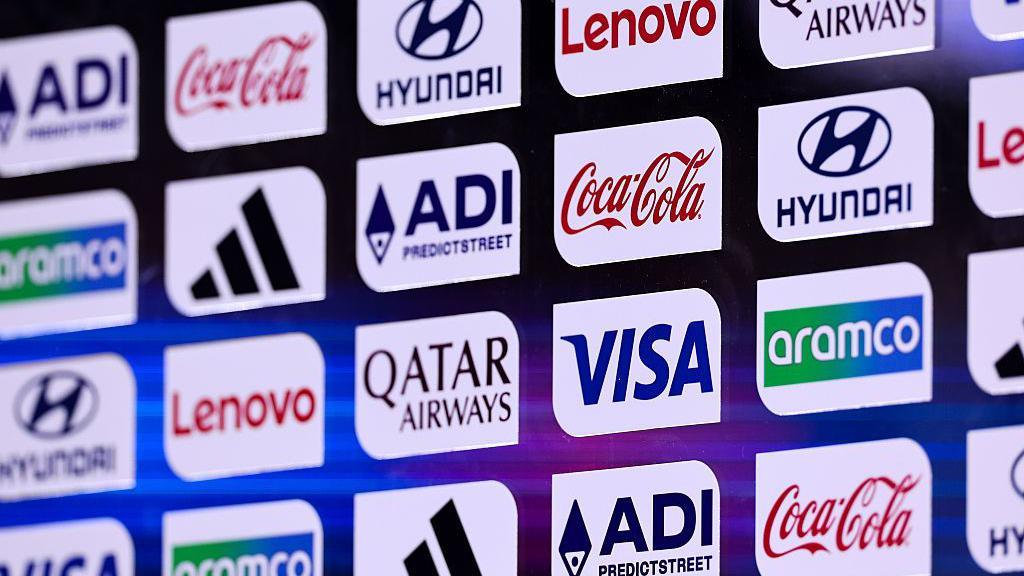
How brands banned from the World Cup became the storyImage source, Getty ImagesImage caption, World Cup stadiums have been asked to cover up sponsors that are not official Fifa partnersByAdam BrittonSports marketing expertPublished1 hour agoLevi’s was not supposed to be one of the biggest brands at this World Cup. Neither were Heinz or Beats.In fact, Fifa has spent much of this tournament trying to make sure fans see less of them. Which is precisely why everyone seems to be talking about them.Outside the Levi’s Stadium in San Francisco, the iconic Levi’s logo has been covered up with a white tarpaulin. Inside the press box, Heinz logos on ketchup bottles have been taped over.Even players have not escaped – Germany’s Jamal Musiala was photographed pre-match with masking tape covering the Beats logo on his headphones.None of these brands are official Fifa sponsors, yet all three have found themselves at the centre of one of the World Cup’s most unexpected stories – arguably generating more conversation than brands that paid millions to be there officially.It’s called the Streisand Effect – a phenomenon named after singer and actress Barbra Streisand, whose attempts to remove photographs of her home from the internet only increased the number of people who saw them.
When we try to suppress something, we often make it more visible, and Fifa appears to be living it in real time.