NBA scouts, fans and executives eagerly awaited the 2026 draft, and the newest rookie class hasn’t disappointed in its first few weeks in the league.
Except for No. 20 pick Jayden Quaintance and No. 21 pick Karim Lopez, who are injured, every first-round selection appeared in multiple games at the Las Vegas summer league.
Which means it’s time for some way-too-early rookie rankings, based on the best rookies’ potential and their initial showings at summer league. In this exercise, we’ll rank the top 11 picks from the 2026 draft, who have been impressive or notable on the court this summer. (That count stops at 11, alas, because No. 12 pick Aday Mara of the Oklahoma City Thunder looks like he has a long way to go before contributing to a championship contender.)
Note that this is a ranking of the players’ quality right now, rather than long-term projection, and it’s inherently subject to small-sample variance. I saw all of these youngsters play at least once in Las Vegas, but none of them more than twice.
Before we begin, the following rookies all deserve at least a brief mention for their performances: the Cleveland Cavaliers’ Meleek Thomas, the summer league scoring leader at 28.3 points per game; the Philadelphia 76ers’ Labaron Philon Jr., a smooth offensive operator; and the Toronto Raptors’ Allen Graves, a steals machine who could be an absolute terror playing with Scottie Barnes, Collin Murray-Boyles and (maybe) Kawhi Leonard.
Now, on to the top 11 rookies, with some shuffling of their draft order based on summer play.

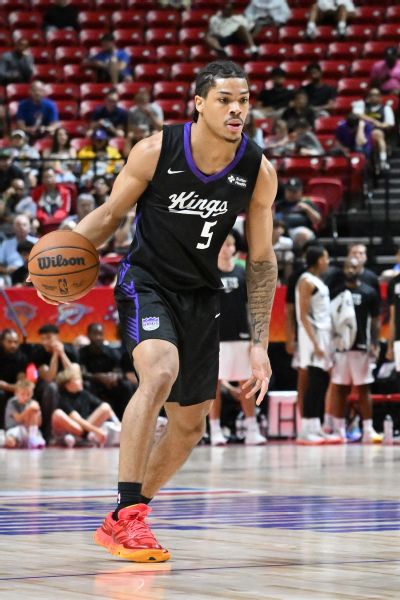
11. Darius Acuff Jr., Sacramento Kings
2026 draft pick: 7
Let’s start with the positive: Acuff looks the part of a lead creator. As he threaded several nifty passes through traffic in Vegas, I grew excited to watch him partner with Domantas Sabonis in pick-and-rolls and handoffs this season.
But Acuff also checked off almost every negative box for a small guard. He didn’t assuage any concerns about his lackadaisical defense, especially off the ball. And his offensive efficiency was subpar in all but one game. Including his play in the California Classic, Acuff shot 35% from the field, 27% on 3-pointers and 70% on free throws this summer.
Those percentages will surely tick upward in a larger sample in the regular season. But given his other limitations, Acuff needs to be a transcendent offensive talent to truly succeed in the NBA, and he’s shown some early reasons to doubt that path.
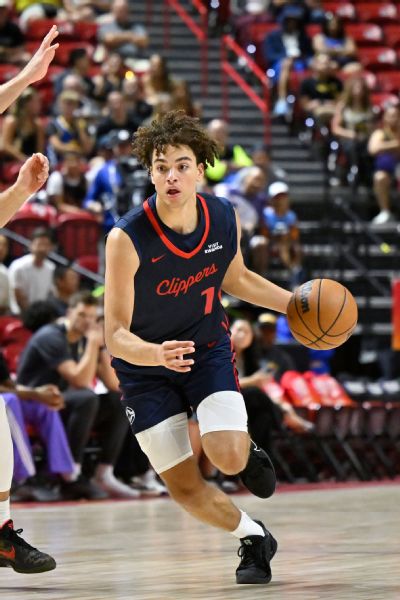
10. Keaton Wagler, LA Clippers
2026 draft pick: 5
Wagler is Exhibit A for why it’s important not to overreact to summer league performances. I watched him struggle through six quarters in Vegas before leaving at halftime of his second game to catch a flight — yet he scored 18 points in a quarter as soon as I left the gym.
With his size (6-foot-5, 188 pounds), smooth 3-point stroke (35% at summer league) and shrewd passing out of the pick-and-roll, Wagler profiles as a lead creator at the NBA level. But he was overly passive for long stretches in Vegas, and a lack of explosiveness meant he rarely created any separation from defenders.
Even his 18-point quarter came mostly from shots beyond the arc; Wagler made just 33% (7-for-21) of his 2-point attempts at summer league, which suggests a rookie year more like Egor Demin’s in Brooklyn than that of a Rookie of the Year contender.
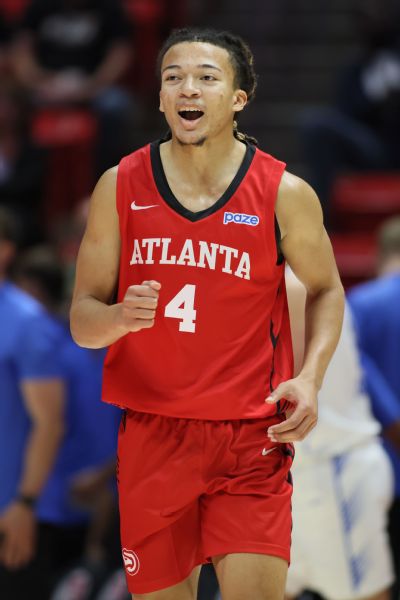
9. Kingston Flemings, Atlanta Hawks
2026 draft pick: 8
Flemings was the best defender among the lottery guards in Vegas, able to stick with opposing guards and hold his own when switched onto opposing bigs. Nets forward Danny Wolf isn’t the most imposing post presence, but it’s still notable that Flemings swiped the ball from the 6-foot-11 player after a late switch in a close game.
More questions surround Flemings’ offense. On the one hand, I saw him score at all three levels in one half at summer league, and he largely looked composed and controlled under pressure. But he also appeared unwilling to drive to his left, and his overall efficiency (32% from the field, counting his play in Salt Lake City summer league) left much to be desired.
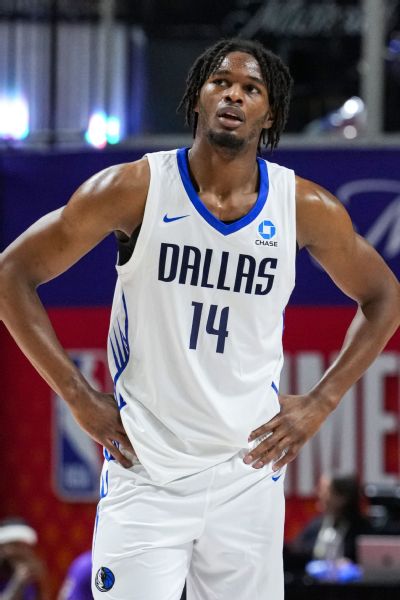
8. Morez Johnson Jr., Dallas Mavericks
2026 draft pick: 9
Johnson was one of the standout performers of summer league despite playing only two games. He made several advanced reads out of the short roll and was extremely efficient inside the arc, making 75% (15-for-20) of his 2-point attempts.
Johnson was even more impressive on the other end, where he was a very active defender with six blocks and five steals in two games. (If anything, Johnson might have been too active, as he had six fouls midway through the third quarter of his debut.)
His jump shot needs work, as he was routinely off to the side — rather than short or long — with his 3-pointers. But for a prospect who seemed like a reach at No. 9 on draft night, Johnson took a big step in Vegas to prove he belongs.
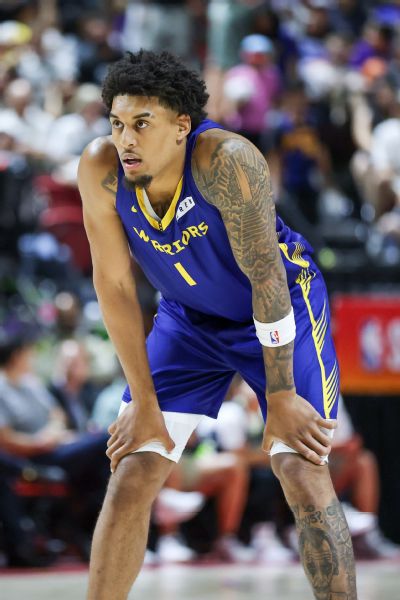
7. Yaxel Lendeborg, Golden State Warriors
2026 draft pick: 11
Remember that this ranking reflects a player’s standing now, so it makes sense that the 23-year-old Lendeborg would be more NBA-ready than many of the teenagers drafted ahead of him.
Included in that package of NBA-ready skills are useful passing chops, solid defense and a promising 3-point jumper, all of which should help Lendeborg fit into a veteran Warriors squad.
Lendeborg was at his most dynamic in transition, routinely driving with strength and bouncing off contact around the rim. One such Lendeborg drive — when he finished over Cameron Boozer with ease — made the summer league highlight reels, and that kind of play was a frequent occurrence throughout Warriors games.
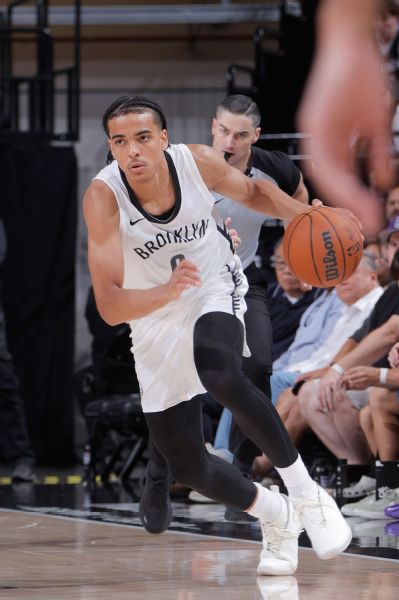
6. Mikel Brown Jr., Brooklyn Nets
2026 draft pick: 6
Brown didn’t have the obvious highlight moments as the players selected above him at No. 6 in the draft, but he turned in a solid two-way performance at summer league. He opened eyes on the defensive end, where he was disruptive in forcing turnovers and standing strong in isolation defense.
On offense, Brown looked comfortable creating his shot, and he was more fluid in getting to his spots than many of the guards in this rookie class. He appears to have the highest ceiling of any of the Nets’ numerous young players.
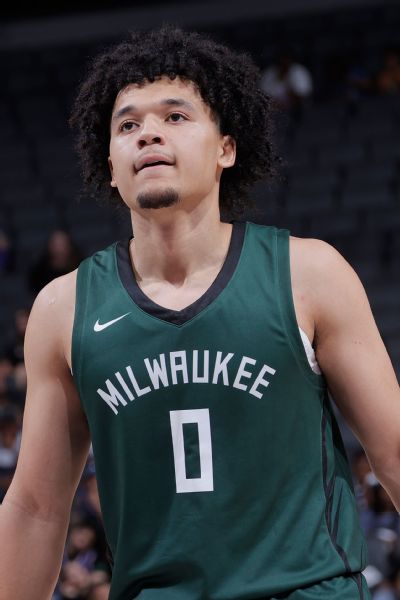
5. Brayden Burries, Milwaukee Bucks
2026 draft pick: 10
Top 10 draft picks ranked by turnovers per game in VegasPlayerTPG1. Brayden Burries0.32. Morez Johnson Jr.1.53. Keaton Wagler1.74. AJ Dybantsa2.05. Cameron Boozer3.06. Mikel Brown Jr.3.07. Kingston Flemings3.58. Caleb Wilson4.39. Darius Acuff Jr.4.710. Darryn Peterson4.7In an environment full of inexperienced players committing rookie errors, Burries stood out in Las Vegas because he rarely made any. The 20-year-old was arguably the best rookie guard at summer league, as he averaged 22.3 points on 50% shooting (44% on 3s) — and most notably, recorded 12 assists versus just one turnover.On a team with Tyler Herro, Ryan Rollins, Jaime Jaquez Jr., Kevin Porter Jr. and Kasparas Jakucionis, it’s unclear how much on-ball opportunity Burries will have as a rookie. But the No. 10 pick has definitely earned a longer look with his summer league exploits.
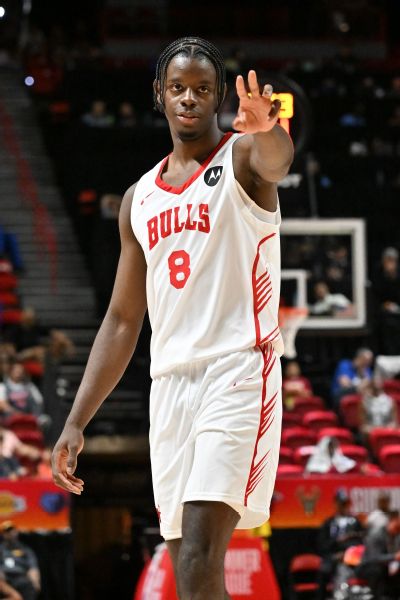
4. Caleb Wilson, Chicago Bulls
2026 draft pick: 4
Don’t get too prematurely excited about Wilson’s 48% mark on 3-pointers; there is almost no correlation between summer league 3-point percentage and regular-season 3-point percentage.
However, the fact that Wilson is taking 8.3 3-pointers per game is meaningful after he went just 7-for-27 on 3s over 24 college games. The stickiest summer league statistic — meaning it translates most neatly from the summer to the regular season — is 3-point attempt rate, and nearly half of Wilson’s shots this summer came from distance. His offense might already have a new dimension in the NBA compared to college.
Other indicators aren’t quite so rosy, however, which is why Wilson sits in fourth place rather than pushing up higher than his draft slot. Wilson had just five assists to 13 turnovers in Vegas, and he shot a shocking 23% (3-for-13) on free throws. His nine blocks in three games were a major positive — he displayed excellent recovery speed to swat one layup in transition after committing a sloppy turnover — but don’t overstate his defensive impact, as he didn’t look nearly as dominant as an every-possession one-on-one defender.
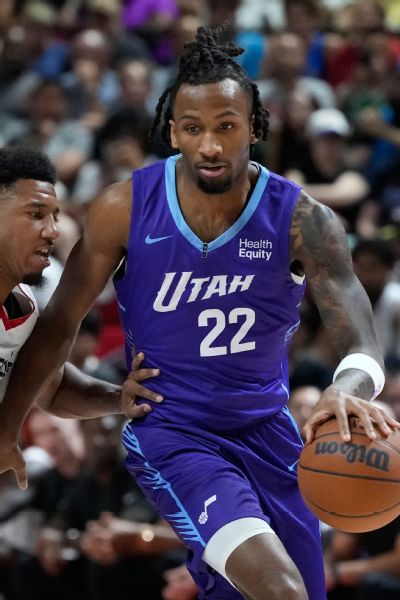
3. Darryn Peterson, Utah Jazz
2026 draft pick: 2
Peterson was much better in a couple of games at the Salt Lake City summer league than he was in Las Vegas, where turnovers and foul trouble plagued him. Peterson’s shaky handle stood out in person, so it’s probably a positive for his efficiency as a rookie that he’ll share ballhandling duties with Keyonte George rather than run the whole show by himself.
But Peterson also showed off his shooting range and flashes of incredible explosiveness that suggest his upside as an NBA-ready scorer. On one play against the Clippers, he drove from the 3-point line to the basket in a blink, then dunked over a defender with tremendous force.
He also tied No. 1 pick A.J. Dybantsa for the lead in Vegas in free throw attempts. That’s a promising sign for his ability to get to the rim and generate points.
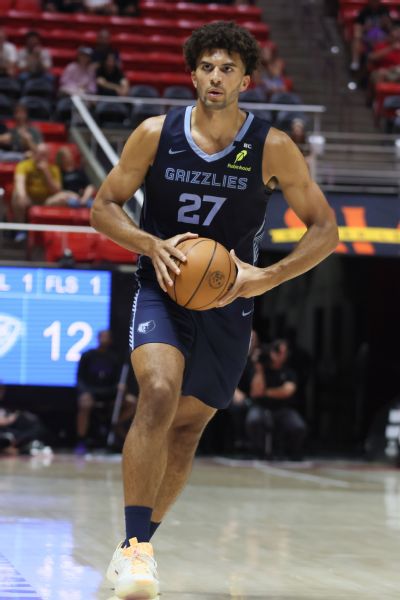
2. Cameron Boozer, Memphis Grizzlies
2026 draft pick: 3
Boozer isn’t draining pull-up 3s like Wilson nor bursting past defenders to the rim such as Peterson or Dybantsa. But he’s stuffing the stat sheet, nonetheless, averaging 18.7 points, 7.0 rebounds, 3.3 assists and 2.3 steals.
One attribute that really stands out in person is Boozer’s size (6-8, 253) and speed; this aspect was also evident in his drill work at the NBA combine in May. Boozer looks massive when he plays one-on-one defense, where he’s agile enough to guard quicker wings and sturdy enough to contest more physical bigs.
Boozer’s jump shot didn’t always fall in Vegas, but it looked clean, and he did enough on offense to still post a true shooting mark north of 60%. He should be firmly in the Rookie of the Year race this season despite a perceived lower ceiling than Peterson or Dybantsa.
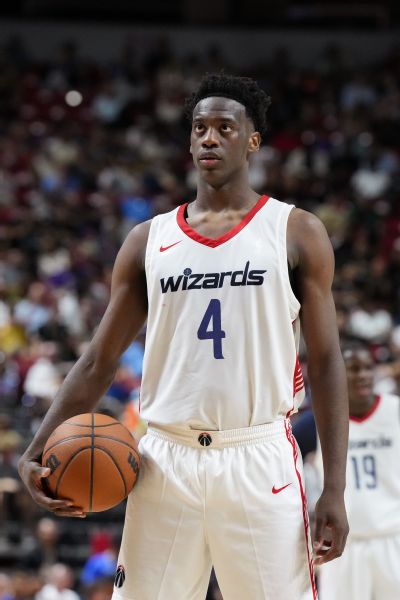
1. AJ Dybantsa, Washington Wizards
2026 draft pick: 1
The No. 1 pick earned the top spot despite attempting far too many low-efficiency midrange jumpers in Vegas. No other player produced as many highlight-worthy sequences as Dybantsa: a confident reverse layup in the first minute of his first game; an inside-out dribble that faked out one defender, followed immediately by an up-and-under to split two more for a layup; and an instinctive behind-the-back pass with his left hand for a bucket in transition.
Dybantsa got into the paint at will in his two summer league games, which led to plenty of points and fouls drawn. He’ll need to work on his shot selection, and he sometimes looked stiff in his defensive stance — he was caught on screens a couple times when defending a ball handler — but it’s immediately clear when watching Dybantsa that he has superstar potential.
Perhaps the biggest question about Dybantsa after summer league is whether he’ll get the same sorts of on-ball opportunities in the regular season. He frequently brought up the ball as the Wizards’ primary initiator in Vegas, but the Wizards are committed to Trae Young for the next four years. How those two stars interact will be a fascinating storyline to watch in Washington.