In just a few weeks, the 2026 FIFA U20 Women’s World Cup is scheduled to take place in Poland. Featuring 24 promising national teams, the tournament should be a measuring stick for next-gen talent pools and a preview of what’s to come in future senior World Cups. Instead, this year’s competition is now part of a bigger story, one about who actually controls the sport and how that affects tournament planning and roster building. Headlines ahead of the U20 World Cup are less about the upcoming tournament and more focused on FIFA president Gianni Infantino’s now-scrapped FIFA Forward Enterprise plan to sell equity stakes to investors and privatize future World Cup and other major tournaments.
What’s notable over the last month is the absence of women’s soccer from the conversation. The $20 billion commercial entity plan was met with swift backlash, potential boycotts, and has continued to fracture federations about next steps regarding leadership. Statements, ultimatums, and meetings over the weeks have specifically centered the men’s tournaments. Infantino’s initial plan framed future funding distribution through commercial cycles of the men’s competitions through 2038.
Combine youth competition with the women’s game, and you find they were never focal parts of the overall privatization pitch, or ever viewed as general leverage, and were never really flagged as at risk in the boycott declarations issued by UEFA and later supported by the AFC and Concacaf.
Perhaps a blind spot, but it’s been the same one the sport has had for decades: women’s and youth programming are an afterthought to the machine built around the men’s game. That disconnect is why preparations for Poland 2026 have largely continued without disruption.
In October, FIFA’s U17 Women’s World Cup is scheduled to take place in Morocco, and several European national teams have qualifying matches for next year’s 2027 FIFA Women’s World Cup in Brazil. Meanwhile, national team staffs are hard at work preparing for the competitions.
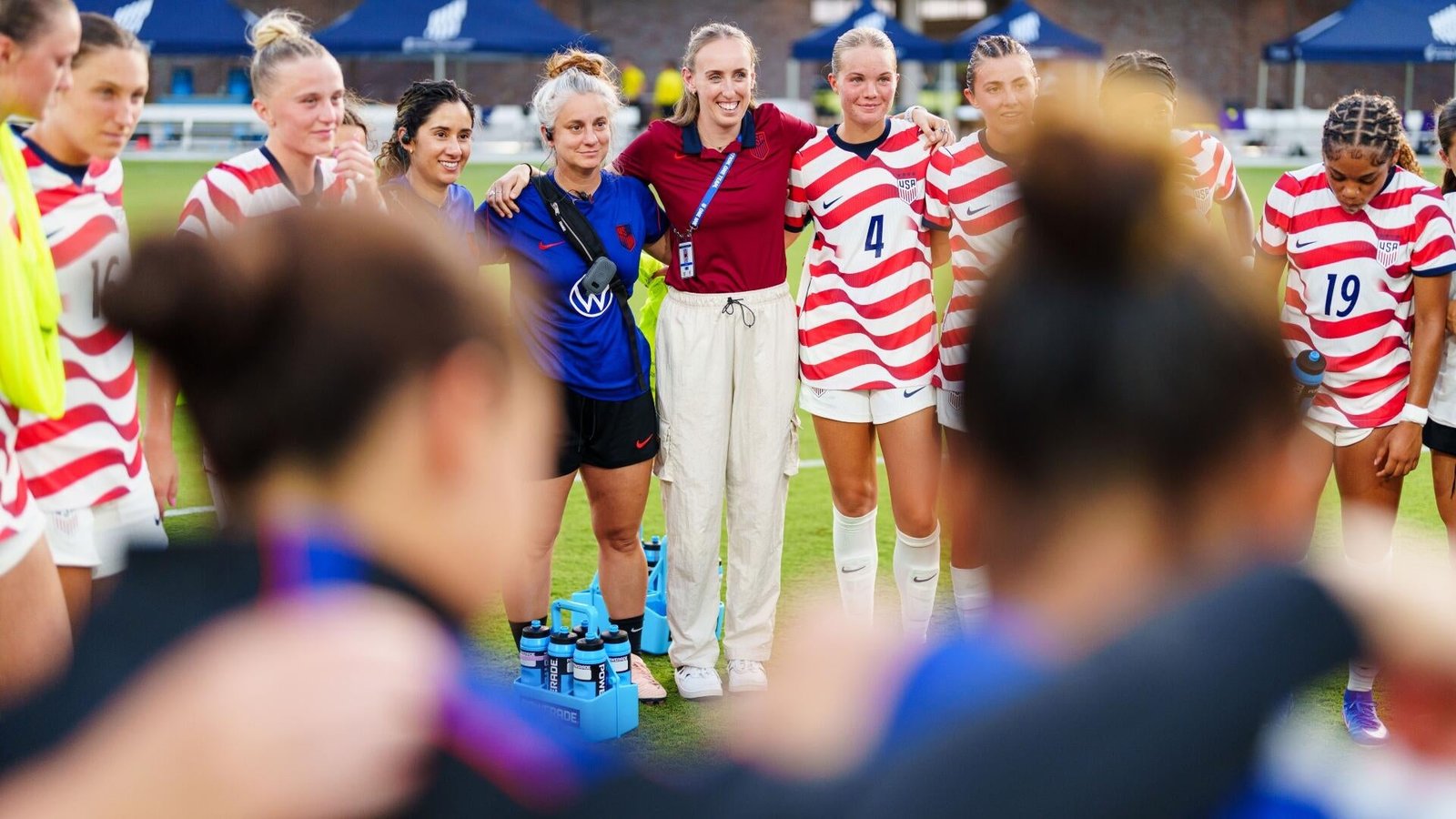
“We’re just finalizing the last little bits of prep while finalizing the roster, and we’re excited to get on that plane to Poland,” USWNT U20 head coach Vicky Jepson told CBS Sports.
All roads lead to Poland
Host nation Poland already recommitted to its responsibility in welcoming all participating national teams across four host cities. The French Football Federation was first to clarify that it would participate in the upcoming U20 World Cup, followed by vocal support from New Zealand, and later Canada and Brazil.
While other federations have not released statements, CBS Sports understands that other qualified nations are continuing tournament prep, including the USWNT U20 program and England. With the U20 Women’s World Cup set to kick off on Sept. 5, coaches are building rosters — the primary challenge for programs at the moment — not organizing the possibility of a boycott stemming from an enterprise plan that did not include a women’s youth program focus.
With more players than ever turning professional at young ages in the women’s game, programs have multiple players that could qualify for the U20 World Cup. The tournament is scheduled outside an official FIFA window, and players attached to a club might not get released despite their desire to represent their national team.
“Some things I can’t control that are taken out of my hands are the roster selection, and that’s down to player releases from clubs,” Jepson stated on making difficult roster decisions.
“It’s different when you’re in the women’s (senior) national team because you don’t have that challenge because it’s within a FIFA window, so you’ve got access to everybody you wish. I don’t have access to everybody that I wish, and [who] want to be a part of this World Cup.”
The U20 USWNT roster has a large, talented pool that includes eligible active players on NWSL clubs and in Europe as well as athletes at elite collegiate programs. Bay FC’s Claire Hutton and Kennedy Fuller, San Diego Wave FC’s Kimmy Ascanio and Melanie Barcenas, are all among potential selections. Seattle Reign have several eligible players, including Jordyn Bugg, Emeri Adames, and Ainsley McCammon, and UEFA Champions League runners-up OL Lyonnes feature Lily Yohannes.
“If everybody was available and everyone was released, it’s a great challenge to have because then you can look at the right people for the environment that we’re going into,” Jepson explained.
Jepson joined the USWNT program 11 months ago, fresh off an interim manager role with Tottenham in Barclays Women’s Super League, and has helped the squad build towards the upcoming World Cup, but also to develop players along the way, and bridge the gaps to the senior national team.
“It’s a shame that there are a percentage of players that won’t get that opportunity to add value to bridging the gap to the women’s national team by gaining experience in a World Cup, but also all the preparation, hard work that they’ve put in, they won’t be allowed to go forward and apply that at the World Cup … But what’s in my control is [when] we get the final decisions on releases, is making sure that those players that are going have got the best support that they can possibly have. 360 support from everybody across our staff here at the federation, with [Emma Hayes’] support, making sure that they’re in the best possible place to compete and represent our country in the best possible way and make everybody proud here in the U.S.,” stated Jepson.
Hayes, USWNT coach, has been adamant about the need to redevelop the pipelines in the national team programs, starting at youth levels, and even helped relaunch the U23 program in 2025. Hayes has been increasingly vocal this year about the importance of players getting as many World Cup experiences as possible, tying the rise of Spain’s current success to the U20 participation as a catalyst, which Jepson also echoes.
“I think the Spanish Federation have it right, because with the league in Spain, that if a player is selected for the national team at youth level, they go, and the clubs don’t interject that. I think we need to do a better job of supporting the athlete. It starts with the athlete, and we should be more player centered, where we ask the player, ‘Do you want to represent the country at U20?’ and if the answer is yes, then we will respect that, and we will let you go. If the answer is no, then no problem. And also, no problem from us. If you don’t want to come, we will never, ever, put pressure on the athlete.
We have to stop putting the player in the middle, and we’ve got to change the process so that we allow them to get to choose their development pathway and what’s best for them. And I don’t think that’s happening at this moment. So that’s the biggest thing that I would like to see change, which is very aligned with what Emma would like to see change,” stated Jepson.
An impasse between club and country
It’s somewhat of an ongoing open secret that when it comes to whether or not players are released from clubs to national teams for international duty outside official FIFA windows, there’s sometimes a disconnect, and the player is often left in the middle. Many players have been involved in U17 and U20 World Cups while playing professionally, and the tournaments have often been launchpads for greater success.
Most famously, Mallory Swanson played in the 2014 tournament and in the 2016 edition following her time with the senior team during the 2016 Rio Olympics, becoming the first player to participate in the Olympics and the U20 World Cup in the same year. Swanson later turned pro in 2017 and joined the NWSL.
Seattle Reign FC head coach Laura Harvey has experience coaching at the senior and youth women’s national team levels and understands the significance and importance of balancing club duties with developmental tournaments. Unlike a mutual partnership with the Spanish football federation and Liga F, players at other clubs aren’t automatic locks when they get called up. Part of that is due to the unofficial tournament window and the relevancy of a player to their club.
“I’ve had the same ethos the whole time. Really, I think that the youth world tournaments are valuable when you haven’t played in one. I think when you get to experience that and get exposed to that, which obviously Emeri [Adames] and Jordyn Bugg did in 2024, and went all the way through to getting a bronze medal or finishing third … exposure to that I think is great,” Harvey stated.
“It’s difficult because the tournament doesn’t fall in FIFA dates, so you’re trying to manage. For us, in the way that our calendar falls, potentially losing big players in your team in a really crucial part of the season. So, you’re sort of managing the short-term effect versus the long-term gain, and what has been amazing in the NWSL over recent years is the number of young players getting exposure in our league with really high minutes has been really high, and I think the great thing about that has been that for some of them … their development has increased dramatically to the point that they’re now getting senior call-ups and senior exposure.”
Seattle Reign have several players eligible for selection who could make the next U20 World Cup roster, alongside several others across NWSL for other national teams. That is ultimately if their clubs allow them to participate or if players opt out. North Carolina Courage players Erica Meg Parkinson and Lauryn Thompson withdrew from recent camps with England’s U20s and will continue the playoff push with the sixth-place Courage.
“I’m thinking of Hutton as an example of that, and Ally Sentnor, who was at the last World Cup, Jordyn Bugg, who are all getting senior exposure now,” Harvey explained.
Claire Hutton played during the 2024 U20 World Cup, though her tournament was somewhat hampered by injury. While Hutton has received call-ups with the senior team throughout the year, her World Cup experiences are limited, and a similar point could be made for midfielder Lily Yohannes as the Concacaf qualifiers begin in November and the 2027 World Cup is next summer. But Harvey’s more considerate approach depends on a player’s profile as each athlete is unique.
“But you know [Claire Hutton] experienced it. So does she need to experience it again? I don’t think you need to experience these world events at youth level multiple times. I think if you go out in the group stage, maybe. But that group didn’t. They went all the way. So I think that’s how we’ve sort of approached this tournament, and how we probably will approach it moving forward. That each individual player is really different, and where they’re at, what they’re contributing on the field for our team, and what their contributions have been at the youth level previously.”
USWNT still reaching for U20 glory
The most famed USWNT roster was the 2012 U20 World Cup-winning squad. There’s a direct correlation between players who were part of that program and later went on to NWSL teams as the league launched in 2013. Julie Ertz, Morgan Gautrat, and Crystal Dunn were each drafted the following year in 2014, and Sam Mewis in 2015, and went on to win senior World Cups with the USWNT.
Others became NWSL mainstays and faces of their respective franchises, such as Keala Watt, or Vanessa DiBernardo and Abby Smith, who are still in the league today. With so many players turning pro at younger ages, the question of whether a youth World Cup experience adds to development will keep evolving as leagues grow.
Jepson will finalize her roster, and she still intends to have the difficult conversation with players who were selected but ultimately not released.
“It’s a conversation that I don’t want to have. First, because they deserve to be [on the roster]. If they want to represent the Stars and Stripes, which they all do, then they should have the opportunity to. So, I don’t think those conversations should have to take place. However, I know that they do,” Jepson stated.
“So, once the club has come back, whether they’ve released or not released, we inform the player, and I will jump on a call and say, ‘Look, you were selected for this World Cup roster, but unfortunately, your club isn’t going to release you, and it’s something that we can’t control. But we want to make sure that you know, we wish you the best of luck with your fixtures in the NWSL, and I know that you’ll be supporting from afar. And a massive thank you for all the contributions, the hard work that you put in during this cycle.’ Because there’s really nothing else I can say to them at that point, because it’s taken from our control, myself and the players’ control. It’s a club decision. But I’ll always be grateful for the time that they put in, and the effort of representing that crest on this cycle with wherever we’ve been around the world to best prepare them. But just be honest, ‘you were selected. This is how highly we think of you. But unfortunately, your club won’t release you.'”
No matter who gets the honor of cracking the U20 roster, Jepson and her staff have had extensive time with the group ahead of the tournament in Poland. In June, the group traveled to Europe for a pair of friendlies against the France U20 side and won 5-0 and then 2-1, before facing England and Colombia back in the United States in July.
The June camp had more pro-level players, and the July gathering was more of a collegiate camp as it was held outside of an official window, though some pro players who had not been getting consistent minutes at club did participate, with Chicago Stars FC’s Micayla Johnson and Kansas City Current’s Katie Scott.
The two-match series in Fayetteville, Georgia, presented some new challenges: a 1-1 draw against England followed by a 1-0 loss to Colombia. All four games were crucial prep for September and a final look at players before narrowing down a roster.
“There’s a high percentage of those players that will be coming to the World Cup, but it’s good for us to feel what losing feels like. It makes you appreciate the ones that you win. But also, for me as a coach, I get to observe how quickly players can bounce back from their emotions of a loss to focus on the next task and take the learnings from that. So it was a real positive camp that we got loads from it,” Jepson stated.
What’s next
The U20 USWNT roster is expected to drop soon. The squad will compete in Group D alongside Japan, Italy, and New Zealand. They will open their group stage against Italy on Sept. 6.