There are 32 teams in the National Football League. Eighteen of them have new playcallers this year. Eighteen! It’s a staggering number. The race is on to find the next Kyle Shanahan or Sean McVay or Ben Johnson, any genius who can innovate an offense and push a team toward a Super Bowl. You know, as Klint Kubiak did, he went from the champion Seahawks to the worst-in-league Raiders this offseason.
The funny thing is that almost every single one of the 18 playcaller jobs that were filled are connected to Shanahan, McVay or Johnson. And it’s even funnier that as former assistants fill those jobs, those three continue to tweak their offenses, adding wrinkles and changes to keep things fresh. Even those who revolutionized offenses are evolving.
The players themselves matter more to Fantasy Football since they’re the ones you’re drafting and starting. Talent is obviously important but opportunities matter more, and it’s these playcallers who will determine the opportunities their players get.
That’s why studying each new playcaller and making some educated guesses on what they’ll do and how they’ll operate this season is important draft prep work.
I’ve gone ahead and ranked all 18 playcallers — some are head coaches who will call plays, others are offensive coordinators. Last year, new play callers Liam Coen (Jacksonville) and Ben Johnson (Chicago) had two of the biggest impacts on the Fantasy Football season. So keep an eye on who ranks atop this list. We’ll put together a landing page for all 18 pieces at the end and cross-link on each piece once we’re caught up.
We’ll start by working backwards with my 18th-ranked new play caller until we get all the way through to No. 1. Without further ado, the team with the 18th-ranked new play caller:
18. Panthers OC Brad Idzik
Who’s new?
Son of former NFL salary cap manager John Idzik and Dave Canales consigliere Brad Idzik will take over calling plays for the Panthers. He was Carolina’s offensive coordinator last season but didn’t call plays, so the expectation is that he’ll stick with the same West Coast principles the Panthers have rolled with since 2024.
What’s expected this year?
More of the same slower-paced offense we saw from the Panthers, with only a modest uptick in pass plays (55.1% pass rate last year). Wide receivers remained a priority position for Bryce Young to target with running backs and tight ends nearly equal at about a 20% target share each. There is a question about how effective the Panthers run game will be after the team didn’t re-sign Rico Dowdle and didn’t add anyone to work alongside presumed starter Chuba Hubbard. Third-year RB Jonathon Brooks is definitely a candidate to potentially leapfrog Hubbard as he slowly makes his way back from a second ACL tear. Maybe the biggest problem facing the Panthers is left tackle Ikem Ekwonu not being ready for the season, and potentially missing the season after rupturing his patellar tendon in January. Rookie Monroe Freeling (18 starts in college) might have to play in his place all year, ready or not.
Winners and losers for Fantasy
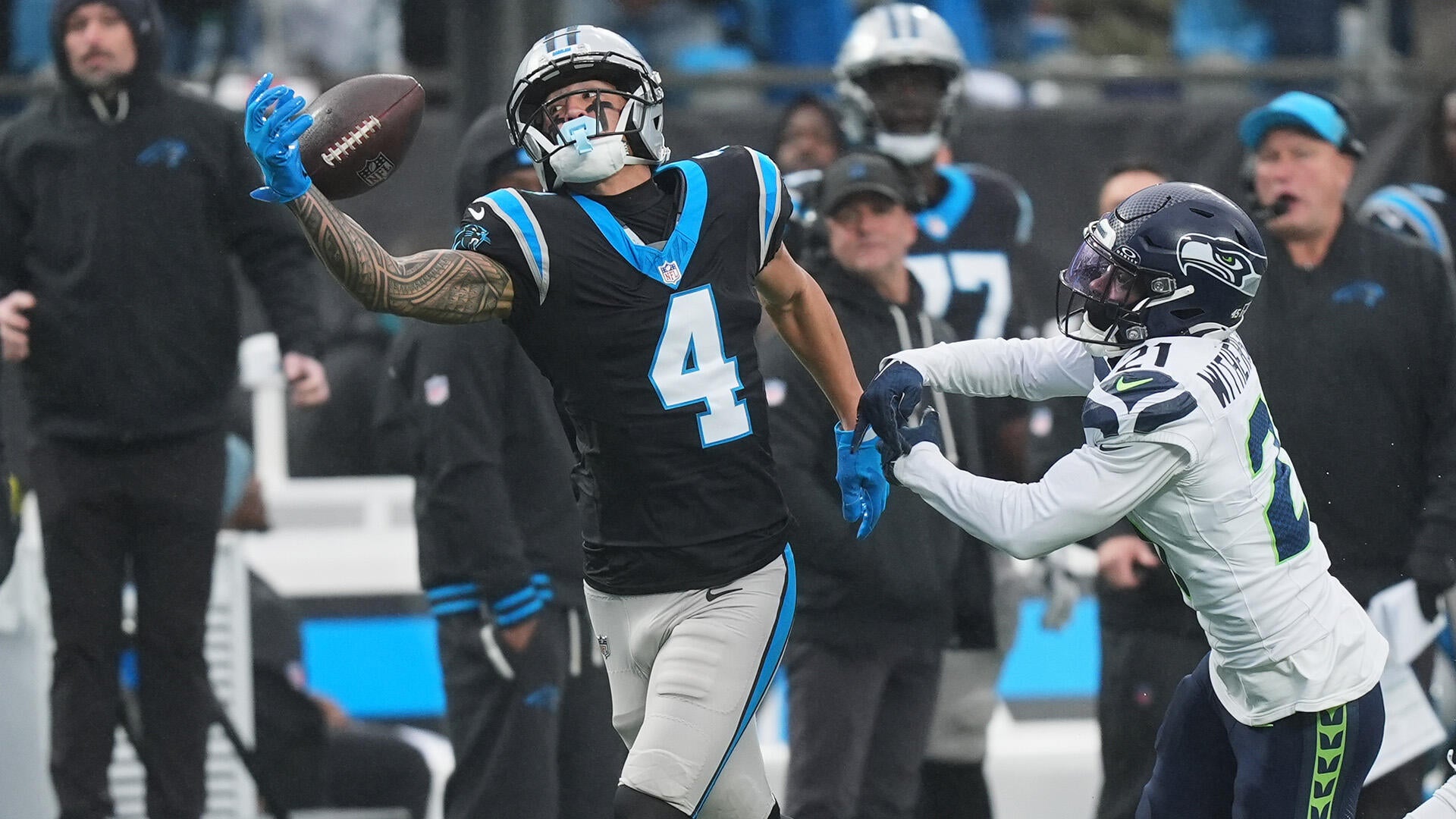
Keeping things status quo, save for a new voice in Young’s ear, doesn’t really present a lot of winners or losers for the Panthers. Hopefully, the team does more to scheme up Tetairoa McMillan since he’s got the unique size and quickness to make plays over and over. To that end, Canales referred to rookie Chris Brazzell II as “one of my favorite players in the draft.” Both he and Idzik spoke about how Brazzell can force defenses to respect the downfield pass, opening things up for both the run game and the short-area passing game. Carolina hasn’t had a guy like that since Canales has been there. If Brazzell works out as Canales and Idzik envision then it could mean easier coverage on McMillan.