Who goes through and how?

Over the next eight days, the World Cup group stage will come to a close. Of the record 48 teams involved, 16 will be eliminated, leaving 32 nations – the number the competition started with from 1998 to 2022.

The top two teams in each of the 12 groups will advance to the last 32. Two of the tournament’s co-hosts, Mexico and the United States, have already booked their place with back-to-back victories – a boon to organisers in terms of keeping the home crowds invested.

Naturally, whoever has the most points tops the group, but it is when two or more countries are level on points that things get complicated.

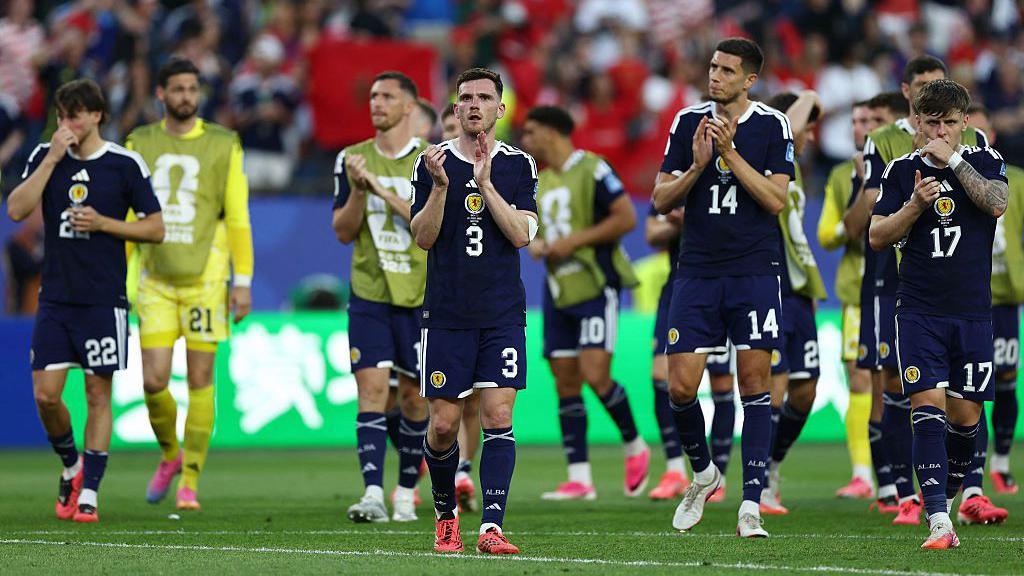
Scotland players acknowledge the crowd after losing 1-0 to MoroccoImage source, Getty Images
Image caption,

Scotland are currently the best ranked third-placed team – but that could quickly change

What are the tiebreakers?

Goal difference, which since 1970 has been Fifa’s tiebreaker of choice, is now superseded by head-to-head results, the method long favoured by Uefa.

Traditionalists may be aghast, but those in favour say head-to-head is a fairer comparison of even teams than goal difference, which is often skewed by thrashings handed out to weaker sides.

If one team tied on points with another has beaten them in the group stage, the winners will finish higher up the table. So far, so simple.

Where multiple teams are level on points, a mini-league is created, removing the results against the remaining teams. Those tied teams are ranked by points won in the games involving each other, then by goal difference, followed by goals scored.

If that does not split them, the next criteria are goal difference followed by goals scored – for the group overall. Still level? Fifa’s catchily named Team Conduct Score (TCS) comes into play.

What might commonly be referred to as a team’s fair play or disciplinary record, each nation started the tournament on zero and are deducted points for any cards shown to players or – coaching staff beware – team officials, as below:

  • Yellow card -1

  • Red card for two yellows -3

  • Straight red card -4

  • Yellow then straight red -5

The closer to zero, the better the score. South Africa, for example, have the worst TCS in the tournament so far, sitting on -12 after receiving two straight red cards and four yellows. At this stage, 14 teams remain on zero.

If, somehow, the teams are still level, whoever had the higher Fifa ranking in June’s published update will prevail.

What about the third-placed teams?

The same criteria will be applied to determine the rankings of the 12 third-placed teams, only eight of whom will progress to the last 32.

Four of the group winners play group runners-up. The other eight group winners play advancing third-placed teams. The remaining group runners-up play other group runners-up.

Fifa’s predetermined match schedule lists five potential options for each of the eight last-32 fixtures involving third-placed teams.

The best third-placed finishers among those options are allocated their slot, in match number order, until the line-ups are complete.

For example, the winners of Germany’s Group E will play in match number 74 against the best third-placed team from Groups A, B, C, D and F. Throughout the draw there are a mind-boggling 495 potential pairings.

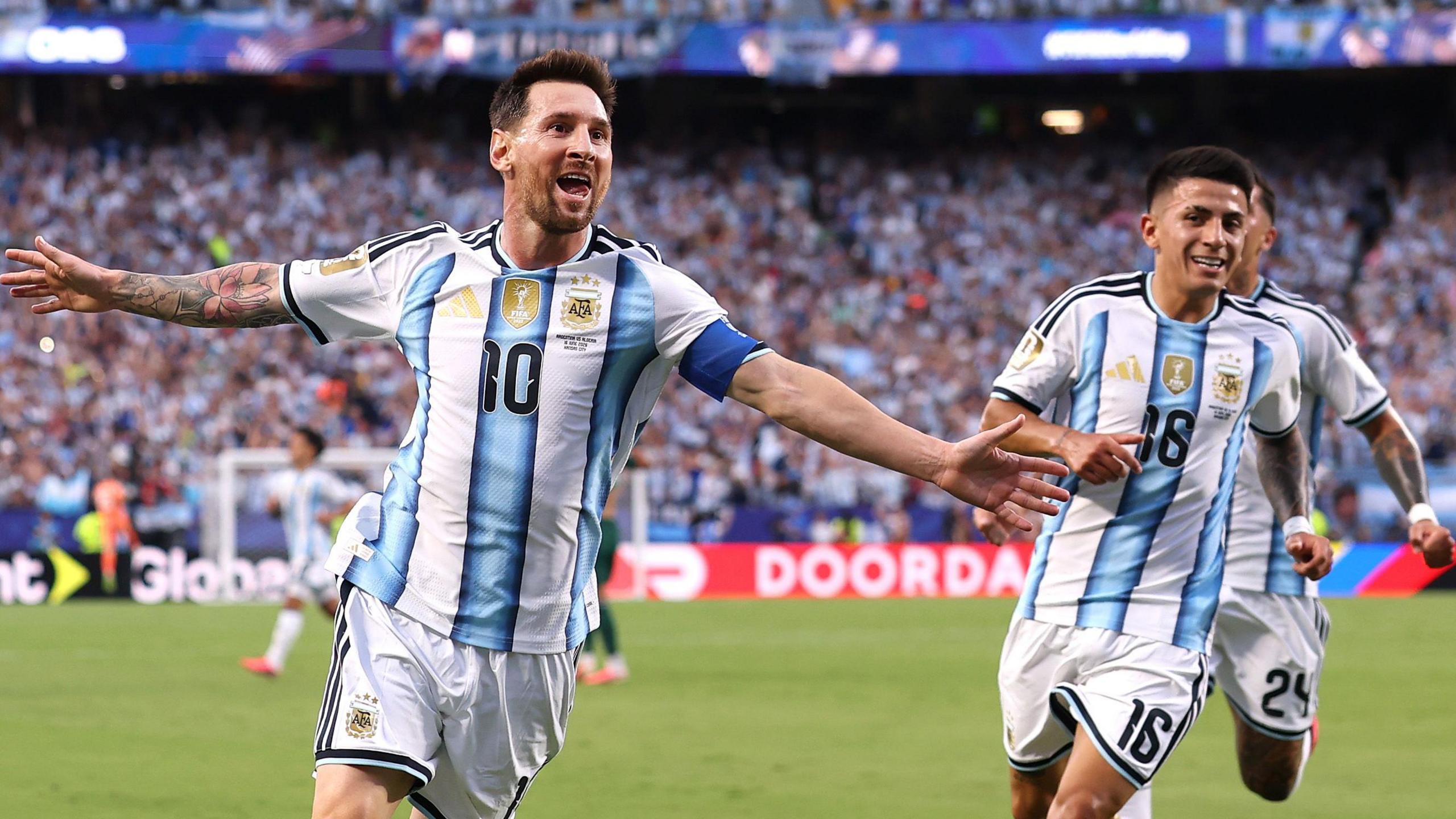
Lionel Messi celebrates scoring the first goal during Argentina's 3-0 win over AlgeriaImage source, Getty Images
Image caption,

Holders Argentina could await England in the semi-final

As it stands, who is playing who?

The more optimistic fans may have already started plotting their team’s path to the final at New York New Jersey Stadium on 19 July, a task that is again made easier by our predictor tool.

As it stands, England, who are top of Group L, would play Portugal, who are third in Group K, in Atlanta on 1 July.

The path to the final for Thomas Tuchel’s side, assuming the favourites progress in each hypothetical tie, would currently involve overcoming Portugal, Spain, France or Brazil, and Argentina – an unenviable run for any aspiring winner.

Group C’s Scotland, who are currently the highest ranked of the 12 third-placed teams – only four of whom have played twice – would take on Group E leaders Germany in Boston on 29 June.

Their half of the draw is less stacked with quality. Scotland or Germany could face the Netherlands in the last 16, Morocco would fancy their chances of another deep run, while the United States, if they can maintain their momentum, have a shot at reaching at least the quarter-finals.

Clearly, the current forecast comes with the enormous caveat that plenty will change in the coming days. The third-place picture will not become fully clear until the last group games are wrapped up on 29 June.

Each point, each goal, and even each card really does count.

Related topics

  • Football

✔ today silver rate

✔ 2026 winter olympics

✔ chat gtp

✔ silver rate today

✔ silver rate today live

✔ 2030 winter olympics

Read More

Sports

Leave a Reply

Your email address will not be published. Required fields are marked *