• Published

If you were to ask Premier League managers who their biggest influences in football have been, the majority are likely to mention Pep Guardiola.

When Guardiola departs Manchester City, he will leave behind him an impressive legacy that extends beyond the team he has managed for a decade.

His tactics have made waves from the Premier League through non-league football and into the grassroots game.

Yet not all of them were planned long in advance. Yes, Guardiola creates systems and tactics based on how he views football, but they are also determined by the players he has at his disposal.

Here we take a closer look at how Guardiola transformed the Premier League.

Shot-stoppers to ball-playing keepers and back

When Guardiola took the City job, one of his first decisions was to oust fan favourite Joe Hart and instead play Claudio Bravo, then Ederson.

Guardiola wanted a ball-playing goalkeeper – not common practice in the Premier League – and was criticised for it.

Ten years on, it would be more controversial to suggest a top-flight team doesn’t need a No 1 who is comfortable with the ball at their feet.

By the early 2020s, most Premier League teams had replaced traditional shot-stoppers with impressive passers – with varying degrees of success.

At Manchester United, David de Gea was succeeded by Andre Onana. Aaron Ramsdale was replaced by David Raya at Arsenal, and Chelsea went from Edouard Mendy to Kepa Arrizabalaga to Robert Sanchez. The list goes on.

Yet Guardiola has been at City so long, we have started to see a reversal of the trend.

With the rise in man-to-man high pressing from goal-kicks, the risk associated with building out from the back is higher than before. Space for attacking sides is further up the pitch.

At City, Ederson – a player who embodied Guardiola’s tactics – was replaced by Gianluigi Donnarumma, who is a less capable passer.

Donnarumma’s one-against-one goalkeeping had been pivotal to Paris St-Germain’s Champions League success last season, and Guardiola believed a change in style made his signing worthwhile.

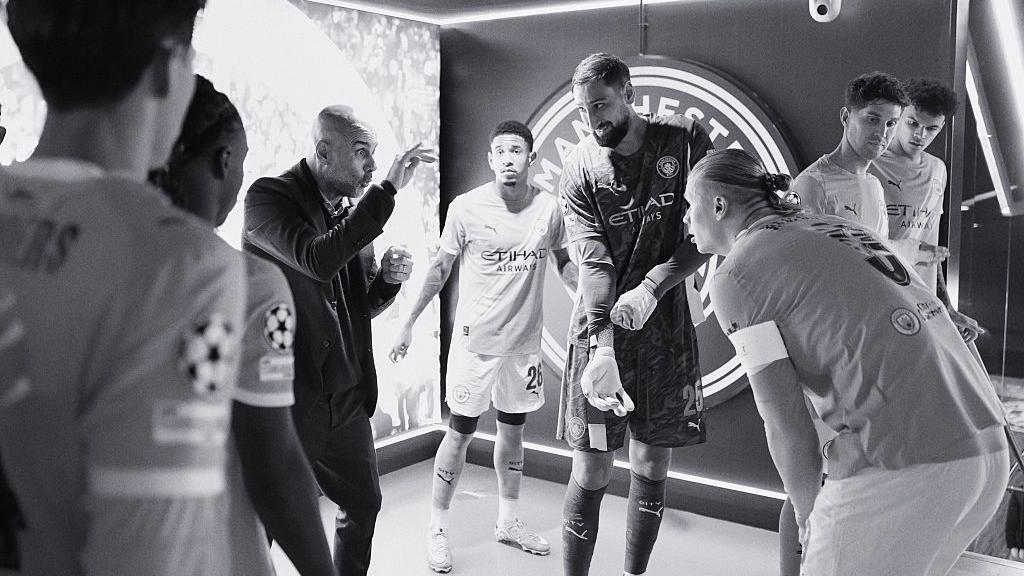
Image of Pep Guardiola, Manager of Manchester City speaking to his players, Erling Haaland and Gianluigi Donnarumma at half time during the UEFA Champions League 2025/26 League Phase MD4 match between Manchester City and Borussia Dortmund at City of Manchester Stadium on November 05, 2025Image source, Getty Images
Image caption,

Gianluigi Donnarumma and Erling Haaland – City’s goalkeeper and main forward this season – are vastly different to those such as Manuel Neuer and Lionel Messi who Guardiola coached earlier in his career

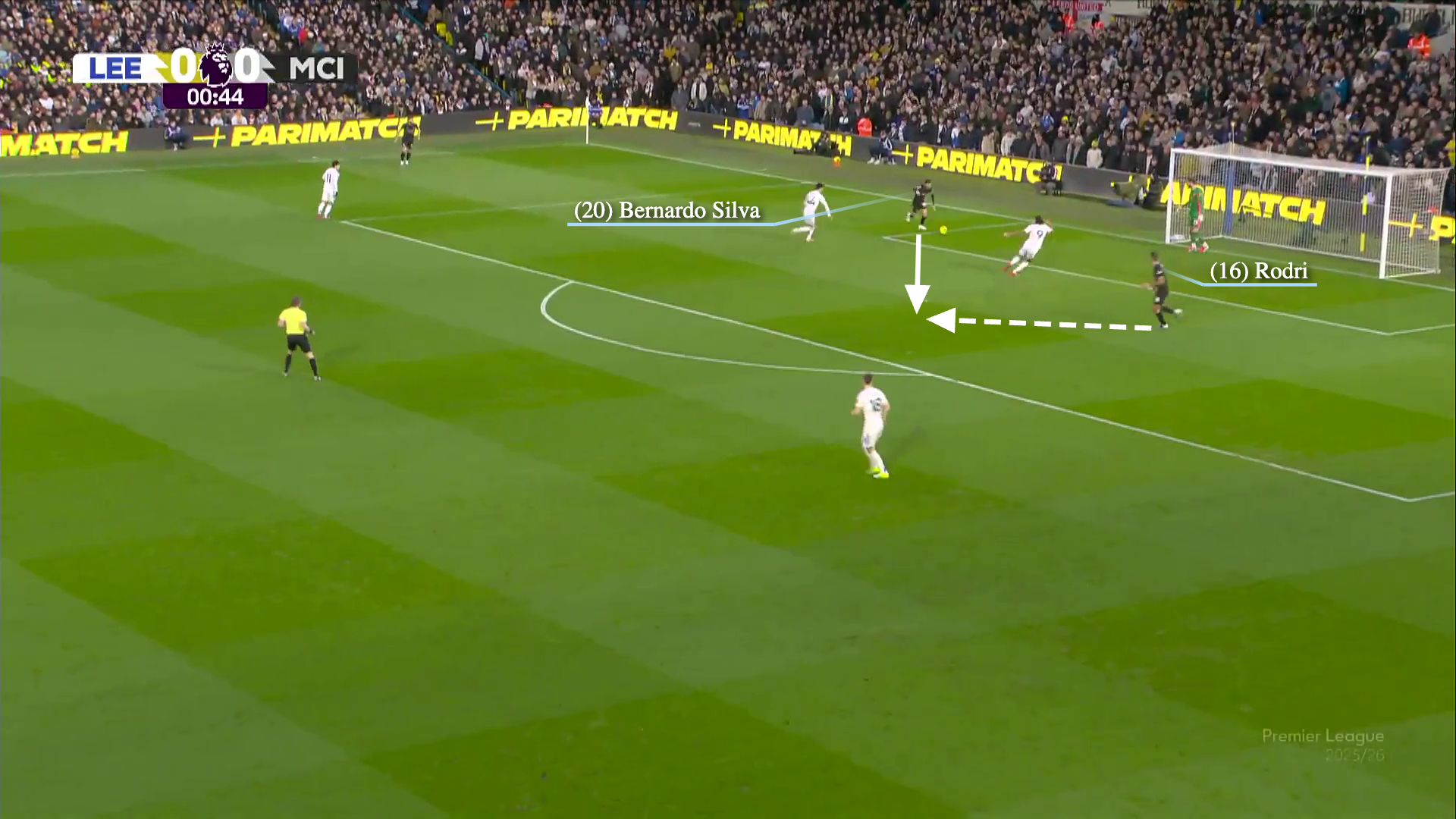
Against high-pressing sides, City have – at times – still built up short by asking midfielders such as Bernardo Silva and Rodri to drop deep and pick up the ball directly from the goalkeeper. It is reminiscent of five-a-side football – and a trend we might see others copy over the next few seasons.

The upside of having an elite goalkeeper became – in City’s mind – more valuable in tight games, and rivals taken the same view, with Manchester United replacing Onana with Senne Lammens – a more traditional keeper – in what feels like a decade-long full-circle moment.

A screenshot of Manchester City playing against Leeds
Image caption,

Against Leeds’ high press, to compensate for City’s less technical keeper and central defenders compared to the likes of Ederson, John Stones and Aymeric Laporte, Guardiola used Bernardo Silva and Rodri in centre-back positions from goal-kicks

The ever-evolving use of full-backs

City broke the record for Premier League points in 2018 – amassing 100 as Guardiola won the competition for the first time.

Injuries to big-money signings left City without options at full-back early in the season, so Guardiola had to adapt.

Though much has been made about the squads he has inherited in previous jobs, arguably his biggest strength has been creating new and viable tactical set-ups with the players at his disposal – often following injuries.

With no natural left-back available, Guardiola looked at the left-footers in his squad – Oleksandr Zinchenko and Fabian Delph – and, noting their qualities as technical passers suited to playing infield, he inverted his left-back next to his defensive midfielder.

That gave City a level of security in the centre of the pitch, improved their build-up, suited the left-back, and allowed the left-winger to hug the touchline.

The jigsaw came together brilliantly, with opposition teams struggling to adapt to City’s build-up. And when Mikel Arteta took Zinchenko to Arsenal, they played some of their most free-flowing football with inverted full-backs.

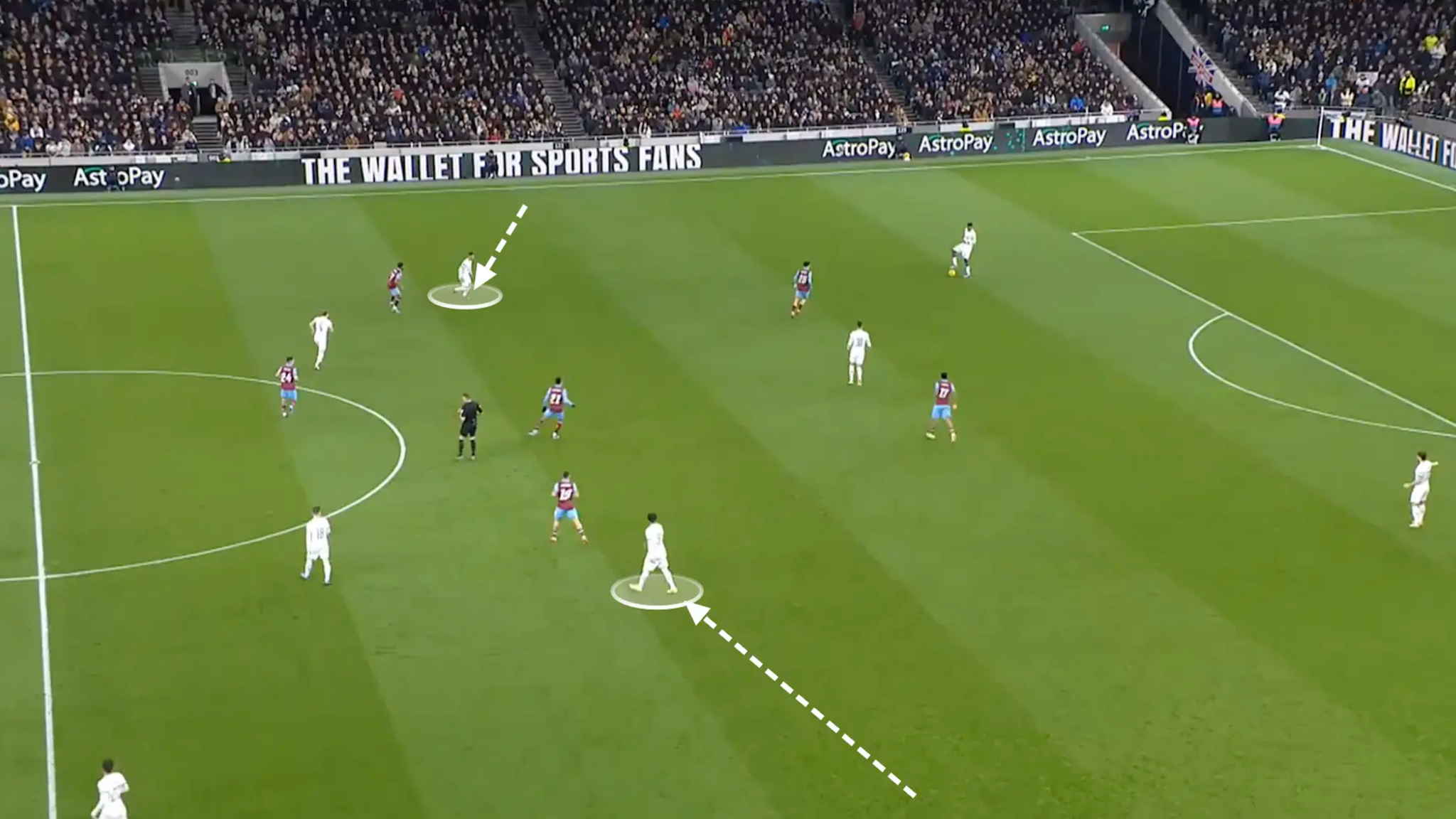
Ange Postecoglu – another of Guardiola’s admirers – also used the tactic when he was Tottenham manager, with Pedro Porro and Destiny Udogie narrow in the build-up alongside their defensive midfielder.

Screengrab from a Spurs match managed by Ange Postecoglu showing the inward inverting movements of both fullbacks.
Image caption,

Postecoglu’s Spurs would play with both full-backs inverting into midfield

Going back to 2018-19, when Zinchenko was out injured, left-footed centre-back Laporte played at left-back.

In their Treble-winning season of 2022-23, centre-backs Manuel Akanji and Nathan Ake played at right-back and left-back respectively – either side of Ruben Dias and John Stones, with the latter moving into midfield.

That opened up the idea of using more traditional centre-backs out wide, bolstering a defence in a unique manner.

Newcastle’s 6ft 7in defender Dan Burn has since played as a left-back, tucking in to form a back three on the ball before defending as a left-back out of possession.

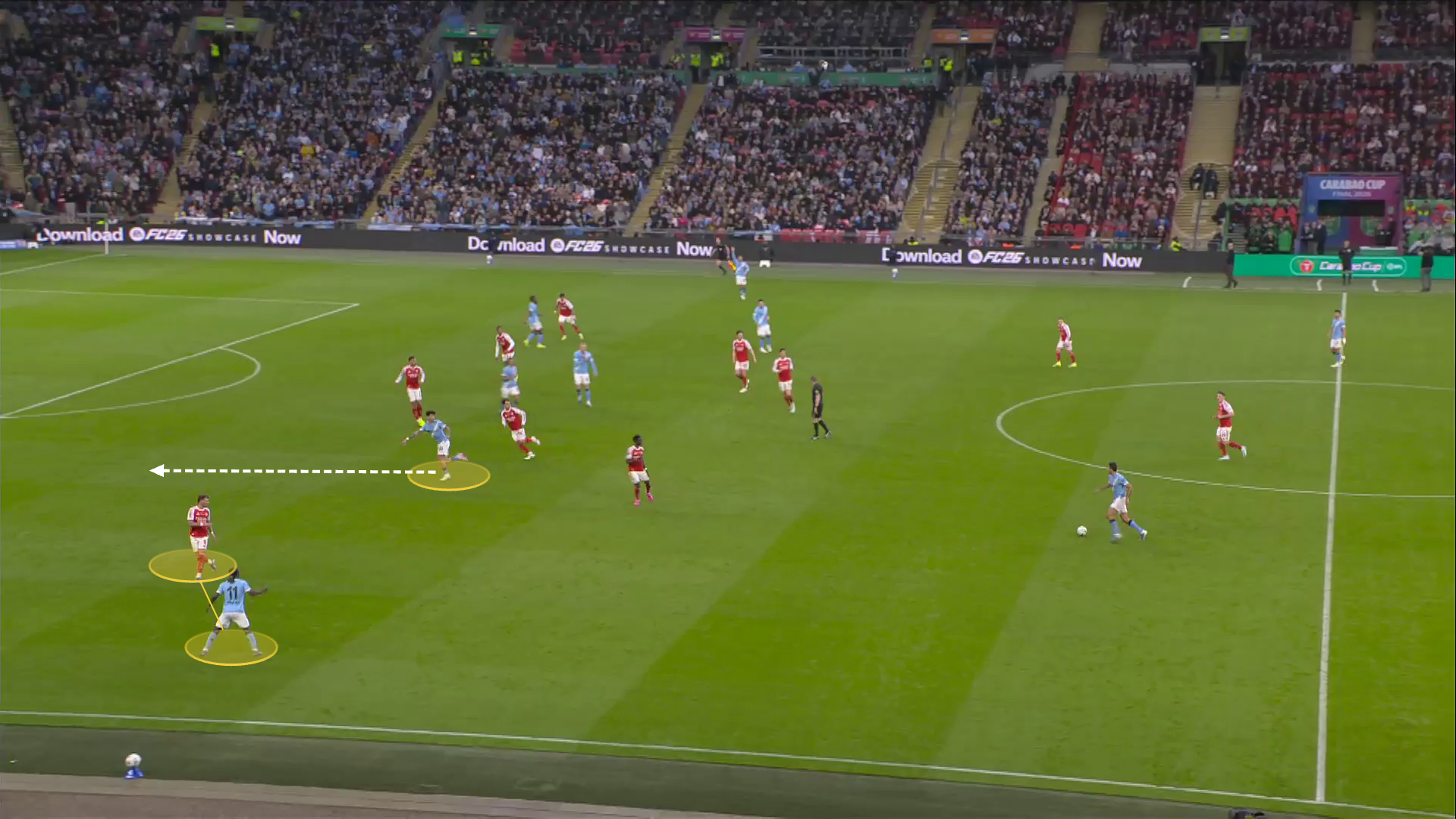
With more attack-minded defenders, Guardiola has experimented with Joao Cancelo and now Nico O’Reilly at full-back, moving them centrally but higher up the pitch – allowing them to arrive in the box and contribute to goals.

Jurrien Timber and Riccardo Calafiori at Arsenal and Malo Gusto and Marc Cucurella at Chelsea have been used in a similarly attacking fashion by Arteta and former Chelsea boss Enzo Maresca – both former Guardiola assistants.

Screengrab showing Nico O'Reilly's movement running in behind from a central position against Arsenal this season.
Image caption,

The recent iteration of the Guardiola full-back can be seen in Nico O’Reilly – a wide defender in a back four who can step alongside the defensive midfielder in build-up, float over to the left flank and play crosses, or attack the box, scoring centrally

From fast breaks to controlled possession

Guardiola has always been a proponent of dominating possession. Early in his managerial career, leading Barcelona, he reported privately he had betrayed himself in a match against Inter Milan.

Having selected Zlatan Ibrahimovic up front, he played with less possession than normal and looked to attack quickly. Soon after, he promised to himself that even if he were to fail, he wanted to do so abiding by his own principles.

Through Guardiola’s use of midfielders as inverted full-backs and having technical players across the pitch, City have always dominated possession under him.

During the 2017-18 season, they had on average 71.9% of the ball per game. Since then they haven’t dropped below 60% across the season.

Winning six Premier League titles in seven seasons using that approach meant controlled, positional, high-possession football became the norm.

Liverpool boss Arne Slot won the Premier League in his first season playing closer to those principles than Jurgen Klopp’s more intense style of play.

While Arteta’s Arsenal have put up impressive defensive records this season, they also look to keep the ball during games.

And Brighton’s sustainable model of success has come from hiring coaches who seek to impose themselves on the game through possession, with Roberto de Zerbi and Fabian Hurzeler excelling.

Scott Parker, Vincent Kompany, and Russell Martin have also persisted with this philosophy in the Premier League – ultimately failing because of player quality and a reluctance to change approach. It underlines the impact Guardiola has had on coaches throughout the league.

Prior to Guardiola’s arrival, English football was famed for its intensity, directness and fast attacks, with Sir Alex Ferguson’s Manchester United dominating.

United under Michael Carrick have leaned into those traditional counter-attacking roots, but one of Guardiola’s most impressive feats has been to come into a league that had Ferguson’s tactical fingerprints all over it and change the overarching approach of many of the its best sides.
Guardiola’s first-mover advantage

Guardiola has undoubtedly changed the tactical landscape in the Premier League, but he has also adapted to its many challenges too.

There is a misconception his style is a fixed one he imposes on a league, forcing opponents to copy. But while he holds fundamental principles that have served him well for many decades, he is still able to quickly tweak his tactics to best suit new signings and deal with unexpected challenges.

For Guardiola, being able to adapt to the quality of his players – while exploiting weaknesses he sees in the league – have allowed him to win and often, whether that be with traditional or inverted wingers and full-backs, or with false nines or natural nines.

When results came, other managers readily copied the Guardiola plan.

Their problem was often that by the time they copied what worked, Guardiola and Manchester City had moved on.

Related topics

  • Football
  • Premier League
  • Manchester City

✔ today silver rate

✔ 2026 winter olympics

✔ chat gtp

✔ silver rate today

✔ silver rate today live

✔ 2030 winter olympics

Read More

Sports

Leave a Reply

Your email address will not be published. Required fields are marked *