NBA Draft Lottery reform 101: How does the league’s ‘3-2-1’ proposal work? Will it really stop tanking?
The so-called ‘3-2-1’ system would go into effect for the 2027 draft if approved
tamil yogi
NBA Draft Lottery reform 101: How does the league’s ‘3-2-1’ proposal work? Will it really stop tanking?
The so-called ‘3-2-1’ system would go into effect for the 2027 draft if approved
Sam Quinn
Apr 28, 2026
at
8:30 pm ET
•
6 min read
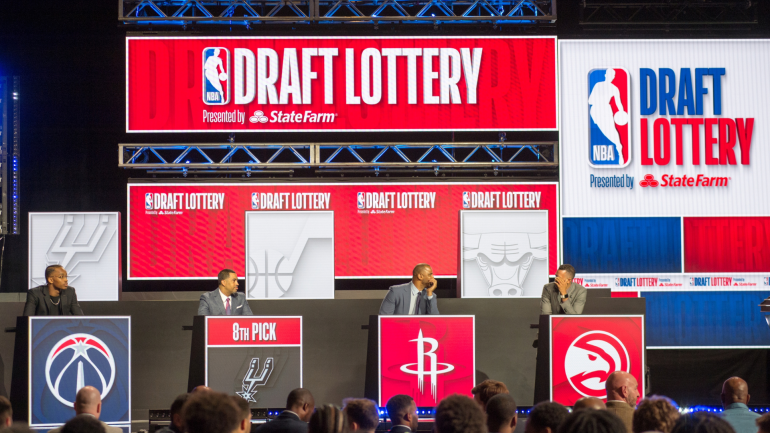
Tanking has been one of the primary stories of the 2025-26 NBA season and the league has spent the past several months searching for solutions. It fined teams like the Utah Jazz and Indiana Pacers for tanking-related offenses, conducted several calls with general managers, batted around multiple concepts, and, according to ESPN’s Shams Charania, has now settled on a proposal that would begin with the 2027 draft lottery.
So, how would the proposed new system work? Here is everything you need to know about the proposed restructuring.
The league is calling its proposed new lottery system the “3-2-1” proposal, named for the new distribution of lottery balls. The lottery would include a total of 16 teams (up from 14): the 10 teams that miss the postseason entirely, the No. 9 and 10 seeds in both conferences, and the losers of the No. 7 vs. No. 8 Play-In Tournament games.
In this proposal, the teams with the three worst records would fall into the so-called “relegation” zone. They would receive only two lottery balls each. The seven remaining teams that miss the postseason entirely would receive three. The No. 9 and No. 10 seeds would receive two, and the loser of the No. 7 vs. No. 8 game would get one. In total, this means there would be 37 lottery balls assigned to 16 teams.
Below is a table comparing every slot’s odds at the No. 1 pick compared to the current system.
| Record slot | New odds | Old odds | Change |
|---|---|---|---|
|
1 |
5.4% |
14% |
-8.6% |
|
2 |
5.4% |
14% |
-8.6% |
|
3 |
5.4% |
14% |
-8.6% |
|
4 |
8.1% |
12.5% |
-3.4% |
|
5 |
8.1% |
10.5% |
-3.4% |
|
6 |
8.1% |
9% |
-0.9% |
|
7 |
8.1% |
7.5% |
+0.6% |
|
8 |
8.1% |
6% |
+2.1% |
|
9 |
8.1% |
4.5% |
+3.6% |
|
10 |
8.1% |
3% |
+5.1% |
|
11 |
5.4% |
2% |
+3.4% |
|
12 |
5.4% |
1.5% |
+3.9% |
|
13 |
5.4% |
1% |
+4.4% |
|
14 |
5.4% |
0.5% |
+4.9% |
|
15 |
2.7% |
0% |
+2.7% |
|
16 |
2.7% |
0% |
+2.7% |
One slight difference here: the old lottery format does not distinguish between Play-In teams and non-Play-In teams. The 14 teams were slotted by record. In this system, the 10 non-Play-In teams would be automatically separated from the six Play-In teams.
As you can see, this system would give the six worst teams in the NBA worse odds at the top pick, and teams 7-16 significantly higher odds. The big winners here would be the best non-Play-In team, as No. 10 gets more than a 5% bump, and the No. 9 seeds, as they’d get a home Play-In game while also receiving bumps greater than 4%.
The current lottery system sets a floor of four picks below a team’s slot. Essentially, this means that the worst team can pick no lower than No. 5. Only the top four picks are drawn. Everything else is determined by each team’s record.
This system would change that drastically. The three worst teams in the NBA, those in the “relegation zone,” could fall as far as No. 12. Everybody else could go as low as No. 16. This means that all 16 picks are getting drawn. You can move up or down one spot. You could also move up 15 or down 13.
There are three other potentially significant tweaks on the table here:
These changes wouldn’t impact the 2026 lottery, which will be held on May 10. They have not been officially approved yet, though they reportedly have majority support among teams. A vote is expected at the May 28 Board of Governors meeting to approve the changes, with 23 of 30 votes required.
Interestingly, the proposal includes a “sunset” provision that would keep it in place only through the 2029 NBA Draft. That would give the league three years to weigh whether the system is working and, critically, align potential changes with the expiration of the existing collective bargaining agreement. Though the current CBA runs through the 2029-30 season, either side can exercise an opt-out by October 2028 that would end it after the 2028-29 season. This would allow the NBA and its players to consider rule changes beyond the scope of the draft in order to create a more cohesive overall marketplace for transactions.
2026 NBA Draft order: Jazz win tiebreaker over Kings — what that, other results mean for lottery, first round
Cameron Salerno
Though we can’t actually predict the decisions teams will make in the real world, we can evaluate the incentive structure in place. In some ways, this new system will discourage tanking. Under this system, it would be less advantageous than ever to have one of the worst records in the NBA. It would, in fact, incentivize bad teams to do everything in their power to win late in the year in order to avoid the bottom three in the standings. And with no distinction drawn between slots No. 4 and No. 10, there would be no reason for teams that aren’t making the postseason to jockey for position within that group.
However, any effort to flatten lottery odds merely shifts the tanking incentive. In this new world, it is more valuable than ever to try to just barely miss the postseason. There is less incentive to have a bottom-three or even bottom-six record, but there is far more incentive to land somewhere between No. 7 and No. 16 than ever. That is especially true with every pick getting drawn. You don’t need to hope for a tiny odds jump into the top four to benefit from, say, being a Play-In team rather than a playoff team. You could benefit just by jumping up from, for example, No. 15 to No. 12.
The obvious concern here, more than anything, would be the No. 7 vs. No. 8 Play-In game. There is typically very little difference between playing the No. 1 and No. 2 seed as a Play-In team. Your odds are going to be low either way. But in this system, losing that game gets rewarded with a spot in the lottery, while the winner goes on to probably lose in the first round anyway. From that perspective, the NBA is inviting tanking in a high-profile postseason game.
In theory, the NBA’s solution to this is the adoption of wide disciplinary power for the commissioner. If the league can strip you of lottery odds or move your pick based on the perception of tanking, teams are theoretically incentivized not to do it. But that is a very slippery slope. How could the NBA police player health, for instance? The NBPA would likely raise questions if the league attempted to unilaterally determine whether a player is healthy enough to play.
There’s also the matter of perception. A significant number of fans distrust the NBA’s current lottery system and believe the league influences its outcomes. These beliefs are, of course, baseless, and there are a number of safeguards in place to ensure the lottery results are legitimate. But there is simply no possible way to create safeguards for any subjective determination about tanking. There is no objective way to determine whether a team loses a game honestly or intentionally. Tanking very much falls under the “you know it when you see it” umbrella.
So what happens, for instance, when big-market teams that fans believe the league favors start losing a bunch of games? There will inevitably be calls for tanking enforcement — whether or not they are warranted. That will especially be true if small-market teams do get punished. Maintaining faith in this system will be enormously difficult. Fans are inevitably going to believe that rules are being applied selectively to their team.
The sunset provision will be essential to all of this. This system has clearly been designed as a short-term fix. The league will see how it works and determine in three years whether it’s actually effective. There are clear questions at this stage, but more will present themselves over time.
For now, we can call this proposal a step toward addressing tanking without knowing for certain whether it will do more harm than good.
✔ today silver rate
✔ 2026 winter olympics
✔ chat gtp
✔ silver rate today
✔ silver rate today live
✔ 2030 winter olympics