The 2026 FIFA World Cup was a cultural experience that brought new perspectives to the United States, and one of them might have staying power in the NFL. Stars throughout the league watched as their home stadiums turned into soccer cathedrals. Corporate branding was hidden, security measures were heightened and, in many cases, natural grass replaced artificial turf. Numerous NFL players want that last change to become permanent.
San Francisco 49ers tight end George Kittle was among the first big-name football players to publicly point out what these playing surface changes could mean for his league. Last month, at the start of the World Cup, Kittle stated the transition from artificial turf to natural grass at venues like MetLife Stadium and SoFi Stadium proves the NFL could play on grass year-round if owners “really gave a s—.”
Kittle attended the World Cup final between Spain and Argentina on Sunday and used the occasion to once again call on the NFL for change.
Grass still looks great! Let’s use grass instead of turf @NFL !! Please? Thanks guys! pic.twitter.com/1iS8Jf2zPX
— George Kittle (@gkittle46) July 19, 2026
Kittle stated last month he thinks 90% of players would prefer natural grass over artificial turf if given the option. While it is unclear if that large a majority actually supports it, there is clearly enough backing for the NFL Players Association to make it one of its primary sticking points with the league. The NFLPA has called for the league to fully adopt natural surfaces for three years, and first-year executive director JC Tretter embraced the issue upon assuming his new leadership position.
The NFLPA leaned into the movement over the weekend with the hashtag #WorthTheCost, with players calling on league stakeholders to invest in player safety and universally ditch artificial turf.
Players say they are #WorthTheCost
A large handful of the NFL’s biggest names echoed Kittle’s desire for league-wide natural grass. Perennial Pro Bowlers and rising stars alike used their platforms during the final weekend of the World Cup to join the call for action.
Bears QB Caleb Williams
#worththecost pic.twitter.com/UxVcFc4lr2
— Caleb Williams (@CALEBcsw) July 17, 2026
Colts RB Jonathan Taylor
Natural grass isn’t out of reach. Prioritizing players shouldn’t be either! We’re #WorthTheCost
— Jonathan Taylor (@JayT23) July 17, 2026
Commanders OT Laremy Tunsil
If stadiums can make grass work for the World Cup, they can make it work for NFL players. We’re #WorthTheCost.
— Laremy Tunsil (@KingTunsil78) July 17, 2026
Panthers LB Devin Lloyd
Natural grass isn’t out of reach. Prioritizing players shouldn’t be either! We’re #WorthTheCost
— devin lloyd (@DevinLloyd_) July 17, 2026
Packers TE Tucker Kraft
Green Bay Packers are spoiled since we play on the greatest surface in the NFL. Natural grass is the best, and should be the only surface we play on. We are #WorthTheCost
— Tucker Kraft (@TuckerKraft) July 17, 2026
Why do players prefer natural grass?
Player safety is the crux of the argument for natural grass. During his tenure as NFLPA president, Tretter penned an article in 2020 outlining the discrepancy in injuries between the two playing surfaces.
NFL injury data from 2012-18 showed a 28% higher rate of non-contact lower-extremity injuries on turf compared with grass. Turf is particularly hard on knees and ankles, resulting in 32% more non-contact knee injuries and 69% more foot and ankle injuries over that seven-year span. Those numbers are rooted in physics: Grass has more give, while turf places more force on the legs.
MetLife Stadium, which hosted eight World Cup matches on a newly installed grass field, has long been at the center of scrutiny. With its AstroTurf in place, the following NFL standouts — among numerous other players — suffered serious lower-body injuries there over the last six years:
- Malik Nabers (torn ACL)
- Aaron Rodgers (torn Achilles)
- Sterling Shepard (torn ACL)
- Wan’Dale Robinson (torn ACL
- Kyle Fuller (torn ACL)
- Nick Bosa (torn ACL)
The evidence is also anecdotal. Tretter wrote in that article that his joints “felt noticeably stiffer the next day” when he practiced on artificial fields compared with grass. Exactly half of the NFL’s stadiums use artificial turf, so players are deeply familiar with going back and forth and feeling the effects of both surface types.
How the World Cup proved natural grass is feasible
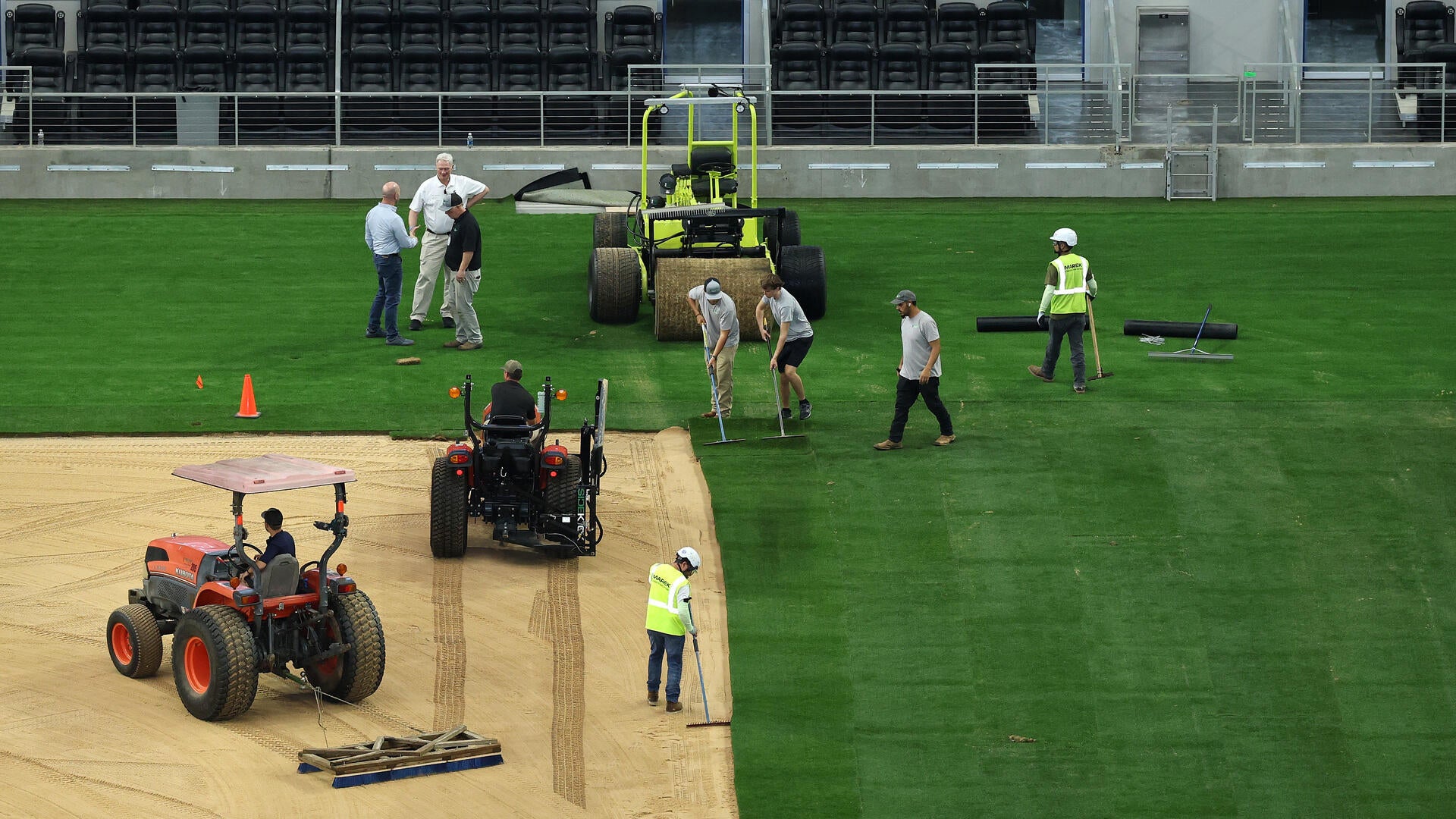
Converting a field from turf to grass is a significant undertaking. At MetLife Stadium, it took weeks to remove the AstroTurf, install 20 truckloads of Tahoma 31 bermudagrass and prepare that new surface in line with FIFA’s world-class standards. Before that, the grass took about 10 months to grow at Carolina Green Turf Farm outside Charlotte, North Carolina. The transformation also required the installation of about two feet of sand, an irrigation system and vacuum ventilation.
Beyond the demanding installation process, in-season maintenance requires an immense amount of resources. Football is especially rough on the surface, not to mention the effects of changing weather over an 18-week season plus the playoffs. Keeping the grass playable is even more challenging at indoor venues.
The grass remained in pristine shape at every venue throughout the World Cup, though. Most stadiums hosted a handful of matches over less than two months. Even indoor facilities avoided playability issues: AT&T Stadium hosted nine matches, while SoFi Stadium held eight. Two other stadiums with retractable roofs combined to host 15 matches on natural grass: NRG Stadium in Houston and Mercedes-Benz Stadium in Atlanta.
The NFL is not short on resources, and half the league already uses natural grass. Getting the other half to make the switch is not asking too much, players argue.
“Why not just spend a couple extra million dollars, which we know they all have, to just grass all the fields?” Kittle stated. “It doesn’t seem that difficult.”