2026 MLB trade deadline preview: Passan’s intel on every teamJeff Passan
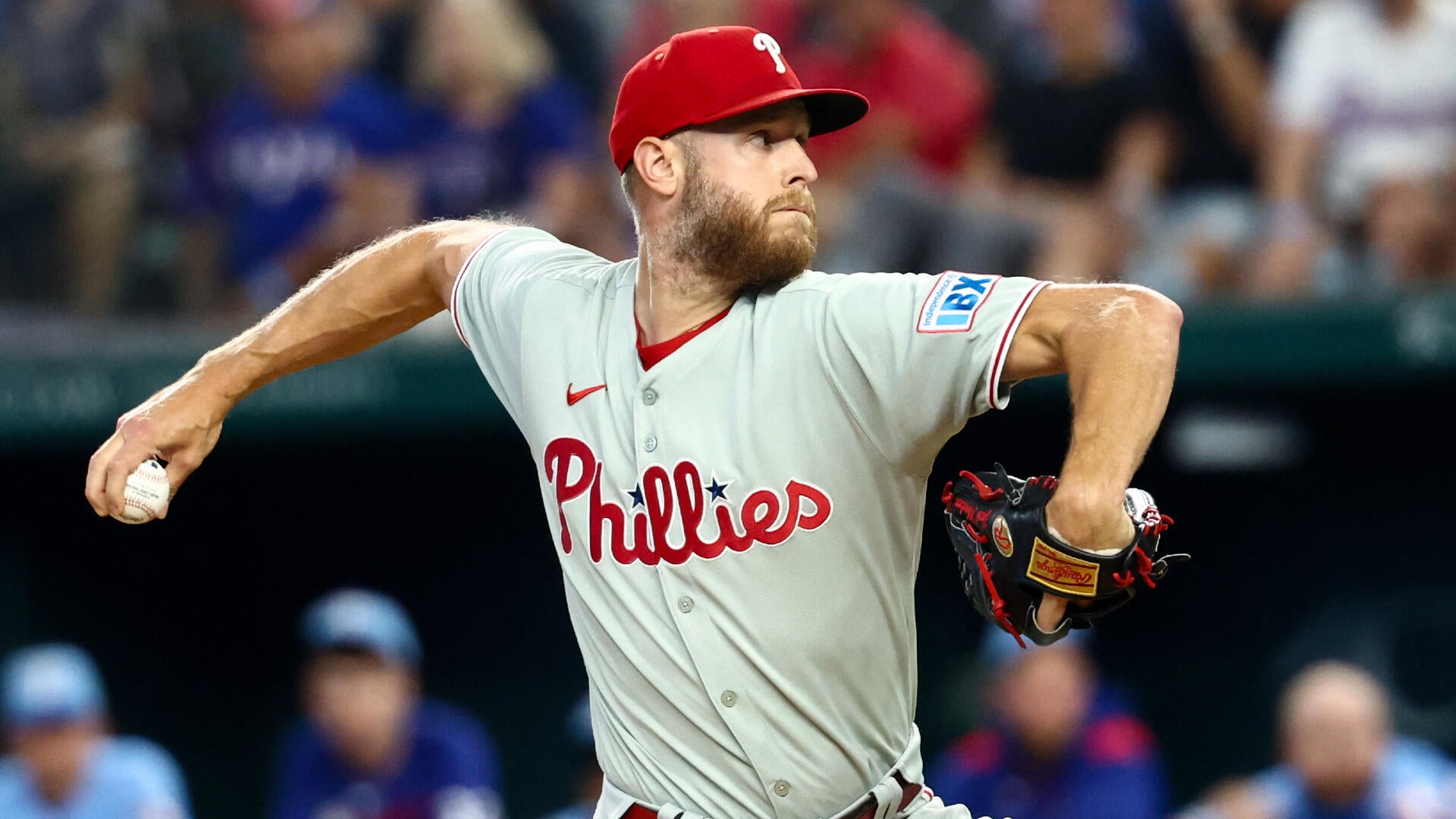
One of the biggest deadline trades this century is days away from happening. The Tarik Skubal sweepstakes has arrived — not officially from the Detroit Tigers, but telegraphed through the preparations of the interested teams with means to get him by the 6 p.m. ET deadline on Monday. In what is expected to have been Skubal’s final outing with the team that drafted him and helped him develop into the reigning two-time American League Cy Young winner, the Tigers blew a 7-0 lead Wednesday and lost to Baltimore in 12 innings.
The defeat dropped Detroit to 51-58, 4½ games back of the final AL wild-card spot with five teams to leap. The math was always going to be difficult after the Tigers’ dreadful May, and it finally caught up to them this week. If Detroit holds Skubal through the end of the season, when he leaves in free agency, the Tigers would reap only a compensatory draft pick in the 30th overall range.
Considering the teams keen on Skubal, Detroit stands to return a hefty multiple on the value of that pick (around $10 million) in any trade return. The teams with the three best records in baseball — the Los Angeles Dodgers, Milwaukee Brewers and Tampa Bay Rays — also happen to have arguably the three best farm systems in baseball.
Skubal would cement the Rays as the AL favorite. With Jacob Misiorowski, he would give the Brewers the most fearsome lefty-righty combination since Randy Johnson and Curt Schilling pitched Arizona to the 2001 World Series title. And the Dodgers would add perhaps the best pitcher in the world to a team that has won the last two championships already.
They’re not the only ones vying for Skubal, of course. The team with the fourth-best record, Atlanta, would love to pair Skubal with Chris Sale and form the best duo of left-handed starters since Rube Waddell and Eddie Plank dominated for Connie Mack’s Philadelphia A’s in the early 1900s. The Chicago Cubs, evermore looking for starting pitching, will be in the mix as well. And there’s still time for other teams to join the fray. Up the price will go, driven not just by Skubal’s excellence but the fact that the Dodgers, Brewers and Rays happen to be absolutely loaded in the minor leagues.
The best prospect in baseball? Jesús Made, a Double-A shortstop with the Brewers. Dodgers outfielder Josue De Paula is a top-five prospect. Rays center fielder Theo Gillen is in the top 10. What makes each team’s list so impressive, though, is its depth. The Brewers are a hitting factory, with eight top-100-caliber batters. The Dodgers can fill three full outfields with legitimate, well-regarded prospects. The Rays have the best catching duo in the minors and an excellent balance of infielders and outfielders. All three have plenty of pitching options, too — major and minor leagues — and with Troy Melton, Framber Valdez, Jackson Jobe and Keider Montero the makings of a solid rotation, arms to help replace Skubal and impending free agents Casey Mize and Jack Flaherty will be part of any deal.
This will come to a head quickly. Multiple executives believe, just to ensure potential medical hiccups don’t scuttle a deal with limited time to pivot, that Skubal will be moved, at just in, Monday morning. The hours between now and then will be frenzied, teams trying to position themselves to win without overpaying too dearly. It’s all great theater, and it’s just a part of a trade deadline that goes well beyond a blockbuster deal.
There is plenty more to discuss. What follows is a breakdown of where all 30 teams stand as the deadline approaches, with those committed to dealing first, those with questions second and the scant few not expected to do much at the end.
Jump to team:
American League
ATH | BAL | BOS | CHW | CLE
DET | HOU | KC | LAA | MIN
NYY | SEA | TB | TEX | TOR
National League
ARI | ATL | CHC | CIN | COL
LAD | MIA | MIL | NYM | PHI
PIT | SD | SF | STL | WSH

Teams going big

Tampa Bay Rays
Biggest question: Just how far will they go?
Biggest needs: Starting pitcher, catcher, relief depth
Best fit: Tarik Skubal, SP
The case for the Rays getting Skubal is quite simple: If they get him, they are the favorite to win the American League pennant. As un-Rays as it would be — they’re typically the ones moving impending free agents, not acquiring them — there is something very exciting about having a rotation that already features Drew Rasmussen, Shane McClanahan and Nick Martinez headlined by Skubal.
Editor’s Picks
Skubal and Miller to where? Lindor dealt across NY!? 10 blockbuster proposals that would rock the MLB trade deadline
MLB trade deadline prospect watch for all 30 teams: Biggest needs, players who could move and untouchables
Olney: The 12 teams most desperate to make a deadline deal — and their biggest needs
That mentioned, if a trade requires Theo Gillen — the dynamic center fielder who at 20 looks as if he more than belongs in Double-A — Skubal is unlikely to be a Ray. Tampa Bay isn’t fundamentally opposed to trading Gillen, but doing so for a player who will be there for months as opposed to years is where aggressiveness turns into recklessness.
If Washington would move CJ Abrams, that might change the calculus, but the depth of the Rays’ system almost gets lost in Gillen’s excellence. The Rays’ 15th-best prospect would be in most teams’ top five, and when in the coming days the asks lessen and teams engage more on that tier, Tampa Bay is going to be busy. Adley Rutschman, Luis Arraez, a bullpen arm that can get lefties and righties — the Rays have numerous possibilities. And don’t count out Skubal entirely, because Tampa Bay’s farm depth is enough to land him even without Gillen.

New York Yankees
Biggest question: How much can they improve a struggling lineup?
Biggest needs: Catcher, leverage relief arm
Best fit: Adley Rutschman, C
Some of the lineups run out by the Yankees lately have conjured memories of Aaron Judge-less times past, and they are not great. And yet here the Yankees are, with Judge, Cody Bellinger and Giancarlo Stanton all sidelined, winning enough to stay within easy striking distance of the Rays.
It’s not imperative that the Yankees go out and act aggressively. With this pitching staff, they almost certainly would be good enough to make the playoffs. But the American League is there for the taking. So it makes sense to push, especially with New York’s preponderance of starting pitching once they are fully healthy. Between their farm system and surplus big leaguers, the Yankees should have access to more or less anyone being discussed in deals. So maybe it’s Rutschman. Maybe it’s Mason Miller. Maybe it’s both. If it’s neither of those, it needs to be someone.
Winning the deadline guarantees nothing. What it unquestionably does is show who is really committed to winning the season. And though there are certainly other considerations (system health, likelihood of going deep in October) teams like the Yankees, by the nature of their mandate, should add every year to illustrate that commitment. If that means moving a starter, so be it. If that means including talented shortstop Dax Kilby, that can’t hold up New York. Drawing a line at George Lombard Jr. is reasonable. Other teams might skip lines altogether, though, and that will be the true test of how far the Yankees are willing to go to get better now.

Boston Red Sox
Biggest question: Where will they make their splash?
Biggest needs: Shortstop, catcher, relief pitching
Best fit: Otto Lopez, SS
The Red Sox fought their way back into contention and aren’t done adding after acquiring Curtis Mead. They are going big. Maybe that means getting Zach Neto from the Angels. They could try to convince Houston to move Jeremy Pena, even as the Astros try to win now, or wheedle Abrams from Washington. The best opportunity, though, could be Lopez, the Marlins’ All-Star shortstop.
Breaking News from Jeff Passan
Download the ESPN app and enable Jeff Passan’s news alerts to receive push notifications for the just in updates first. Opt in by tapping the alerts bell in the top right corner. For more information, click here.
Miami is open to dealing anyone but right-handers Eury Perez and Sandy Alcantara. Boston could kill two birds with one stone and get a Lopez-Liam Hicks package, though with the amount of control for each — three more years for Lopez, four more for Hicks — the cost would be painful. Maybe it’s Marcelo Mayer and pitching. Or perhaps the Red Sox, knowing that covering two vital positions in one fell swoop is a rare opportunity, center a package on shortstop wunderprospect Franklin Arias, who in his third Triple-A game homered off Chris Bassitt, he of 1,300 big league innings.
As of now, the Red Sox are juggling dozens of balls. They’ll cull those in the coming days and are among the teams likeliest to make a decisive move. Whether it’s at shortstop, catcher or both is the big question to be answered when the market finally defines itself.

Chicago White Sox
Biggest question: What caliber prospect will they give up in pursuit of their goals?
Biggest needs: Starting pitching, relief pitching
Best fit: Reid Detmers, SP
White Sox general manager Chris Getz is always ready to make a deal, and after years of slogging through a rebuild most accurately described as a tour through the circles of hell, they’ve come out on the other side sooner than expected and ready to pounce.
Much of what the White Sox do depends on their willingness to deal from a farm system that has graduated an abundance of talent and still has plenty left. Most of it is in the middle infield, with the No. 1 pick in this year’s draft, Roch Cholowsky, plus Caleb Bonemer and Billy Carlson — both big bonus babies out of high school — and William Bergolla, who is out for the season because of a broken leg but has Luis Arraez-level bat-to-ball skills.
The White Sox also have some money to spend, which puts them in a place to snag a higher-dollar contract of an impending free agent if some of their other targets go elsewhere. Robbie Ray, for example, would help their rotation — and the White Sox could provide an alternative option for San Francisco, which has suggested to teams it will pay down some of the $8 million-plus Ray is owed for the rest of the season. Whether it’s deals like that for Ray or Clay Holmes, or controllable players like Detmers who will require trading a Bonemer type, the White Sox have plenty of options and will lean on Getz’s ferocity to help win their first division title in five years.

Chicago Cubs
Biggest question: How much pitching can they get?
Biggest needs: Starting pitching, relief pitching
Best fit: Tarik Skubal, SP
The Cubs are in an enviable spot. Not only is their everyday lineup in no need of real tinkering, they’ve got plenty of bats available: Matt Shaw and Pedro Ramirez in the big leagues, Owen Ayers and Jefferson Rojas in the minors.
2026 MLB trade deadline trackerWhich teams will make the biggest splash? Here are the just in news, rumors and analysis as 6 p.m. ET on Aug. 3 nears. Running tracker »
They recognize that to achieve their objective — to get an impact starting pitcher and bullpen arm — they’ll need to part with some of that. Chicago lines up very nicely with the Mets, who have a cadre of arms that will be moving. If Mets president of baseball operations David Stearns wants to avoid having to piecemeal together a manic deadline day, he could package one of his starters (Clay Holmes or Freddy Peralta) and a bullpen arm (Luke Weaver, Brooks Raley, A.J. Minter, Huascar Brazoban) to entice the Cubs.
The Cubs don’t have the prospect depth of the Dodgers, Brewers and Rays and have no intentions of dealing outfielder Josiah Hartshorn. Can a combination of multiple young bats and right-hander Jaxon Wiggins be enough to land the prize? Chicago is going to be creative — with Ayers on the cusp, the Cubs have talked about Carson Kelly with teams seeking a right-handed-hitting catcher, for example — because in a league with the Dodgers, Brewers, Braves and Phillies, walking into a postseason with clear weaknesses is doom waiting to happen.

Atlanta Braves
Biggest question: If they don’t win the big sweepstakes, what’s the pivot?
Biggest needs: Starting pitching, Ronald Acuna Jr. to be Ronald Acuna Jr.
Best fit: Tarik Skubal, SP
Skubal and Sale. Sale and Skubal. It’s a dream top of the rotation, and it’s within Atlanta’s reach if it’s willing to take a hefty hack at its prospect depth. Start with breakout outfielder Eric Hartman, add a young, big league-ready arm and stack a couple of more prospects on top of that, and at very least it gets you into the conversation — and maybe winds up with Tarik Skubal starting Game 1 of a wild-card series and Chris Sale in Game 2.
Short of Skubal, Atlanta will find another starting pitcher and hope that Robert Suarez’s return from the injured list turns its bullpen into the absolute weapon it was over the season’s first three months. The Braves figured at one point their starting-pitching depth would return, too, but Hurston Waldrep was yanked from a rehab start, Spencer Schwellenbach still isn’t ready for a rehab start and Spencer Strider will be back at the end of September at the earliest.
Without another front-of-the-rotation starter, the Braves would go into October with Sale followed by some version of Reynaldo Lopez, Bryce Elder and Grant Holmes. That is fine for the regular season when you’re capable of scoring like Atlanta. Compared to the rotations Los Angeles, Philadelphia and Milwaukee will field, it pales. President of baseball operations Alex Anthopoulos knows that, and as one of the more decisive decision-makers in the game, he won’t hesitate to change it in the next 96 hours.

Philadelphia Phillies
Biggest question: What will their system allow them to do?
Biggest needs: Fifth starter, leverage bullpen arm, offensive firepower
Best fit: Zach Neto, SS
For a team that’s as good as the Phillies, they have a lot of needs. This is a good thing and a bad thing. It’s good because it suggests ample opportunity to improve. It’s not so good because there’s only so much prospect capital to splash around before you’ve put yourself into a shell of a farm system like the Padres, for example.
2026 MLB trade deadline gradesTrade season has officially begun! Here’s our running scorecard for every big move. Trade grades »
Granted, Phillies president of baseball operations Dave Dombrowski has experience in gutting minor league systems — and has done so to generally good effect. But the Phillies might have a choice to make. Their system is thin. They don’t want to move Francisco Renteria, an impressive-looking 17-year-old center fielder who has been the best player in the Dominican Summer League. Gage Wood, their first-round pick last year, is high on a lot of teams’ preference lists.
But someone like Neto would take, presumably, Wood and Renteria. And at that point, further acquisitions would deplete Philadelphia’s system even more. Which leaves the Phillies asking a reasonable question: Is it preferable to use the deadline for one big acquisition and a few smaller ones, or should the Phillies keep their top prospects and just aim for across-the-board solid players. Maybe they surprise and do both. Sleep on Dombrowski at your peril. But know that perhaps every need won’t be addressed, and that’s OK.

Milwaukee Brewers
Biggest question: Will they pull a 2008?
Biggest needs: High-end starting pitching, home run power
Best fit: Tarik Skubal, SP
On July 7, 2008, the Brewers traded three prospects and a player to be named later for three months of CC Sabathia’s services. Sabathia was so dominant he actually finished in fifth in the National League Cy Young race in only 17 starts. Though the Brewers faltered in the division series, nearly 20 years later that deal still serves as an example of a deadline success — even if that PTBNL was Michael Brantley.
Milwaukee finds itself in a similar position today: really, really good — and with one of the best pitchers in the world there for the taking. Particularly so considering Milwaukee boasts the game’s best farm system and has endless deal iterations that could tempt Detroit the most. As alluring as a rotation with Skubal and Sale sounds, Milwaukee could one-up it: Here is Tarik Skubal and Jacob Misiorowski. Beat that.
The Brewers aren’t exclusively focused on Skubal. They love the idea of Mason Miller joining what’s already a superpen. They are always in search of some slug, with a major league-low 98 homers. The Brewers also know that in spite of the dearth of homers, they’re fifth in MLB in runs scored, so offense isn’t an issue now. In the postseason, when home runs account for an even higher percentage of runs than the regular season, it could be an issue, which is why absent a Skubal deal, Milwaukee will find another starter and guide its resources toward more incremental improvements.

Los Angeles Dodgers
Biggest question: Can anyone beat them for Skubal?
Biggest needs: Impact players, bullpen depth
Best fit: Tarik Skubal, SP
Meet the favorite in the Skubal sweepstakes. Which should come as no surprise. Even before Shohei Ohtani’s pitching status for the rest of the season was in question … before Blake Snell and Tyler Glasnow sat out months because of injuries … Skubal to the Dodgers was regarded as the expected outcome if the Tigers falter.
The top 100 MLB trade deadline candidatesSkubal to the …? All-Star outfielders and shortstops available? Here are the big names your team could be targeting. Passan & McDaniel rank the top 100 »
Well, they did, and now the Dodgers only need ask: Which prospects are they willing to give up? Because Los Angeles has plenty of them. If it’s not Josue DePaula, it’s Mike Sirota or Eduardo Quintero or Zyhir Hope or James Tibbs III or Charles Davalan. If it’s not Justin Wrobleski, it’s River Ryan or Christian Zazueta or Zach Root or Adam Serwinowski. And that’s to say nothing of their infield, which, with Emil Morales and Kellon Lindsey and Chase Harlan, is far deeper than at the beginning of the season.
Point is: The Dodgers drafted or signed almost every one of those players. This is not blowing away a player with cash like free agency. Every team in the running can stomach the $10 million Skubal is owed for the rest of the season. This is excelling at all of the fundamental elements of running an organization. Teams don’t win a lottery to get Tarik Skubal at the deadline. They put themselves in position to beat other teams to him. Whatever other moves the Dodgers make over the next few days, this deadline is really about one player. They’ve got their deadline reinforcements coming in the returns of Snell, closer Edwin Diaz and catcher Will Smith, which will come close to making them whole. Now it’s Skubal time.

Detroit Tigers
Biggest question: When will Skubal go?
Biggest needs: Best player available
Best asset: Tarik Skubal, SP
Though the Tigers haven’t mentioned this to other teams yet, blowing a seven-run lead on their way to a 12-inning loss Wednesday cemented the truth: They haven’t won enough to warrant Skubal staying, and he will be traded. The last instance of a two-time Cy Young Award winner in his prime being traded was when Johan Santana went to the Mets in February 2008. The Tigers know that this deal can help shape their future and will do everything they can to extract every last ounce of value.
President of baseball operations Scott Harris has not telegraphed what the Tigers are seeking, but the teams in the mix understand that the price will be hefty and the number of suitors will only cause it to go higher. Because of the magnitude of it, multiple executives mentioned they would be very surprised if Skubal isn’t gone by, at just in, the morning of the deadline. Taking something of such import down to the end can be dangerous. One questionable medical report and a deal could fall apart, leaving Detroit stuck with Skubal and a measly draft pick as compensation.
Furthermore, some of the market’s most engaged teams are going to be waiting on Skubal, which could stall some of the better players from moving. Perhaps that includes Detroit’s own Casey Mize, whose fastball velocity dipped 2 mph from his yearly average in his last start but has a 2.70 ERA on the season. Gleyber Torres also will be one of the better right-handed-hitting options. There are relievers (Kyle Finnegan, Kenley Jansen, Drew Anderson). The Tigers are a solid collection of talent that played to a 10th-percentile outcome. It’s an immensely frustrating outcome. It’s also the thing that helped make this deadline.

New York Mets
Biggest question: How many players will go?
Biggest needs: Starting pitching, infield bat
Best asset: Clay Holmes, SP
The Mets are going to start moving soon. As much as they have the capacity to nimbly maneuver a trade deadline with a half-dozen or more players moving, doing so is tricky, which gives them incentive to break up the most disappointing team this season sooner than later.
There’s real opportunity for the Mets. They have six pitchers they’re willing to move that have drawn strong interest. Every team that needs relief pitching — the Yankees and Pirates and White Sox and Rangers and Diamondbacks and Braves and Twins and more — want at least one of Luke Weaver, Brooks Raley, A.J. Minter and Huascar Brazoban. Raley and Minter will move for certain, and Weaver is expected to generate enough interest to warrant dealing him with one year left on his contract.
Perfect trade deadline add for top MLB teamsSkubal to which elite team? An All-Star traded within the NL East!? We make moves for World Series hopefuls.
Jeff Passan »
Similarly, the desire for starting pitching at the top end of the market is real (Tampa Bay, Atlanta, both Chicago teams, Arizona, Milwaukee, Philadelphia) and between Clay Holmes and Freddy Peralta, the Mets have two of the most desirable starters.
Francisco Lindor isn’t going anywhere, so it won’t be that kind of deadline. But president of baseball operations David Stearns has the ability to make this the week that helped change the Mets. This isn’t a start-from-scratch situation, and unless they package some of their players, nobody by himself is likely to fetch a top-100 prospect. That makes it all the more imperative to get these right and put the Mets back on the path they expect to travel: one to the top, not the basement.

San Francisco Giants
Biggest question: Can they manage to move one of their onerous deals?
Biggest needs: Starting pitching, relief pitching, outfielders
Best asset: Luis Arraez, 2B
The Giants should do reasonably well for Arraez, whose wondrous ability to put the ball in play is a separator in the postseason. They should find a taker on Ray, too, particularly with a willingness to pay down his salary.
Beyond that and a few other smaller deals — JT Brubaker as a low-leverage relief arm, Tyler Mahle as a backend starter — the Giants are full of questions. Mainly, can they find a path to shed any money from a roster that is too bloated for a team on pace to go 68-94? Rafael Devers? Matt Chapman? Willy Adames? They play to hold on to Jung Hoo Lee but could offload Heliot Ramos, who some teams see as a solid flyer.
This almost certainly will not be a transformational deadline for the Giants. It will be a painful reminder of how sideways this season has gone. They have a solid farm system for the first time in years thanks to their work in Latin America, but this is likely to be a multiyear turnaround, and anything they can salvage from this season is better than the nothing it has been.

Toronto Blue Jays
Biggest question: How aggressively will they offload players who meant so much to their World Series run?
Biggest needs: A memory eraser to permanently purge 2026
Best asset: Kevin Gausman, SP
Speaking of disappointing seasons, the Blue Jays are right up there with the Mets for the most frustrating 2026. They returned most of their pennant-winning 2025 team and added Dylan Cease, Kazuma Okamoto, Tyler Rogers and Cody Ponce. They were poised for a repeat. They scuffled early, never recovered and now find themselves in an uncomfortable position: breaking up a team the year after it reached the World Series.
MLB second-half preview for all 30 teamsWho will rule the rest of the season? Here’s what you need to know coming out of the All-Star break. Second-half preview »
There are plenty of options. Gausman, up and down this year, is still regarded as one of the best starters available. Daulton Varsho plays a solid center field and can hit the ball out of the park. Shane Bieber walked a career-high six in the first inning of his last start, and at more than $5 million on his contract for the rest of the season might be too pricey for teams that worry his stuff has gone too far backward. And though George Springer is heating up — over the last six weeks, he has more multihit games (11) than he did in the season’s first 21⁄2 months (eight) — he’s owed more than $7 million himself.
The biggest return would come if the Blue Jays made closer Louis Varland available. They’ve told teams that’s not happening. You can have Rogers and Jeff Hoffman — both with big contracts and FIPs of 2.80 or lower. You can have more controllable arms such as Mason Fluharty and Rule 5 pick Spencer Miles. Varland would bring a monster haul, but with its core returning, Toronto sees this more as a dreadful season than a sign of things to come and plans to redouble its efforts going into next year.
Teams with questions that will shape the deadline

Los Angeles Angels
Biggest question: How many of the big three go?
Biggest needs: Quite literally everything
Best asset: Zach Neto, SS
The biggest mystery of the trade deadline, beyond where Skubal will land, is what the Angels are doing. They have an interim general manager, longtime Cardinals president of baseball operations John Mozeliak, who has been given the go-ahead to discuss shortstop Zach Neto, left-hander Reid Detmers and right-hander Jose Soriano. Whether those discussions materialize into potential deals, and whether those potential deals will be approved by owner Arte Moreno, are the unanswered questions.
The initial sign: Mozeliak will operate with impunity. He traded reliever Chase Silseth and catcher Logan O’Hoppe to the Rangers on Wednesday night. Every contender is shooting their shot with the Angels because in a market without an overwhelming amount of high-impact talent, three well-above-average players with at least two years of team control is a very attractive proposition. Mozeliak is not surprisingly taking his time. The offers will dictate his moves. If markets are healthy for all three, all three could go. If markets falter — and based on the way that Mozeliak has mentioned some interested teams aren’t a fit, that feels like a long shot — all three could stay.
Either way, the Angels, hamstrung by Moreno’s impulsive decision-making throughout the years, have a real chance to start fresh. It would be painful, no doubt, and set the Angels on an unfamiliar course. It’s also a necessary one, because for a decade they’ve needed new direction and have never been allowed to pursue it. Now it’s time to see if it’s same ol’ Angels or a new day.

Miami Marlins
Biggest question: How weird will they get?
Biggest needs: High-ceiling bats
Best asset: Otto Lopez, SS
The Marlins are in an excellent position for a team coming off a 12-game losing streak. There is no pressure for them to make trades seeing as their only impending free agent is closer Pete Fairbanks. They also have made everybody but Eury Perez and Sandy Alcantara available. The only mandate is to get better — and considering the Marlins have always seen 2027 as the real beginning of their next window, they are in no hurry to do something now unless it really makes sense.
Top 10 prospect lists for every MLB teamWho is rising and falling in every major league farm system? Kiley McDaniel digs in.
Updated top rankings for all 30 teams »
And maybe it will. Teams adore Lopez and his MLB-leading .329 batting average. They love Liam Hicks’ 14 home runs with a 9.8% strikeout rate (with the next-lowest K rate and as many home runs belonging to Juan Soto at 21 and 13.4%). They see the lack of right-handed bats available and wonder if Heriberto Hernandez could be a solution.
There are other candidates, too, which reinforces the point that the Marlins are doing something right. And another right thing, for teams without championship pressure and with an opportunity to take advantage of a market, is not to let the excitement of this year force deviation from a plan that’s unfolding quite well. As good as the 2026 Marlins have been — and they’ve been quite good at times — the 2027 and 2028 and 2029 Marlins, playing in what might be the best division in baseball by then, are going to need every advantage they can to beat the money of the Mets and Phillies, the steadiness of the Braves and the coming ascent of the Nationals. So if that means doing the unexpected in August 2026, Marlins president of baseball operations Peter Bendix won’t hesitate.

Seattle Mariners
Biggest question: What do you do with this team?
Biggest needs: Back-end relief arm, right-handed bat
Best fit: Mason Miller, RP
The most confusing team in baseball resides in the Pacific Northwest. The Seattle Mariners should be good — very good, even. They’ve got talent on offense. They’ve got a loaded rotation that runs six-deep. They’ve got a cadre of good relief arms. And with all of that, they remain under .500. Because they’re still just 2½ games back of the Rangers for first in the AL West, the Mariners can’t, in good conscience, punt on this season. At the same time, they are trying to answer a question with no good answer: How much do you invest in a team that hasn’t proved itself worthy of investment?
The Mariners, with their loaded farm system, could get Miller to join Andres Munoz, Gabe Speier, Jose Ferrer, Eduard Bazardo and, eventually, Matt Brash. It would be arguably the best bullpen in baseball. They could get any right-handed bat they want, though the infield will be crowded upon Brendan Donovan’s long-awaited return, and the inventory of outfielders is both thin and not all that impactful.
Seattle is open to moving starters Emerson Hancock or Luis Castillo, and maybe there’s a big leaguer-for-big leaguer match that makes sense. The Mariners are plenty capable of figuring things out and going on a tear to end the season. What they do between now and Monday will say plenty about how the Mariners front office regards this team. They were ready to go all-in. Are they still?

Pittsburgh Pirates
Biggest question: Do they belong in the above category?
Biggest needs: Relief pitching — multiple
Best fit: Adrián Morejón, RP
The Pirates have the makings of a terrifying October team. They can really hit — and that has been true even with Konnor Griffin, Oneil Cruz and Spencer Horwitz, three of their best offensive players, on the injured list. Their starters can really sling it, with an average fastball velocity of 96.8 mph — more than a half-mph better than the next-best big league team and nearly 4 mph clear of the Cubs.
How could an MLB salary cap work?Here’s what the NBA, NFL and NHL teach us about baseball’s proposed system.Jeff Passan »
Though their bullpen hasn’t been a complete disaster, it has been disaster-adjacent — bad enough that their closer to begin the season, Dennis Santana, was just designated for assignment and went unclaimed. Gregory Soto, Yohan Ramirez and Mason Montgomery are perfectly fine bullpen options, but only Montgomery belongs in a leverage role. Which puts the impetus on Pittsburgh to remake its relief corps and secure its first postseason spot since 2015.
Should they land relievers — and they are trawling everywhere for them — the Pirates’ potential comes that much closer to morphing into reality. They’re two games back of the final wild-card spot. A playoff berth is within reach. And whether it’s one of the Mets’ arms or a high-strikeout type like Ryan Zeferjahn or even the flamethrowing Morejón, the upgrades are there for the taking.

San Diego Padres
Biggest question: How is Preller gonna Preller?
Biggest needs: Starting pitchers — plural
Best fit: Robbie Ray, SP
Best asset: Mason Miller, RP
One day, the Padres look like a team that can compete with anybody, and the next day, they resemble a 100-loss outfit, and it’s this duality that makes figuring out San Diego’s deadline so difficult. With the return of their offensive firepower over the past month and their seasonlong relief excellence — they have the lowest expected ERA in baseball — the Padres can make a case to add in hopes of stealing a wild-card spot.
The issue with adding beyond low-cost contracts is simple: They’ve added so much in recent years that their farm system is destitute. They could add depth quite easily if they decide to move Miller or Morejón — or both — but that would go a long way to quelling any chance at winning this season.
A.J. Preller, the Padres’ president of baseball operations, is creative enough to thread the needle on a simultaneous add-and-subtract play. Flip a reliever or two, add a starter or two, and maybe there’s enough to sneak back into the postseason. But the classic Preller play of whale hunting? When they gave up Leo De Vries — now the No. 2 prospect in baseball — to get Miller last year, they were 60-49 with a plus-32 run differential. Today, even after five straight wins, they’re 55-53 and minus-18.

Baltimore Orioles
Biggest question: How much are they ready to blow this thing up?
Biggest needs: Controllable starting pitching
Best fit: Jose Soriano, SP
Best asset: Adley Rutschman, C
Few teams, if any, have the capacity to upend their roster like the Orioles. This doesn’t make them likely to do it, but teams have noted to themselves to remain in touch with Baltimore because of the Orioles’ openness to consider just about anything.
Redrafting 2023-25 MLB draftsSkenes or Kurtz? Wetherholt or Griffin? We combined three years’ worth of superstar prospects and play GM for all 30 MLB teams. See all 60 picks »
Move 2022 No. 1 pick Jackson Holliday? Sure. What about 2019 No. 1, catcher Adley Rutschman? For the right deal. The 2024 AL Rookie of the Year, Colton Cowser? On the table. At this point, the Orioles are considering just about anything because what they have has not worked. After a most-unexpected division title in 2023 that seemed to portend the arrival of a new powerhouse in the AL, the Orioles have gone backward.
Rutschman is the most interesting of the bunch, though his current placement on the injured list complicates matters, as does the fact that the teams with the greatest desire for catching help all reside in the same division as Baltimore. The Orioles could be among the busiest teams before Monday at 6 p.m. ET. And they also could focus on their free-agents-to-be (outfielder Taylor Ward, left-hander Trevor Rogers and right-handed reliever Andrew Kittredge) while saving their overhaul for the winter. Whichever way the Orioles approach it, plenty of eyes will be trained on them heading into the weekend.

Colorado Rockies
Biggest question: Do you trade high on offense in Colorado?
Biggest needs: Best player available
Best asset: Hunter Goodman, C
When Paul DePodesta took over as president of baseball operations over the winter, some of the game’s most curious executives wondered whether he would do what they’ve long assumed a Rockies head of baseball operations might: try to get the best return for the offensive stars Coors Field consistently produces and use that advantage to load up on pitching.
That opportunity has arrived. By no means the Blake Street Bombers, this version of the Rockies do wield some thunderous bats. Goodman is doing his best 2025 Cal Raleigh impersonation. Rookie Cole Carrigg can really hit. Mickey Moniak, Jake McCarthy, TJ Rumfield — on it goes. Perhaps the Rockies stick with all five, hopeful they can form the core that gets Colorado back to above .500 for the first time since 2018.
But DePodesta does have plenty of options if he’s inclined to make moves. Even though Goodman’s game is decidedly homer-centric, he’s still a massive upgrade for every team seeking a catcher. And with the ask always lessening as the deadline approaches, perhaps the lack of traction changes this weekend. Moniak and McCarthy can plug right in to any team in need of outfield help. The Rockies, who in the past have not dealt much around the deadline, figure to be busy this year. In a market with so few players available, it only makes sense.

Washington Nationals
Biggest question: How much should you break up a good developmental year?
Biggest needs: Best player available
Best asset: CJ Abrams, SS
The Nationals just keep hanging around on the periphery of the wild card, their offense a buzzsaw and their pitching a punching bag. A year removed from picking No. 1 in the draft, they’ve ridden Abrams and James Wood to the cusp of playoff contention, all while cycling through 30 arms to find 13 serviceable. They have yet to come close.
So what do you do when you’re a clearly rebuilding team that is well ahead of schedule and somehow finds itself in the middle of a playoff race despite a clear weakness? Well, you could just stand pat and let the season play out and no one would blame you. But that’s not how Paul Toboni, the Nationals’ new president of baseball operations, tends to manage.
Already Toboni has sent Curtis Mead to Boston for Connelly Early. And as he did during the winter with MacKenzie Gore, he can pit desperate teams against one another for Abrams or breakout first baseman Luis Garcia, and try to add talent to an organization that’s finally on the right track. The Nationals would need to be blown away to consider moving Abrams — and multiple contenders are considering such offers, making the final 48 hours of the deadline an interesting time in Washington. It could be a blockbuster. It could be small additions to supplement a run at a postseason berth. It could be Foster Griffin going to a contender. It could be anything, which, if you think about it, fits this Nationals team perfectly.

Minnesota Twins
Biggest question: Can they add while also strategically offloading?
Biggest needs: Swing-and-miss bullpen arm, another hard-throwing pen arm
Best fit: Ryan Zeferjahn, RP
Best asset: Ryan Jeffers, C
The day after Twins general manager Jeremy Zoll mentioned the team would add at the deadline, Minnesota was shut out by the Kansas City Royals, with six of those innings coming from former Twin Randy Dobnak. The reward for going for it? Cruelty. This is the terrifying part about being one of the 15 teams — literally half of MLB — within five games of .500: the margin of error is perilously thin, and a rough few days can make a good idea look bad.
Inside No. 1 MLB draft pick decisionCholowsky or Emerson? Here’s how Chicago’s No. 1 overall pick process played out hours before the draft.
Jesse Rogers »
The truth about the Twins is that they’re not going to add just to back up a mandate from owner Tom Pohlad that they compete. They’re going to be judicious. Jeffers still could go, but just not necessarily for prospects. If there’s a big league-for-big league trade to execute, Minnesota won’t hesitate.
So Jeffers and outfielder Trevor Larnach, long cited as Twins trade candidates, remain in play. Minnesota won’t trade anyone just for the sake of trading them. But is this going to be a full-throated, go-for-it attempt? No. It’s just a chance for them to use the assets they have in abundance — future outfield star Walker Jenkins is just waiting at Triple-A — to address areas of need like a bullpen that used a good start to the second half to bring its ERA below 5.00.

Houston Astros
Biggest question: Are they seriously adding?
Biggest needs: Left-handed hitting outfielder, starting pitching
Best fit: Jake McCarthy, OF
Well, the Astros plan to add, and considering how they’ve played lately — winning eight of their past nine — it’s well-earned. Yordan Alvarez is crushing and has a legitimate chance to win the Triple Crown. Jeremy Pena is conflagrant, with an AL-leading six homers since the break. In a league like this, it doesn’t take much.
How Astros GM Dana Brown chooses to maneuver this deadline is one of the more interesting stories to unfold over the next four days. Though the expectation was that Brown would move multiple bats — maybe even Peña — with plans to contend, the Astros might not have the opportunity to do so. They could finagle a trade with another team still in the race, but even that comes with risk.
Considering the state of the Astros’ farm system, the opposite sort of run — eight losses in nine games — could have gone a long way to forcing Houston to remedy an absence of near-big-league-ready talent. That is no longer in play. The Astros could be on the Rockies’ left-handed outfielders. They could make a play for JJ Bleday from Cincinnati. And they can keep hoping it works, because if it doesn’t, they’ll have wasted the opportunity for a quick reset.

Texas Rangers
Biggest question: Around .500 again, will they continue to be aggressive?
Biggest needs: Leverage bullpen arm, steady bat
Best fit: Luis Arraez, 2B
Texas pounced on right-hander Chase Silseth, acquiring him and catcher Logan O’Hoppe from the Angels late Wednesday for 19-year-old Low-A shortstop Angel Arredondo. And perhaps that answered the above question: aggressive enough to jump the market and land a solid reliever in Silseth and bounceback candidate in O’Hoppe, who in his first three seasons hit 53 home runs.
The just in ESPN Fantasy baseball content• THE BUZZ: All the just in fantasy news
• Karabell: The Futures are not quite now
• Cockcroft: Scouting the second-half schedule for surprises
• Reliever depth chart for every MLB team
Fantasy baseball home page >>
How much more the Rangers do depends on cost, and that goes two ways: in prospects and cash. Texas isn’t trading 20-year-old shortstop Sebastian Walcott, who’s back from elbow surgery and destroying Double-A. Otherwise, they’ve got enough talent in their system to land Arraez or potentially an outfield bat — someone to join a lineup that finally has a healthy Wyatt Langford and should soon get Corey Seager back as well.
Going into their series against Seattle over the weekend, Texas wasn’t sure its direction. Winning three of four games charted the course, and though they’re unlikely to be in on the best options — the Rangers don’t have much financial wiggle room — they’ll survey the landscape and figure to add a couple of more players by the time 6 p.m. ET rolls around Monday.

Arizona Diamondbacks
Biggest question: They have the ninth-best record in baseball?
Biggest needs: Starting pitching
Best fit: Freddy Peralta, SP
To answer the question: They sure do. The Diamondbacks are now tied with Philadelphia at 57-52, and the desire to chase a playoff spot will keep them from moving their impending free agents (though not necessarily reliever Ryan Thompson, who has been floated in trade conversations).
As for the rest of the Diamondbacks, they’re doing this all with a piecemeal rotation with Corbin Burnes, Zac Gallen, Ryne Nelson and Michael Soroka all currently on the injured list. If even two return this season, inserting them to a rotation with Eduardo Rodriguez, Merrill Kelly and Brandon Pfaadt is pretty good. Add another starter via trade, and it could be that much better. Do it with Peralta and fix him, and a playoff rotation with Peralta, Burnes and Rodriguez could do damage.
Getting a left-handed bat — especially someone who can play first base, of which there are few — would be a coup for the Diamondbacks and go a long way toward resolving an offense that ranks 13th in runs scored but 24th in wOBA. Though the return for Luis Garcia might prove too steep, Arizona is committed to adding offense, as it should be.

St. Louis Cardinals
Biggest question: How do you balance now and next?
Biggest needs: Best player available
Best asset: Dustin May, SP
May is the best Cardinal who is currently available — a short list that also includes relievers Ryne Stanek and JoJo Romero. In terms of actual availability — players president of baseball operations Chaim Bloom would consider trading — May is much further down. The Cardinals have some talent, and teams have mentioned they’re open-minded to moving it.
Updated top 50 MLB prospect rankingsStarting with a new No. 1 player, we rank baseball’s next wave of stars.
Kiley McDaniel »
That’s how Bloom operates, and it’s what could keep St. Louis from not getting carried away by this season’s success. Because this has been a genuinely excellent year for a team that entered with minimal expectations. And it has established unequivocally that this is JJ Wetherholt and Jordan Walker’s team going forward, and that’s quite the pair of pillars to build around.
Everybody else isn’t fungible exactly, but for the right offer they could be had. Outfielder Lars Nootbaar could move. First baseman Alec Burleson, too. Even slugging catcher Iván Herrera. Plus closer Riley O’Brien. With what’s coming — slugging catcher Rainiel Rodriguez, home run-smashing outfielder Joshua Baez and breakout outfielder Won-Bin Cho aren’t far off — the Cardinals have room to dangle players other organizations wouldn’t. If deals don’t materialize, St. Louis won’t be that much worse for the wear. As exciting as this year has been, the future looks even better.

Cincinnati Reds
Biggest question: Will they make a big move — or just a lot of them?
Biggest needs: Every-day stalwarts, bullpen help
Best asset: JJ Bleday, OF
In terms of volume, the Reds could be among the most active teams at the deadline. They’ve got a cache of free-agents-to-be: catcher Tyler Stephenson, third baseman Eugenio Suárez, first baseman Nathaniel Lowe, right-hander Brady Singer, left-handed relievers Brock Burke and Caleb Ferguson, and right-handed reliever Pierce Johnson. It’s a perfectly OK group.
Where the Reds really could get interesting are in deals beyond that obvious list. Would they really consider dealing Bleday, one of the best signings of the offseason and still with a year of club control for a team that too often looks allergic to scoring runs? Could they move Nick Lodolo, the left-handed starter a year from free agency, or fellow lefty Andrew Abbott, who’s got an extra two years of club control and a better track record of performing?
There aren’t many better four-player cores in baseball than Elly De La Cruz, Sal Stewart, Chase Burns and Hunter Greene. And because of that, any thought of a down-to-the-studs rebuild is immaterial. With more than $50 million coming off Cincinnati’s 20th-ranked payroll of $128.6 million, the Reds have ample opportunity to remake themselves next year. In the meantime, the goal is to recoup as much prospect talent as possible with what amounts to seven backup plans.
Not likely to do anything big

Cleveland Guardians
Biggest needs: Runs
Best fit: Heliot Ramos, OF
The Guardians are on the verge of taking over the dubious lead in all of MLB for fewest runs scored. It is a band of ignominy — and one with which Cleveland has grown familiar. Certainly it doesn’t help that no Guardian has hit more than 13 home runs — Kyle Manzardo leads the team in homers and somehow carries a .376 slugging percentage — and the entire team has hit 105.
Cleveland has maneuvered plenty at past deadlines. But between their lack of impending free agents — only Rhys Hoskins’ and Shawn Armstrong’s contracts expire — and a roster that hasn’t proved itself entirely worthy of a significant investment in prospect capital, the Guardians could find themselves more or less standing pat.

Kansas City Royals
Biggest needs: Relief pitching, starting pitching
Best asset: Michael Wacha, SP
Unless Kansas City’s tack changes, it will hold onto Wacha and fellow starter Seth Lugo. Outfielder Lane Thomas will get moved to a contender. The Royals will seek a John Schreiber landing spot. Anything else is a matter of their appetite to yield team control. Because if they do, Daniel Lynch IV would join the top tier of available left-handed relievers.
The Royals don’t want to rebuild. They believe in their core of Bobby Witt Jr., Jac Caglianone, Maikel Garcia, Carter Jensen and Vinnie Pasquantino. Complementing it with pitching is the goal, but it’s one this deadline will struggle to supply. Limited inventory and limited quality tends to equal limited return.

Athletics
Biggest needs: Starting pitching, relief pitching
Best asset: Elvis Alvarado, RP
The A’s have a surplus of bats and a famine of pitchers. Every new bat, it seems, can really hit — from Carlos Cortes to Joshua Kuroda-Grauer to Tommy White — and the A’s at some point will need to cull from their bats. Every new arm, on the other hand, winds up with an ERA that starts with a 4 or 5 — or, in particularly problematic cases, a 6 or 7.
This could have been the Shea Langeliers deadline (outside of Skubal), with teams preparing trade packages to convince the A’s to deal the All-Star catcher. Whether that would’ve happened or not became moot after Langeliers tore the meniscus in his right knee and underwent season-ending surgery.