Sport Insight
Run a marathon? Try 100 in 100 days
- Published
tamil yogi
Sport Insight
Run a marathon? Try 100 in 100 days
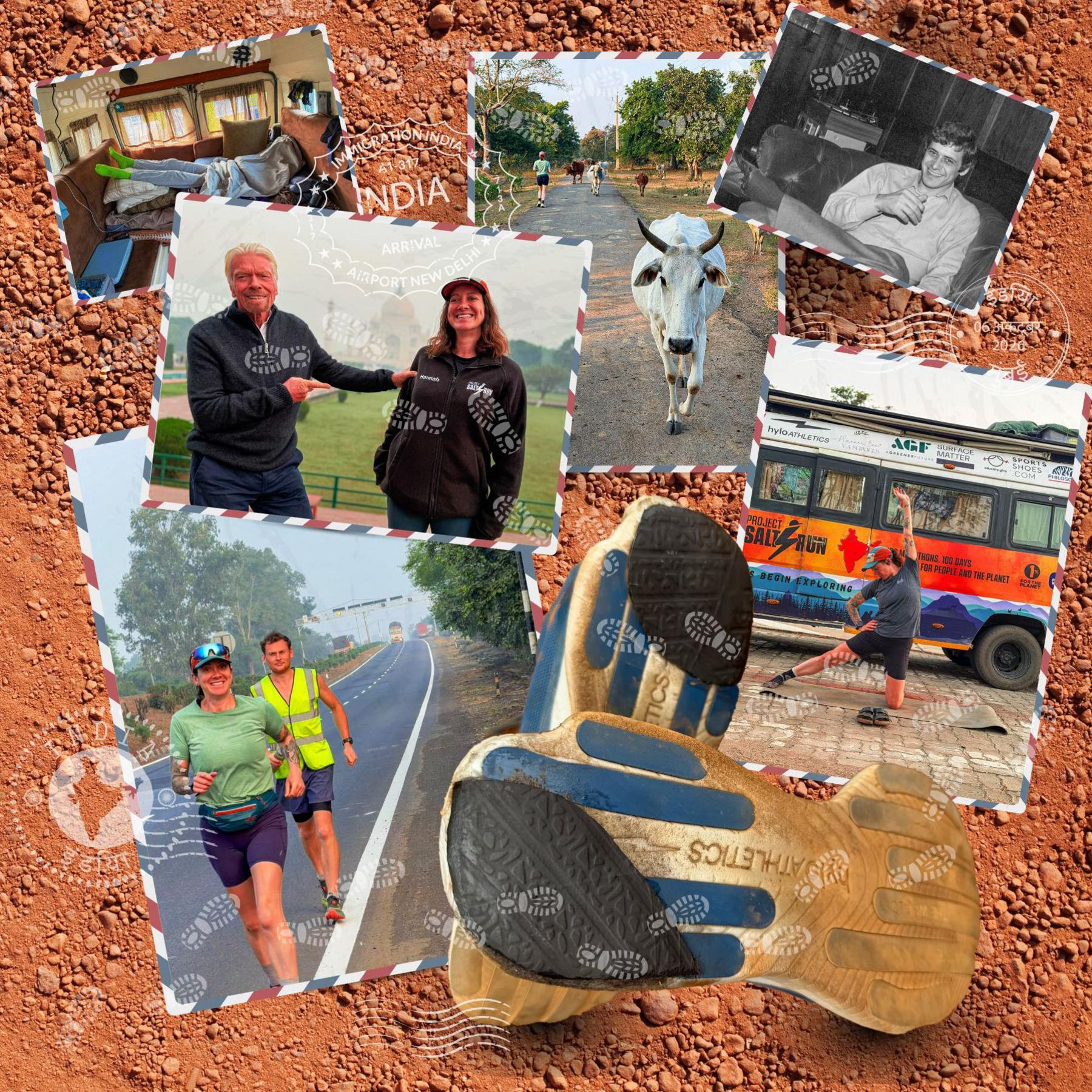 Image source, Natalie Smith and Hannah Cox
The soles of Hannah Cox’s trainers tell their own story.
Patched up with pieces of a car tyre and orange with dust, it’s clear they have covered a lot more ground than just a solitary marathon.
While some of the thousands of finishers of Sunday’s London Marathon might be waking up barely able to get down the stairs, vowing ‘never again’, consider this – what if you now had another 26.2 miles to run?
And then another, and another and another. For 100 consecutive days? Across India?
On top of that, until 18 months ago, you had never run.
This is the epic and emotional adventure that is stamped into those trainers.
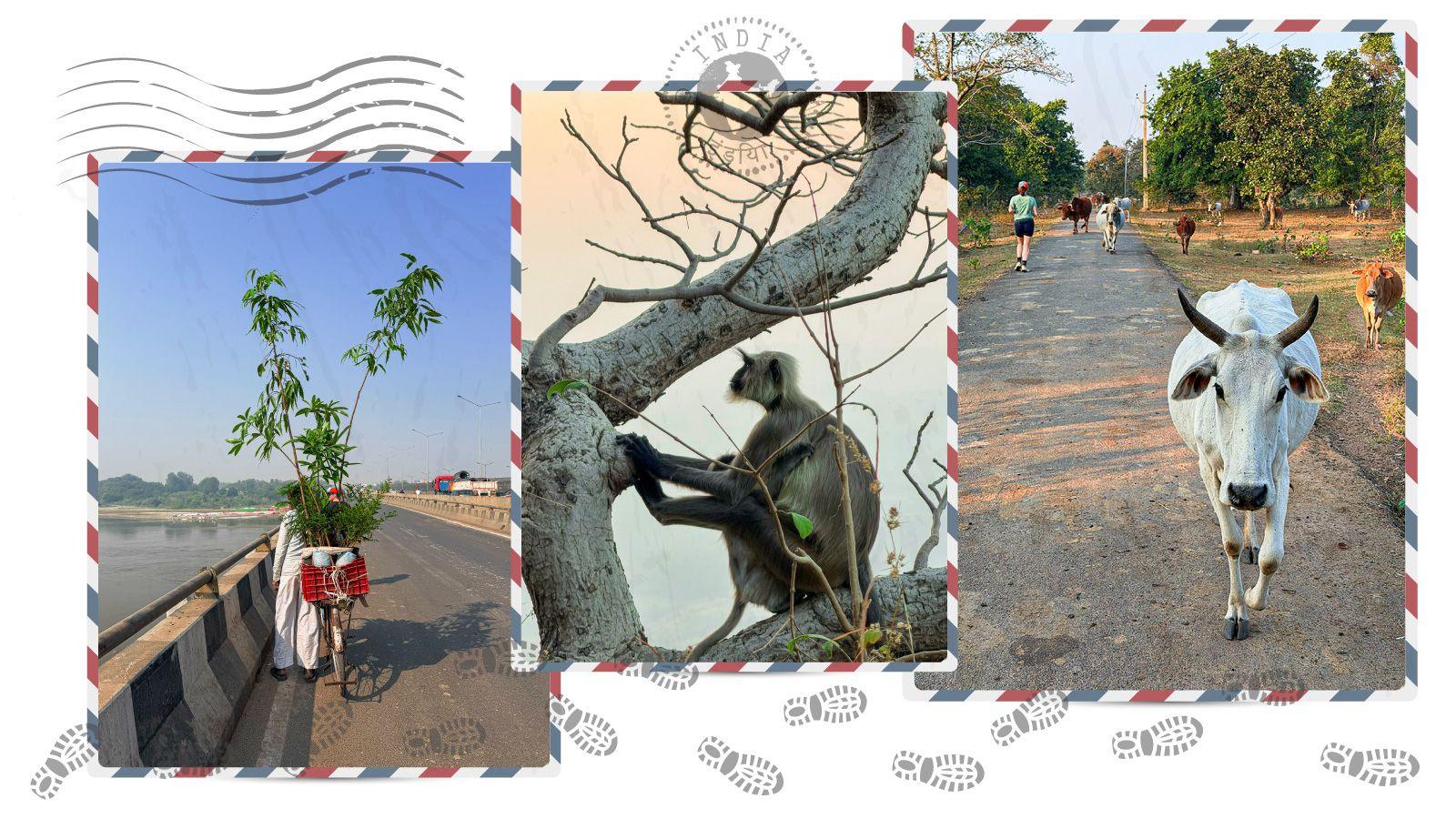 Image source, Natalie Smith
Hannah shared the roads with plenty of companions
For several years, Cox had an ambitious route in mind – she just hadn’t decided how she would travel along it.
Following her father’s death in 2011, the 41-year-old had become increasingly fascinated by her Indian heritage and in particular with a 4,200km route used by the British in the 19th century to implement a controversial salt tax during its rule over India, a customs barrier which included the Great Hedge of India.
When she met up with a friend in the summer of 2024 who asked her if she was “still obsessed with that hedge”, she decided it was time to finally make the journey.
She had not expected him to say “I think you should run it”.
But it sowed a seed and she joined a local running club in Manchester. Soon she was running for 30 minutes three times a week.
As her fitness progressed, the 5Ks turned into 10Ks and she began working on the back-to-back running days that were crucial if she was to have any chance of success in India.
Challenges like “20 20 20” – running 20km every weekday for 20 days and also running seven marathons in seven days from coast to coast of the UK helped convince Cox that ‘Project Salt Run’ had legs.
She quit her job, assembled a support team, acquired a van – and decided she would use the challenge to try to raise £1m for various environmental charities.
While she was prepared physically and practically, nothing could ready her for the madness of the roads she would take or the sickness she would battle.
“Everyone tried to put me off at first – people just didn’t believe I would actually do it,” Cox says.
But on 26 October last year, she set off from the Attari-Wagah border between Pakistan and India, bound for Kolkata, just a few miles from where her father Deric was born.
She stayed true to the route, which meant there were sometimes days when she ran 42km along a highway “which was boring as hell” but other days were through nature reserves, along canals and through farmers’ fields.
There were cows, snakes and goats in the road, while drivers regularly travelled on the wrong side of the highways. Some were busy roads and she has a scar on her right leg from a collision with a motorbike while she was running.
She even needed a police escort at times because she was going through regions known for regular fatal tiger attacks.
It was often hot, dusty and smoggy and even though she had spent two weeks beforehand doing sessions in a heat chamber to acclimatise, it was unlike anything she had ever experienced.
And then there was the sickness, which played a large part in her losing more than 10kg during the challenge.
One such episode also coincided with one of the more surreal chance encounters.
“It was day 24 and we met Richard Branson at the Taj Mahal,” she says.
“He was out there to host a charity cycling event and we were walking round the Taj and I was just feeling worse and worse.
“The evening before, he had invited me for dinner at a really expensive hotel. I had one sniff of an Old Fashioned cocktail and I was like: “oh my god, I’m going to be sick”.
“I had to run to these really fancy toilets and I was sick everywhere.
“The next day, I needed to run a marathon and five of the people who were part of Richard Branson’s charity event decided they were going to run with me. I was sick all day that day by the side of the road but I just knew I had to finish.”
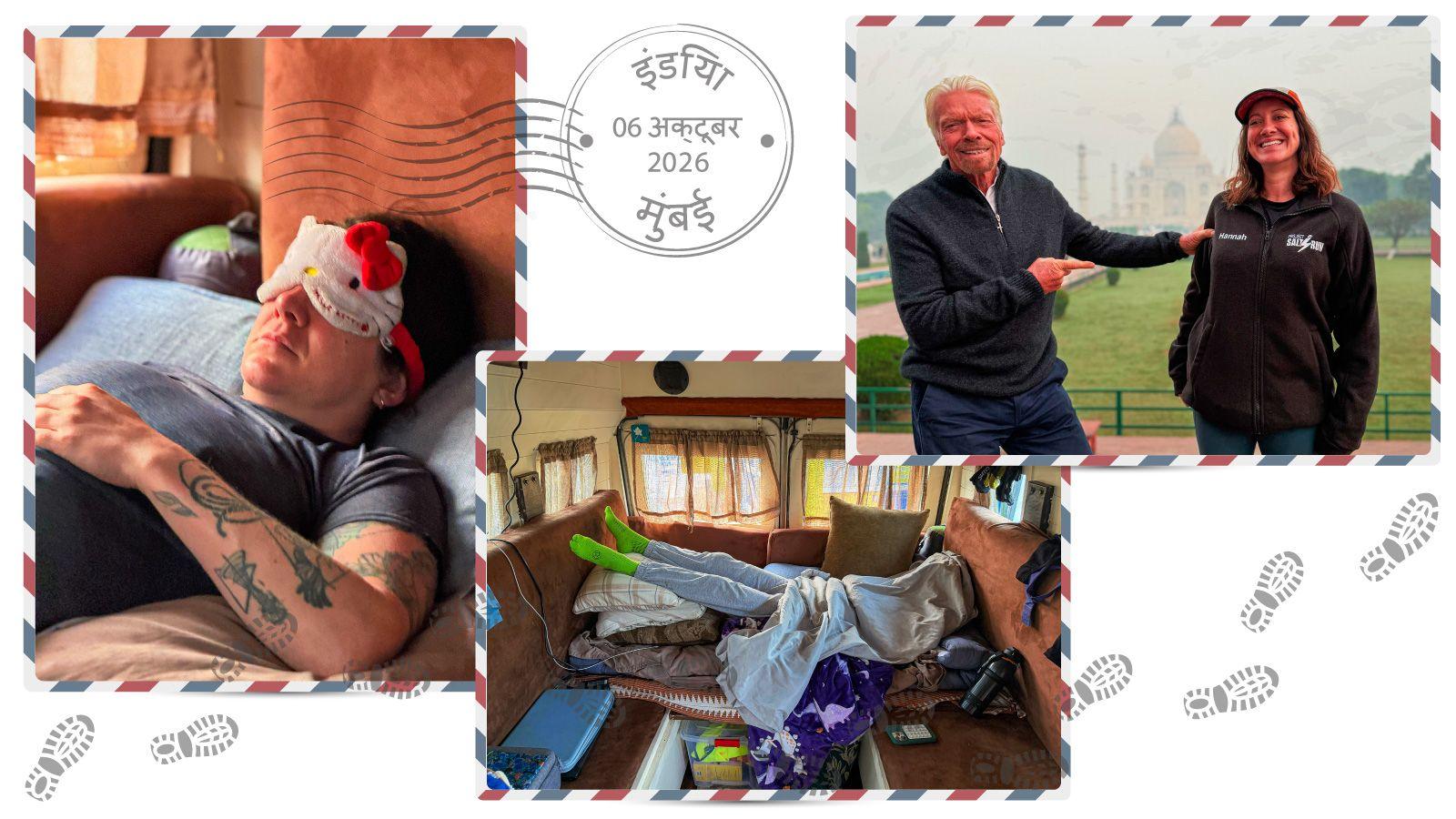 Image source, Natalie Smith
When she wasn’t rubbing shoulders with Richard Branson, this van was home
Cox would get up early to get some miles in before the temperatures peaked and kept hydrated with litres of fluids with electrolytes while she was running.
She had a simple method for refuelling – eat, run 15km, eat, run 15km, eat, run 12km, eat, sleep, repeat.
Breakfast was porridge with bananas and peanut butter, while lunch was “usually a massive plate of rice with marmite with two eggs, or cheesy fried potatoes with eggs and veg”.
Between checkpoints she would snack on cashews and almonds and then at the end of that day’s marathon she would have curry, rice, eggs and roti, as well as crisps and chocolate for extra calories.
Occasionally, passing strangers gave her and her team food or cooked for them in their homes but usually it was a case of sourcing seasonal items on the market and preparing them on the side of the road.
The van followed her during the day and at night they parked up by the side of the road or in petrol stations.
Every 10 days they treated themselves to a cheap hotel for a hot shower and some “much needed space”, but otherwise the van was home and sweaty running kit was washed under the cold tap in a petrol station forecourt.
“The shower in the van was cold, so I’d have a cold shower at the end of every day, wash my hair maybe once or twice a week as it was so grim using the shower,” Cox says.
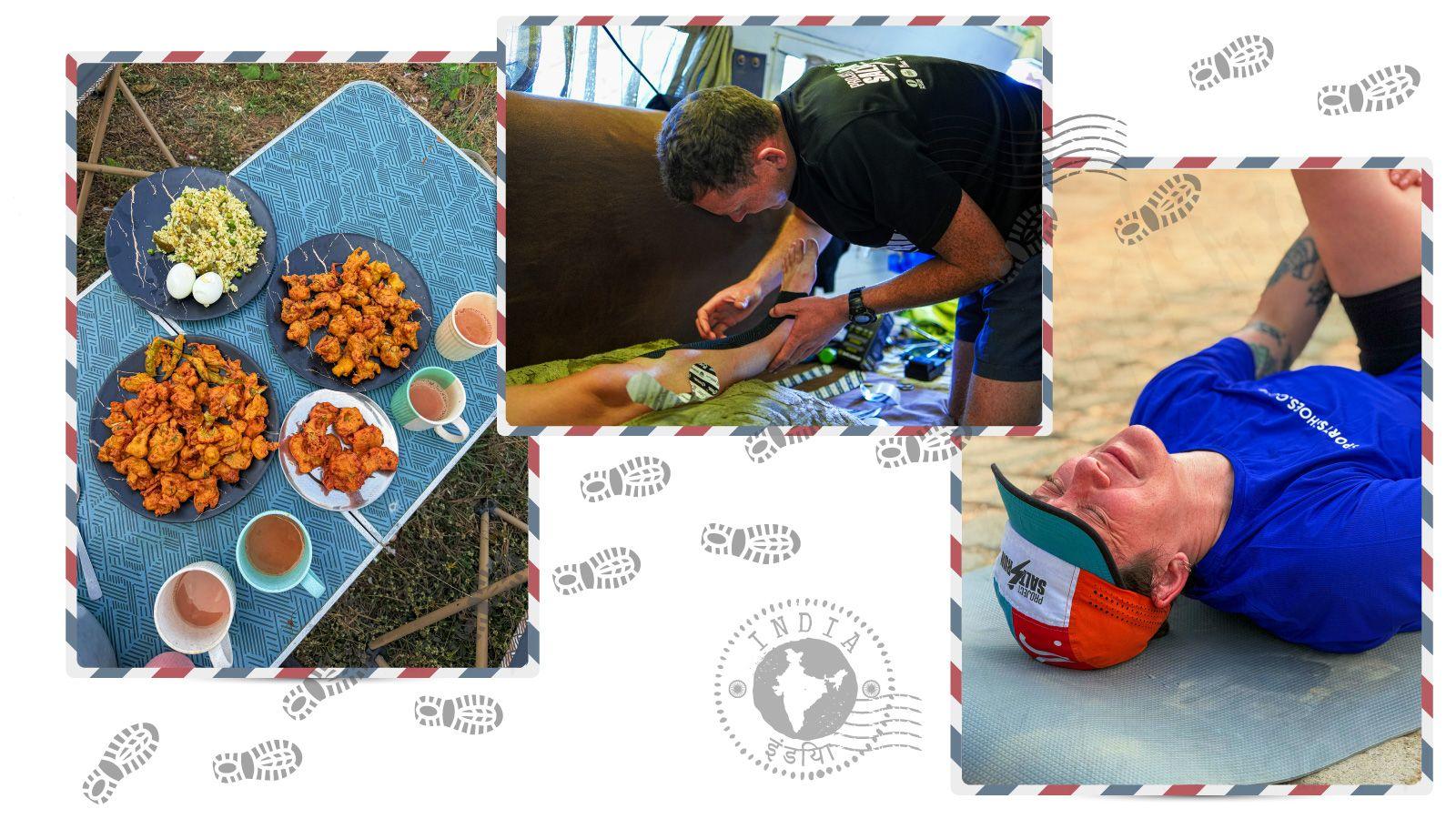 Image source, Natalie Smith
Hannah’s food and recovery were taken care of by her team
Despite brushing shoulders with Branson and Co, Cox’s journey was never about the glamour.
“I mean, it [Branson] is the story, right? It’s the one people cling on to, like, you met a famous person, and there was another famous person, and there was a load of millionaires, but it was such a tiny part of what it was,” she says.
“The project wouldn’t have worked, and didn’t work without everybody that supported it, and the grassroots nature and community aspect of it.”
And psychologists agree this is one of the keys for anyone taking on a challenge.
“There are three basic psychological needs when we talk about motivation,” says Amy Whitehead, sports scientist in psychology.
“If you’ve got really high autonomy, high social support and you’ve got some level of competence and confidence then you can succeed.”
Compared to the stories of some of the other ultra running challenges – for example, British ultra runner Will Goodge is planning to run 50 marathons in 50 US states in 20 days that will feature private jet travel – Cox’s crew of four was incredibly pared back.
A support runner, a driver, a helper and – her secret weapon – a podiatrist.
The first thing many people want to ask her about running 100 marathons is what state it left her feet in.
But there are no tales of lost toenails or infected blisters for her.
“I’d happily walk around with you in sandals right now,” she tells BBC Sport at her running club, where she has just been given a hero’s welcome.
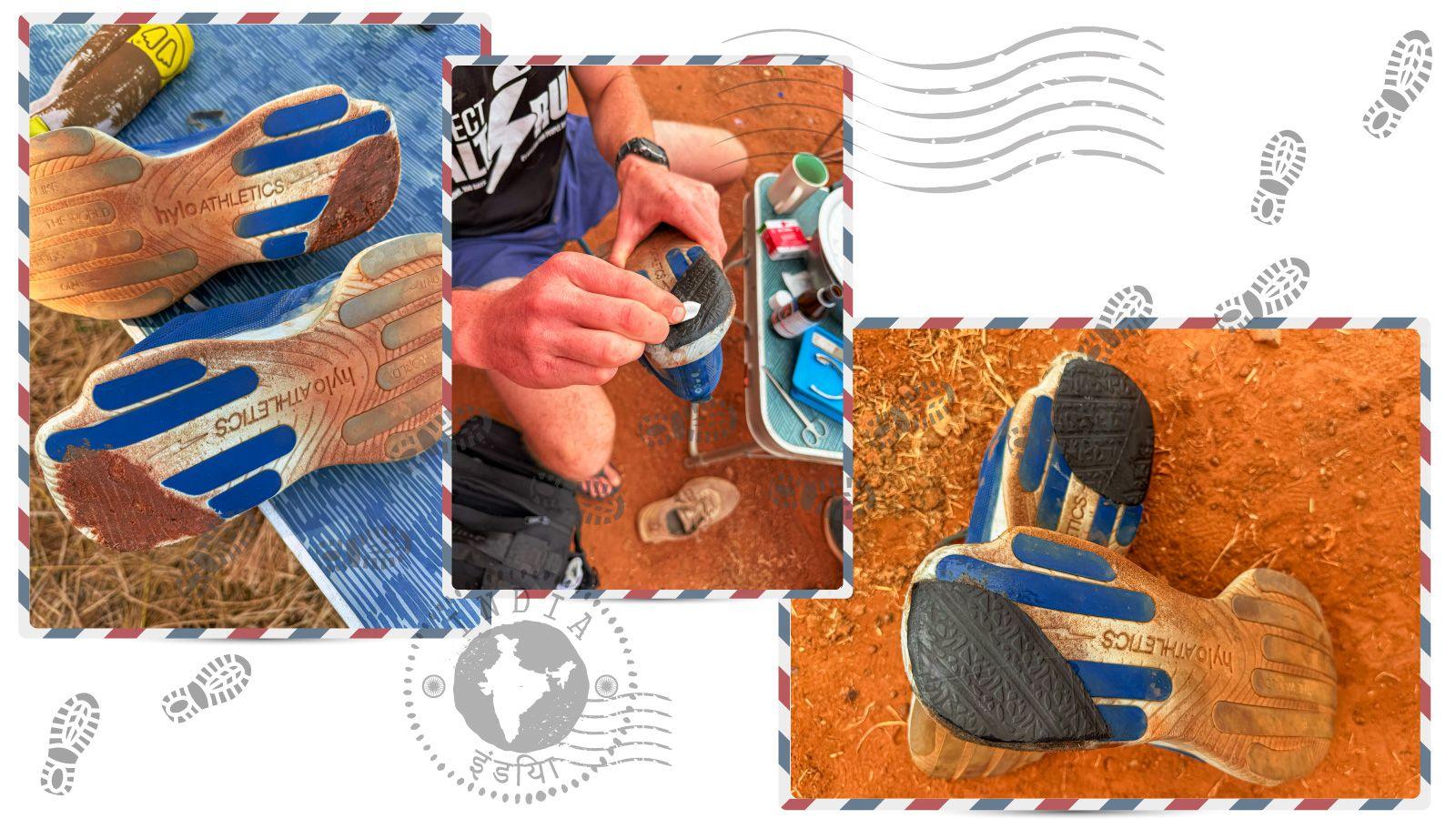 Image source, Natalie Smith
Cox took a sustainable approach to repairing her trainers
Her finances, though, are perhaps not in as good shape as her feet.
She is still trying to recoup the big chunks that were taken out of her bank balance in the form of personal loans.
Some of those loans were renegotiated while on the side of the road in India as it became clear that their money would run out, even if her energy levels didn’t.
She is also still raising money, determined to reach her original £1m target for four environmental and social impact charities.
They are causes she believes strongly in – hence the car tyre fix for her ailing shoes that was sourced by the side of the road. She went through three pairs of trainers but it would have been more without those resourceful repairs.
She is still running in one of the pairs – and as if 100 marathons in 100 days wasn’t enough, in early April she ran the Brighton Marathon and then last weekend took on London.
Ironically, the thought of UK city marathons was way more intimidating than her Indian adventure.
“I was nervous because it’s a performance space with people doing a marathon who are worried about their time,” she says. “That’s never really been my thing.
“In India it was me out with my friends, with a really core mission of what we were trying to do. And it feels that Brighton and London are two things that I’m doing on my own.”
She turned to her tried and tested method of run 15km, eat, run 15km eat, run 12km to get through those two marathons, and allowed herself to reflect on the original challenge.
“It felt like it was a story that I was just part of and I didn’t have any choice in the matter,” she says.
“The universe was like, ‘you’re doing this’.
“I had a complicated relationship with my dad. Project Salt Run felt like a very, very late love letter to him.”
✔ today silver rate
✔ 2026 winter olympics
✔ chat gtp
✔ silver rate today
✔ silver rate today live
✔ 2030 winter olympics