• Published
  • 142 Comments

George Russell took a comfortable victory in the Australian Grand Prix at the start of a new era of Formula 1 after a brief early scrap with Ferrari’s Charles Leclerc.

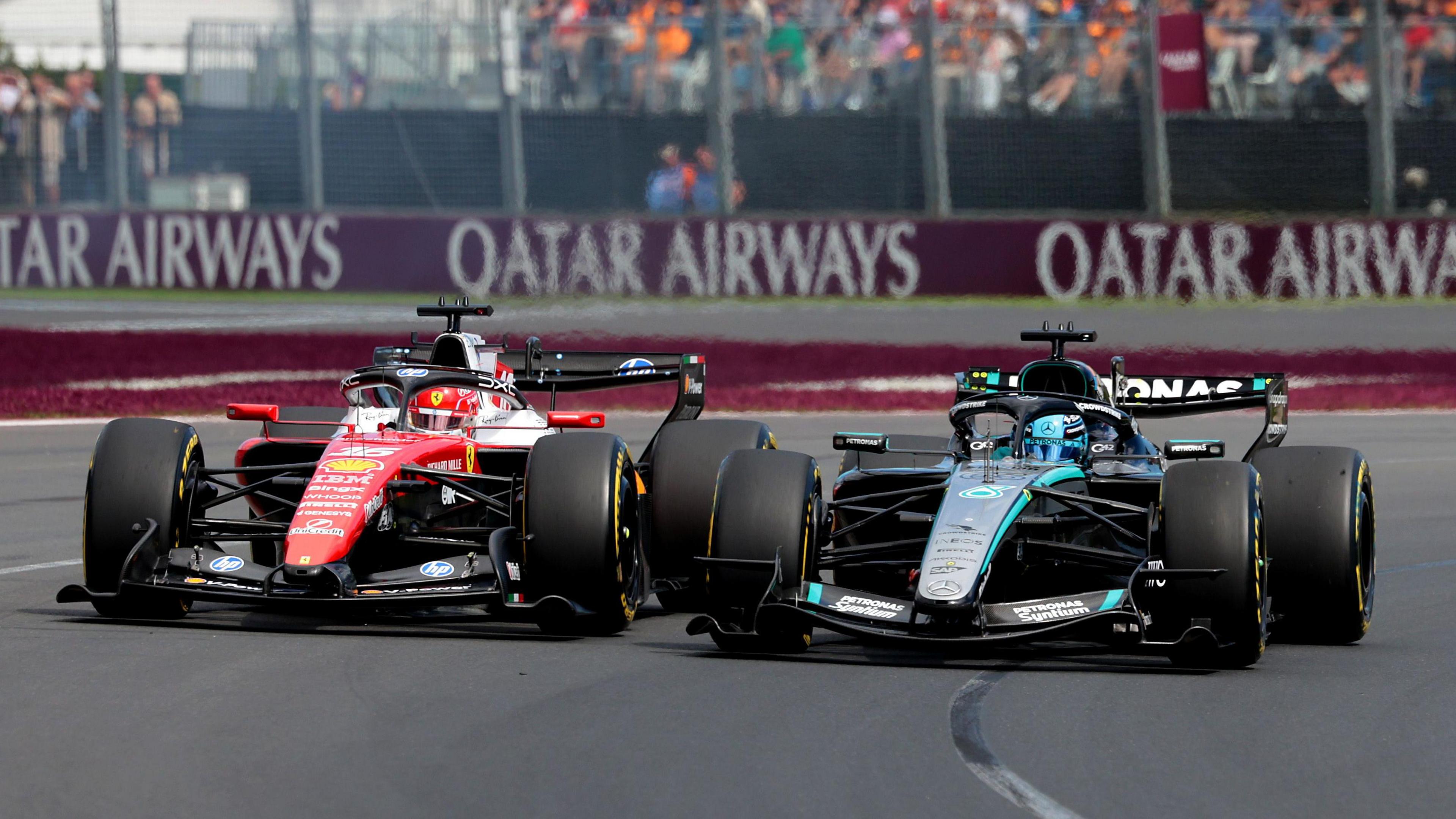
Russell and Leclerc staged a close fight for the first 10 laps with frequent lead changes before Ferrari’s decision to stay out during a virtual safety car period took them out of contention for the win.

The Briton led home team-mate Kimi Antonelli while Leclerc had to be satisfied with the final podium position ahead of team-mate Lewis Hamilton.

“I’m feeling incredible, it was a hell of a fight at the beginning. We knew it was going to be challenging and I got on the grid and I saw my battery level had nothing in the tank,” stated Russell.

“I made a bad start and obviously some really tight battles with Charles, so I was really glad to cross the finish line.”

McLaren’s world champion Lando Norris finished fifth, fending off a challenge in the closing laps from Red Bull’s Max Verstappen, who recovered from 20th on the grid to finish sixth.

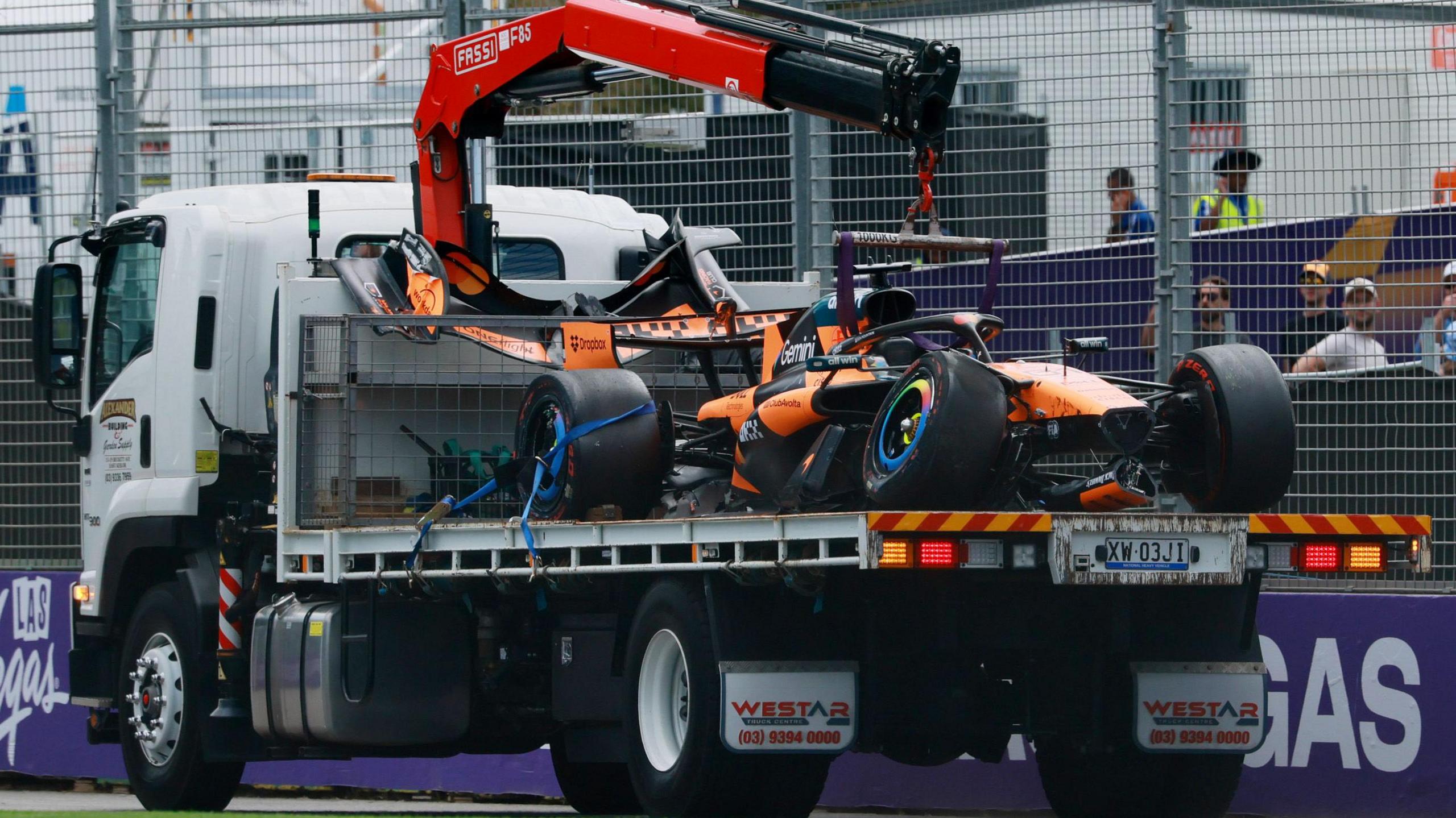
Norris’ team-mate Oscar Piastri crashed on his way to the grid of his home race, losing control over a kerb and getting a spike of unexpected power to spin into the wall.

Arvid Lindblad, 18, became the youngest Briton to race in F1 and impressed on his debut to take eighth behind countryman Oliver Bearman in the Haas.

The key stories of a race that faded in interest after early excitement were:

  • Mercedes’ dominant victory to mark a return to the front of F1 after four difficult years

  • Questions over Ferrari’s strategy – again

  • Was it racing, or just energy management?

How Russell won

The damaged McLaren of Oscar Piastri is driven away on a truck after he crashed on the way to the grid before the Australian Grand PrixImage source, Getty Images
Image caption,

The damaged McLaren of Oscar Piastri is driven away on a truck after he crashed on the way to the grid before the Australian Grand Prix

Russell’s pole position – 0.8 seconds clear of the fastest non-Mercedes car – had sent shockwaves through the paddock on Saturday but the race was initially much closer than qualifying.

Both Ferrari drivers made their expected electric starts, and Leclerc vaulted from fourth on the grid to take the lead at the first corner.

Russell powered past the Ferrari on lap two between Turns 10 and 11 by using extra electrical energy.

But Leclerc was not to go down without a fight and drove past the Mercedes in a similar fashion on the run to Turn Nine on lap three.

Russell tracked Leclerc closely. He challenged for the lead into Turn One on lap nine only for the Ferrari driver to fend him off and leave Russell to fight to retain his position from Hamilton, who by now had joined the leading train of cars.

Antonelli, who had dropped to seventh at the start before fighting back past Norris, Lindblad and Isack Hadjar’s Red Bull, then joined them to make it four cars in the leading group after 10 laps, and they circulated together until Hadjar retired on lap 12.

The Frenchman, who had been running fifth, pulled off on the back straight, bringing out the virtual safety car, usually the trigger for teams to pit and benefit from the reduced time loss compared with pitting under racing conditions.

But while Russell and Antonelli pitted, Leclerc and Hamilton did not. Hamilton immediately questioned the call, saying over the radio: “At least one of us should have pitted.”

Instead, they ran long, sticking to their pre-race plan of a one-stop strategy.

By the time Leclerc pitted on lap 25, Russell was only five seconds behind him, and the Ferrari emerged 14 seconds adrift of the lead.

On fresher tyres, Leclerc might have been expected to narrow the gap to Russell, but he did not, and the fight at the front was over.

Did Ferrari mess up?

Mercedes' George Russell and Ferrari's Charles Leclerc side by side as they battled for the lead of the Australian Grand PrixImage source, Getty Images
Image caption,

George Russell and Charles Leclerc battle for the lead in the early stages of the race

When the virtual safety car was called, Leclerc was approaching the pit lane entry. There was just about time to call him in had the team reacted quickly – as they arguably should have been prepared to do with Hadjar’s car where it was.

Stopping Hamilton would have been more comfortable, but they chose not do that either. They could have stopped the next time around, with the VSC still operating, but again both Ferraris stayed out.

Perhaps the team felt Mercedes would struggle to make it to the end with a single stop, but in the end it was no problem, and there will be questions as to whether Ferrari should have committed to staying in the lead fight given how they seemed able to match Mercedes at the time.

Leclerc stated he did not think they could have won and that third was the best he could have done.

But while he made no ground on either Mercedes, nor did he lose significant ground, so there are indications Ferrari can challenge Mercedes in coming races.

Hamilton, who stopped three laps later than Leclerc after demanding the team leave him out for a while, challenged his team-mate in the closing stages.

Top 10

1. George Russell (Mercedes)

2. Kimi Antonelli (Mercedes)

3. Charles Leclerc (Ferrari)

4. Lewis Hamilton (Ferrari)

5. Lando Norris (McLaren)

6. Max Verstappen (Red Bull)

7. Oliver Bearman (Haas)

8. Arvid Lindblad (Racing Bulls)

9. Gabriel Bortoleto (Audi)

10. Pierre Gasly (Alpine)

  • Full race results

  • Drivers’ championship standings

  • Constructors’ championship standings

Related topics

  • Formula 1

More on this story

✔ today silver rate

✔ 2026 winter olympics

✔ chat gtp

✔ silver rate today

✔ silver rate today live

✔ 2030 winter olympics

Read More

Sports

Leave a Reply

Your email address will not be published. Required fields are marked *