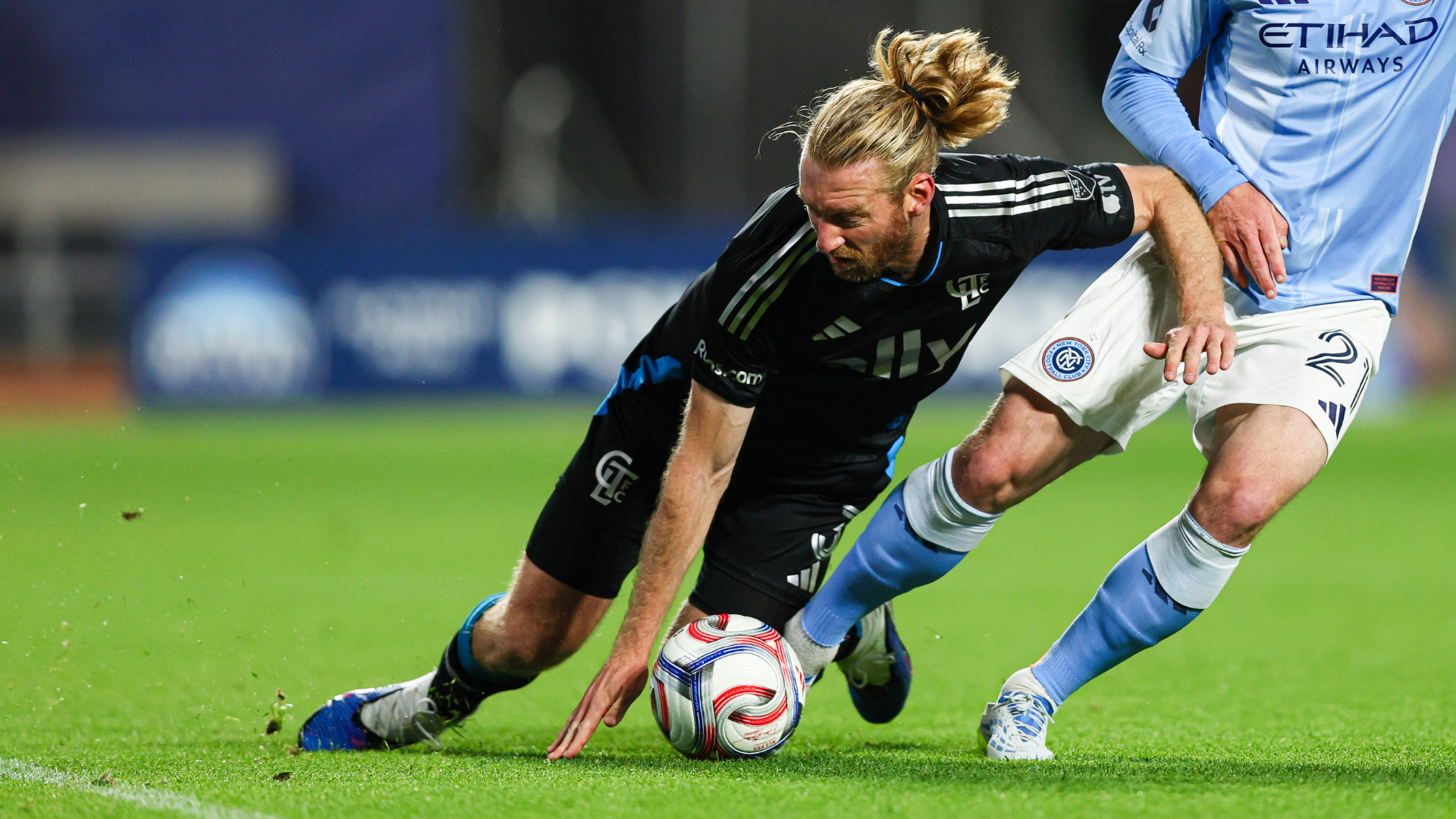
U.S. men’s national team defender Tim Ream exited Charlotte FC’s win at New York City FC with a groin issue, potentially raising concerns about his availability with the World Cup less than two months away.
Ream started Charlotte’s 2-1 win in New York but came off at halftime for Andrew Privett, his status unclear for the team’s trip to Orlando City on Wednesday. The 38-year-old is expected to undergo more tests on Sunday before more specifics on the injury are revealed.
“Tim felt something after about 30 minutes in his groin,” Charlotte coach Dean Smith mentioned after the match. “He managed to get through it, but we didn’t want to risk [him] in the second half.”
Ream has been a fixture for the USMNT for the last several years, starting each of the team’s games at the 2022 World Cup and the 2024 Copa America when Gregg Berhalter was the head coach and starting 18 of Mauricio Pochettino’s 24 games in charge since he assumed the helm in October 2024. The center back has maintained his standing in the lineup even as Pochettino began introducing a back three formation last fall, a system they now use interchangeably with the back four the U.S. had almost exclusively used previously, stretching back to Berhalter’s tenure.
It is too early to speculate on Ream’s status, but his injury comes weeks after World Cup hopeful – and Ream’s former teammate in Charlotte – Patrick Agyemang injured his Achilles, ruling him out of this summer’s tournament on home soil.
Defensive questions persist for USMNT
The USMNT have more defensive nuance these days, but for the progress they may have made in recent months, their back line is arguably their main cause for concern heading into the World Cup. They have just six clean sheets since Pochettino took charge and just one in their last 12, in a 2-0 win over a rotated Japan in September when the head coach started with a back three for the first time.
Pochettino has experimented heavily during his 18 months in charge, both in terms of personnel and tactical ideas, the changing variables at times creating a lack of cohesion that is understandable in friendlies designed for that type of tinkering. The issue has not exactly sorted itself out, though – they are error-prone in a wide variety of ways, be it in last month’s 5-2 loss to Belgium in which things unraveled quickly, or November’s 5-1 win over Uruguay, when they were fully dominant but still had a defensive lapse. The issue is bigger than just a typical vulnerability in the back from attack-minded teams like Pochettino’s version of the USMNT, but comes down to costly decision-making that has plagued this team for several years now.
“I think in some moments it’s a decision,” Ream mentioned ahead of the USMNT’s 2-0 loss to Portugal last month. “It’s a conscious decision. It’s just an overall effort, and I know it’s not that guys don’t want to do it. I think sometimes it’s [that] we’ve just made an effort and now it’s about making another one, right? It’s about making not just the first, the second, the third, the fourth, and sometimes that doesn’t happen, and that’s just, again, something that is a non-negotiable, really, and it’s something that we were doing really well in the fall last year and it’s something we have to get back to.”
The team boasts more stability when Chris Richards lines up alongside Ream at center back, only bolstering the argument that he might just be the team’s most important player heading into the World Cup. Without the 38-year-old, though, there are some questions as to how the USMNT lines up at the World Cup.
Ream has been part of the back line’s woes, most recently conceding a penalty to Belgium that gave the visitors a 3-1 lead, midway through a stretch in which they scored three goals in 15 minutes to put the game out of reach for the USMNT. He still seems to have a vote of conscience from Pochettino, who has managed to explore his options over the last few months with varied results. Auston Trusty got the run out next to Richards against Portugal and made an argument for himself, while Mark McKenzie played alongside Ream against Belgium, and Miles Robinson has played with both Richards and Ream in the past despite missing the March friendlies with a short-term injury.
Alex Freeman and Tanner Tessman are two versatile players who can slot into a back three, a skillset that will come in handy on top of their usual responsibilities at outside back and defensive midfield, respectively. Joe Scally also has a wide-ranging skillset, but he might be on the outside looking in at a World Cup roster spot, if the fact that he played just 41 combined minutes against Belgium and Portugal is anything to go by.
Pochettino has mixed and matched these players on a handful of occasions, one combination not necessarily proving to be better than the others. Even if Ream is fit to take part in the World Cup, that question would still persist – Richards has been the USMNT’s best center back for some time now, both in terms of his performances for the national team and with Crystal Palace. Ream feels like a likely starter at the World Cup but not a guaranteed starter, especially if McKenzie, Trusty, or Robinson strengthen their own arguments in the final weeks before the tournament begins. A member of that trio seems most likely to break into the lineup than anyone else, regardless of Ream’s availability.
Getting that particular combination right, regardless of who is available, might be the difference between a statement-making run this summer or another humdrum World Cup outing for the USMNT.