• Published

On a grim Sunday at Tannadice in March, Celtic lost 2-0 to Jim Goodwin’s Dundee United, a defeat that put them five points behind Hearts, and two behind Rangers.

Martin O’Neill, a strange amalgam of dejection and defiance, didn’t mince his words about how wounding the defeat was, but he was strong on all hope not being lost.

Celtic, he reported, would have to win seven out of seven on the run-in.

“We disappointed an awful lot of people today,” he remarked. “It’s been difficult since I’ve set foot in the place. This is a blow but we’re not finished yet.”

The truth was that O’Neill and Celtic were only getting started.

He asked for seven wins on the bounce and, up until Saturday’s endgame in Glasgow, he had six. Tense, nervous, only occasionally impressive and frequently a grind, but 18 points from a possible 18 while in chasing mode.

It was an illustration of a doggedness that wasn’t there in the final weeks of Brendan Rodgers’ time and that was embarrassingly absent during the calamitous weeks of Wilfried Nancy’s period in charge.

Now they’ve made it 21 points out of 21 and they’re champions again. They’ve hunted down and overtaken a Hearts side that has done very little wrong all season.

After walking into a shambles, exiting and then re-entering an even bigger shambles, O’Neill has won 19 of his 23 Premiership games with just two losses.

They are not impressive winners but they are worthy winners. They’ve triumphed on the back of spirit rather than class.

They’ve benefitted from some extremely controversial calls along the way – particularly in recent weeks – but a race is run across an entire campaign and their fans will not be slow in telling you about decisions they felt went against them, and for Hearts, over the past 10 months.

That’s a wearying game to play, not that it’s stopping people from playing it.

  • Celtic stun Hearts with late double to snatch title in astonishing finale
  • Newest Celtic news, analysis and fan views

Title only masks season of discontent

Their victory merits proper analysis, though. The Celtic board should be doing a deep dive on this stuff rather than solely basking in their win and concluding that another title shows that not much is wrong at Celtic Park, when it plainly is.

After the cheering they need to do some serious analysing. They need some brutal honesty.

Celtic won the league with 82 points – 10 fewer than last season, 11 fewer than the season before, 17 fewer than the season before that. If you have high standards, then that direction of travel should be seen as a challenge.

They scored 73 goals – a massive reduction on last season’s 112, and on the 95, 114, 92 and 92 in the seasons that went before. It’s their lowest tally of league goals in 19 years.

That’s a stark reflection on their lame search for a striker to replace Kyogo Furuhashi, who left well over a year ago. His countryman, Daizen Maeda, coming good at the end of the season was enormously significant.

They conceded 41 league goals – their highest total in 33 years. That is, in part, a consequence of something outside their control. Cameron Carter-Vickers and Alistair Johnston only played 13 league games between them.

Celtic might well end up with a double that nobody saw coming. That’s on O’Neill, and his ability to navigate his way through the toxicity that’s existed in the club all season.

For O’Neill, this is fairytale stuff. A gap of 20 years and another title.

Figure caption,

Celtic celebrate after clinching title on dramatic final day

At the start of the season, with Rodgers seemingly imperious, the notion that the septuagenarian was going to return to Parkhead not just once but twice, and steer home a troubled club, would have been outlandish.

Truth, sometimes, is stranger than fiction.

And Celtic’s truth has been wild. O’Neill has ensured a happy ending, but so much of what went before was angry and divisive. Hostility reigned supreme until an uneasy truce towards the end of the season.

It all kicked off with that Champions League exit at the hands of Kairat Almaty. Two games, zero goals and a transfer window that enraged the supporters. Celtic won four games out of 12 in Europe.

The summer arrivals: Kieran Tierney, Isaac English, Ross Doohan, Benjamin Nygren, Callum Osmand, Hayato Inamura, Shin Yamada, Jahmai Simpson-Pusey, Michel-Ange Balikwisha, Marcelo Saracchi, Sebastien Tounekti and Kelechi Iheanacho.

Only five of those made it into double figures in league appearances. Others rarely, if ever, featured.

Rodgers reported a few of them were “club signings”, the inference being that they weren’t his choices. His rhetoric caused ructions behind the scenes. It would spill out in public soon enough.

Rodgers, agitated and agitating about the business done in the market, infamously likened his squad to a Honda Civic rather than the Ferrari he wanted to drive. In October, Celtic lost 2-0 to Dundee and 3-1 to Hearts and he resigned.

On his way out he received a verbal blast, the like of which has never been seen before in Scottish football. Dermot Desmond, the major shareholder, issued a statement that filleted Rodgers in the most brutal way.

The former manager had been “divisive, misleading, and self-serving”, reported Desmond. He had “contributed to a toxic atmosphere and fuelled hostility towards members of the executive team and the board. Some of the abuse directed at them, and at their families, has been entirely unwarranted and unacceptable”.

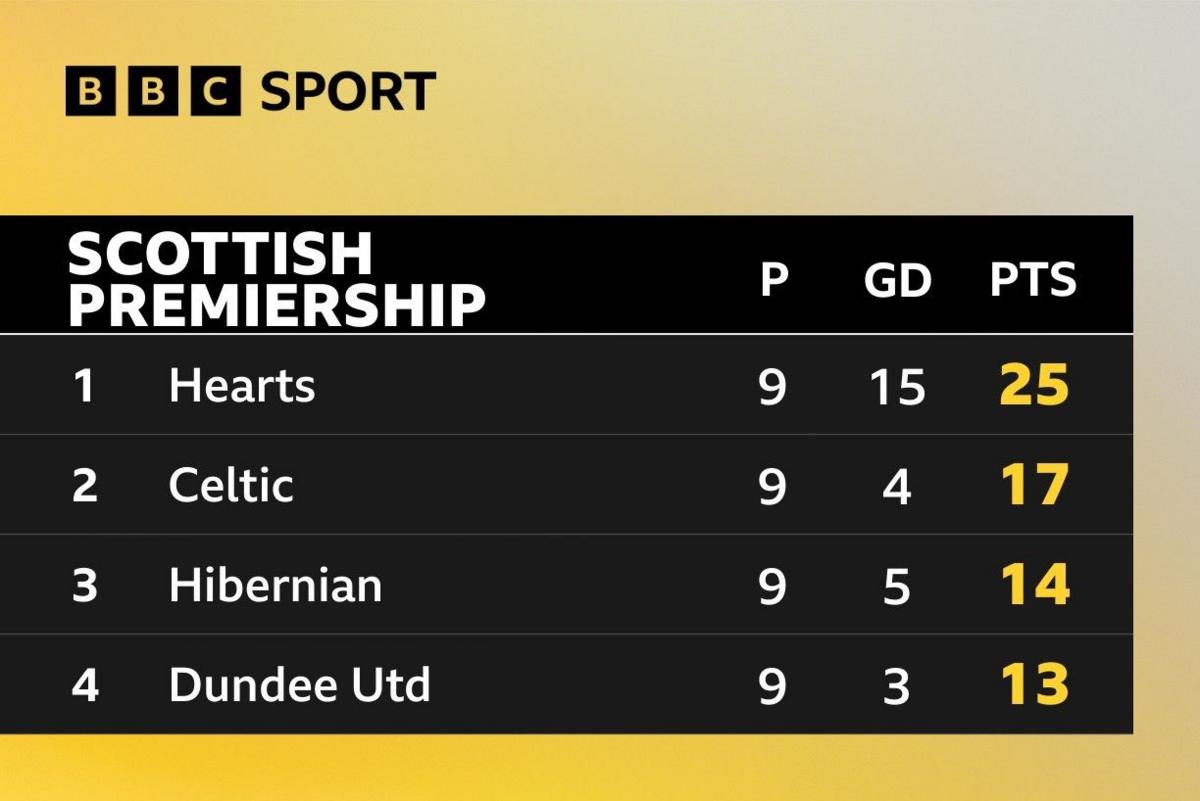
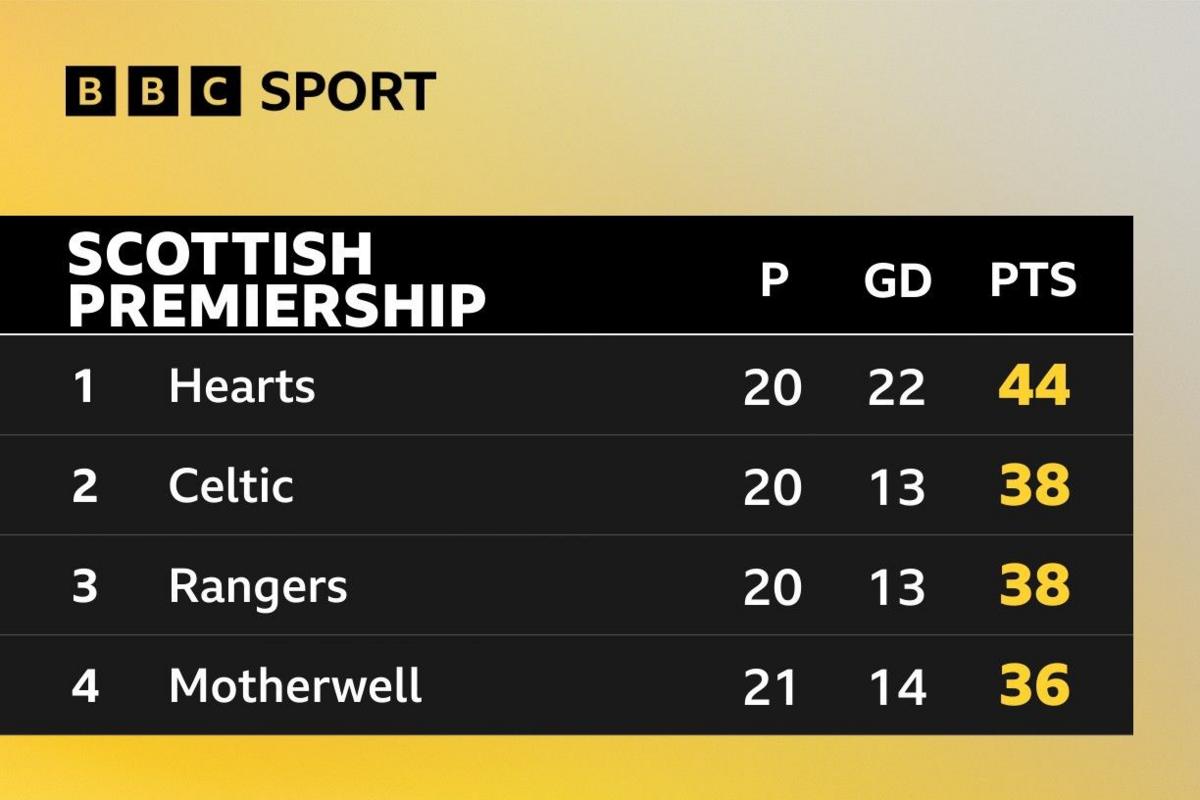
Table when O'Neill first took charge
Image caption,

Table when O’Neill first took charge

Venom cranked back up amid Nancy mess

The surreality of the situation – the raging fans, the vengeful Desmond and the fallen former hero Rodgers – was enough to be getting on with, but it was also revealed that O’Neill was on his way back as interim manager two decades after he left the club and more than six years since he’d managed at any level.

O’Neill had been on radio tipping Hearts to win the league earlier in the day. Now his job was to restore order amid the chaos. A footballing civil war had been raging. Rodgers had lived through it and now it was O’Neill’s turn.

He was in charge for five league games and won all five. Then Nancy took over, championed by Paul Tisdale, the lesser-spotted head of football operations.

The decision to appoint Nancy – and Tisdale, too – was a monumental and needless punt and it blew up in Celtic’s face literally on day one when they lost 2-1 to Hearts, then 2-1 at Dundee United in the next league game. In between the two, Nancy lost the League Cup final to St Mirren.

If O’Neill had managed to dial down the venom a touch in his brief first spell, it was now cranked right back up again, with added poison.

Table when O'Neill returned for second stint
Image caption,

Table when O’Neill returned for second stint

Supporters railed against the problems that were, in their view, destroying the club; Nancy and Tisdale, hapless transfer windows, lousy communication, indifference to the thoughts of fans, a sense of drift and a feeling of a hierarchy asleep at the wheel.

Banners and songs eviscerated the decision-makers. At November’s AGM, Desmond’s representative – his son Ross – castigated fans, saying the board would not be “bullied by aggressive and irrational criticism.”

While a small element of the support at the meeting shouted him down – it was then abandoned – he spoke of attempts to “dehumanise and vilify” chairman Peter Lawwell and chief executive, Michael Nicholson. He called it “shameful”.

Desmond Jnr’s comments were like petrol on a fire. Relationships between club and board were torched. Lawwell resigned the following month, saying that he’d had enough of the abuse and the threats from sinister elements.

Nancy was put out of his misery in the first week of January, after Motherwell had embarrassed his side 2-0 at Fir Park, before Rangers went to Celtic Park and won 3-1. Tisdale exited, too.

There was now no permanent manager, no permanent chairman, no sporting director or head of football operations and nothing much in the way of a properly functioning recruitment department. The team looked beaten.

Old bhoy O’Neill proves he’s still got it

In a vaguely comical scene, O’Neill was sent for again. He had a mighty job on his hands.

That January transfer window was supposed to be a massive one. O’Neill was grilled about targets in every interview. He understood why the questions were being asked but he looked exhausted when trying to answer them.

Celtic made desperately heavy weather of getting new blood in the building. They arrived in trickles: Julian Araujo, Tomas Cvancara, Junior Adamu, Benjamin Arthur, Joel Mvuka and Alex Oxlade-Chamberlain – five loan signings and a free transfer.

Araujo did well before his injury and Oxlade-Chamberlain scored winners against Livingston and St Mirren, but the rest of them have hardly been mapped.

Figure caption,

O’Neill reacts after winning fourth title as Celtic boss

Fan unrest continued. Statement wars. The Green Brigade ultras were banned amid allegations of assault of a steward. Part football manager, part peace envoy, O’Neill looked, at times, like Canute trying to hold back the tide.

After Celtic lost 2-1 to Hibs in late February, they were in third place. When O’Neill’s team fought back to get a 2-2 draw at Ibrox on 1 March, they were eight behind Hearts, albeit with a game in hand.

In the 10 games before the United loss he won seven, drew two and lost one, but that kind of points haul wasn’t going to be enough and O’Neill knew it. That’s why he reported they needed seven wins from their next seven. Few thought they would do it.

Only one or two of the seven were comfortable, five of them were by a goal, three won by a goal late on. The penalty decision at Fir Park on the penultimate game of the season was an enormously contentious call by referee John Beaton.

A clear penalty through one lens and an abomination (and worse) through another. Two camps entrenched in their own certainty.

The fallout has been indiscriminate and nasty. A police intervention was required to ensure Beaton’s safety in his own home. The most dramatic season was never likely to end with a whimper.

O’Neill triumphed in the end. He cut through the bedlam of fans versus board, he galvanised a team that looked dead to the world, he spoiled the story that so many people wanted.

It was easy to doubt him in the dog days, but as he proved in the most stressful final months of the campaign, the old bhoy’s still got it.

Get in touch

Send us your views on Celtic

Related topics

  • Football
  • Scottish Premiership
  • Scottish Football
  • Celtic

✔ today silver rate

✔ 2026 winter olympics

✔ chat gtp

✔ silver rate today

✔ silver rate today live

✔ 2030 winter olympics

Read More

Sports

Leave a Reply

Your email address will not be published. Required fields are marked *